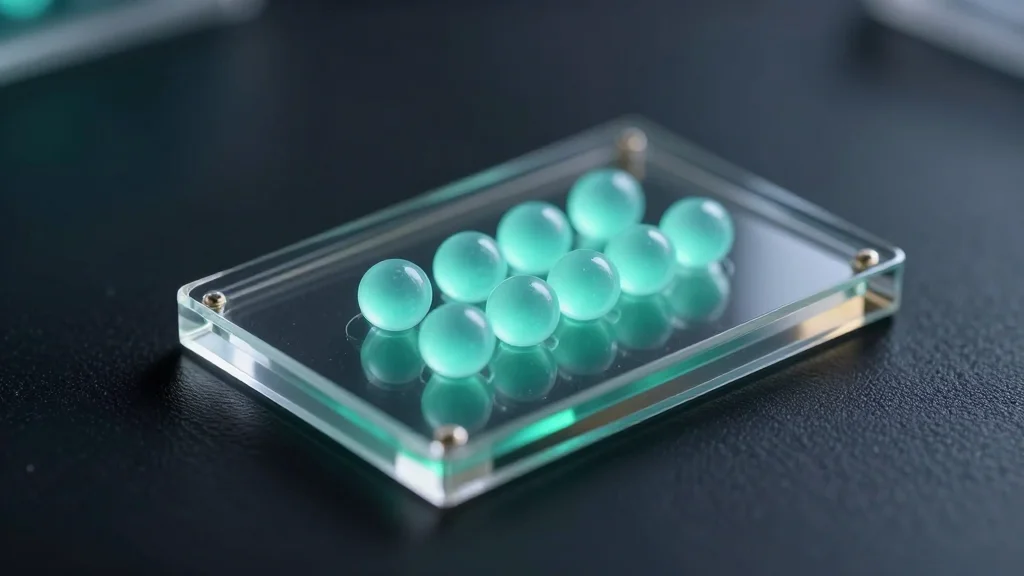
Harvard Team Creates Self‑Reproducing Synthetic Cells, Demonstrating Real‑Time Evolution

Why It Matters
The ability to generate self‑replicating, evolving protocells from scratch gives scientists a controllable model to test long‑standing hypotheses about the origin of life. By decoupling replication from genetic machinery, the study isolates the minimal chemical requirements for Darwinian processes, offering empirical data that have been largely theoretical until now. Beyond fundamental science, the platform could transform synthetic biology by enabling engineered cells that replicate without the constraints of natural genomes, reducing biosafety concerns while expanding the toolkit for programmable bio‑fabrication. The work also forces ethicists and policymakers to confront how emerging definitions of life may affect regulation of artificial organisms.
Key Takeaways
- •Harvard and Santa Fe Institute scientists built fully abiotic protocells that self‑reproduce and evolve.
- •The protocells were created from a homogeneous chemical solution irradiated with green light.
- •No DNA, RNA, proteins or natural membranes were used; replication is driven purely by chemistry.
- •Senior author Juan Pérez‑Mercader called the achievement "completely unprecedented" in synthetic biology.
- •The study, published in PNAS, provides a new experimental platform for origin‑of‑life research.
Pulse Analysis
Harvard's synthetic protocell system arrives at a moment when the synthetic biology field is seeking scalable, safe alternatives to genetically modified organisms. Traditional engineered microbes rely on complex genetic circuits that raise containment and horizontal gene transfer concerns. By demonstrating replication without any nucleic acid machinery, the Harvard team sidesteps many of those regulatory hurdles, suggesting a future where ‘living‑like’ factories could be deployed with lower ecological risk.
Historically, attempts to recreate life‑like behavior have oscillated between lipid vesicles loaded with biochemical pathways and ribozyme‑based systems. Those approaches, while informative, still depended on biological macromolecules. The Harvard work flips the script: it starts from a chemically uniform soup and lets physical forces and simple reaction networks generate structure and function. If subsequent iterations can embed catalytic cycles or primitive information storage, we may witness a stepwise reconstruction of the earliest evolutionary steps, offering a tangible bridge between pre‑biotic chemistry and the first true cells.
Looking ahead, the key challenge will be scaling complexity without re‑introducing biological components. Success could redefine the minimal criteria for life, influencing everything from astrobiology—where scientists search for non‑DNA based life signatures—to bio‑manufacturing, where self‑organizing, adaptive materials could revolutionize production. The field now faces a pivotal question: will the next generation of synthetic cells remain purely chemical, or will they inevitably converge back toward biology as functionality demands increase?
Harvard Team Creates Self‑Reproducing Synthetic Cells, Demonstrating Real‑Time Evolution
Comments
Want to join the conversation?
Loading comments...