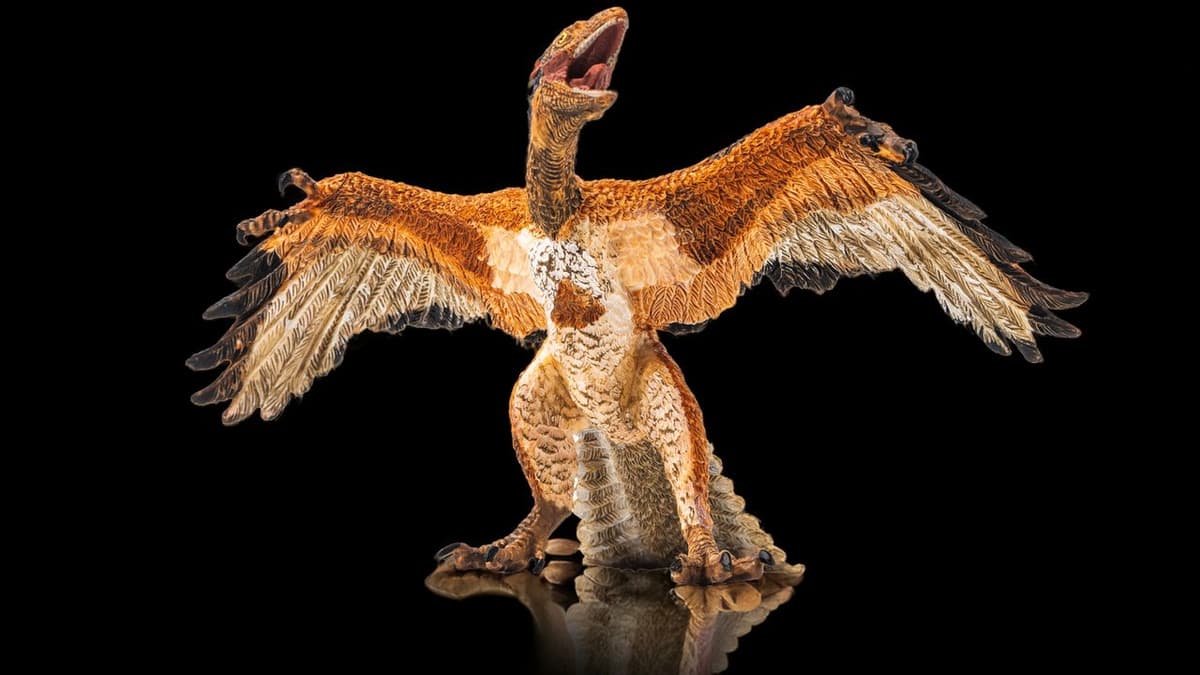
'He Began to Cry, and Almost Fell to the Floor': The Fluffy Fossil that Finally Showed the World that Birds Are Dinosaurs
Companies Mentioned
Why It Matters
The discovery provided definitive anatomical evidence that birds are living dinosaurs, reshaping evolutionary theory and driving a new era of paleontological research and commercial fossil markets.
Key Takeaways
- •1996 discovery of Sinosauropteryx provided first feathered non‑avian dinosaur
- •Fossil's preservation owed to rapid volcanic ash burial in Liaoning
- •Find ignited global surge in feathered dinosaur discoveries
- •Evidence confirmed birds evolved from theropod dinosaurs
- •Chinese fossil trade boomed as museums paid top prices
Pulse Analysis
The 1996 unveiling of Sinosauropteryx marked a turning point for vertebrate paleontology. While the 19th‑century Archaeopteryx hinted at a bird‑dinosaur connection, the Chinese specimen offered unequivocal feathered anatomy on a non‑avian theropod. Its preservation—locked in volcanic ash that halted decay—allowed scientists to examine filament structures, melanosomes, and protein residues, confirming they were true feathers rather than skin artifacts. This breakthrough validated John Ostrom's hypothesis and provided a tangible bridge between the fossil record and modern avian biology.
Following the Sinosauropteryx reveal, Liaoning Province became a hotspot for exquisitely preserved fossils, yielding dozens of feathered species such as Caudipteryx, Microraptor, and Yutyrannus. Researchers could trace feather evolution from simple filaments to complex pennaceous structures, revealing that even large theropods like early tyrannosaurs sported plumage. These insights forced a reevaluation of dinosaur ecology, suggesting roles in thermoregulation, display, and possibly early flight. The flood of data also spurred interdisciplinary collaborations, integrating paleohistology, molecular chemistry, and computer modeling to reconstruct coloration and behavior.
Beyond academia, the feathered dinosaur boom reshaped museum exhibitions and the global fossil market. Institutions competed for rare specimens, driving up prices and prompting stricter export regulations from China. Public fascination grew, feeding popular media and documentaries that portray dinosaurs as dynamic, feathered creatures rather than scaly monsters. Looking ahead, ongoing discoveries and advances in ancient DNA extraction promise to deepen our understanding of the genetic pathways that produced feathers, further blurring the line between extinct dinosaurs and their living descendants—birds.
'He began to cry, and almost fell to the floor': The fluffy fossil that finally showed the world that birds are dinosaurs
Comments
Want to join the conversation?
Loading comments...