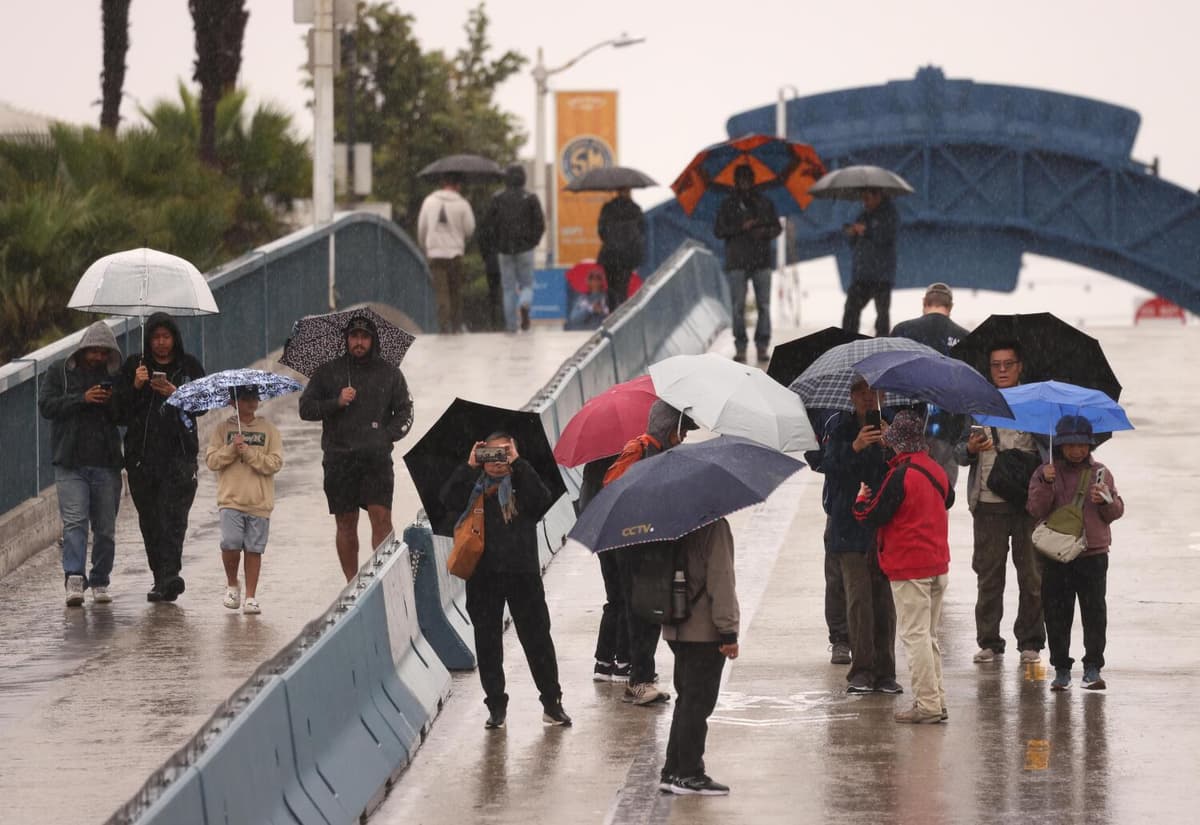
Heavier Storms and Longer Dry Spells Are Drying California and the West
Why It Matters
The shift undermines existing water‑management strategies, heightening drought risk and threatening agriculture, urban supply, and ecosystem health across the West.
Key Takeaways
- •Rainfall now arrives in fewer, heavier storms across the West
- •Longer dry spells between storms increase soil dryness and evaporation
- •Rocky Mountains precipitation intensity rose ~20%, shrinking Colorado River flow
- •Current drought‑flood policies insufficient for concentrated rainfall patterns
Pulse Analysis
The study’s core insight is that climate‑driven changes in precipitation intensity matter more than total rainfall totals. As the atmosphere warms, it holds more moisture, releasing it in intense downpours that the land cannot absorb quickly. Excess water runs off, evaporates, or pools temporarily, leaving soils parched during extended inter‑storm intervals. This mechanism explains why regions like Northern California and the Rockies are seeing higher drought indices even as annual precipitation remains steady or climbs.
Water managers and policymakers must rethink supply‑demand calculations in light of these findings. Traditional drought metrics that focus on cumulative precipitation miss the critical timing factor that determines aquifer recharge and snowpack accumulation. With the Colorado River already in a historic megadrought, a 20% increase in storm concentration threatens downstream agricultural users, urban utilities, and hydroelectric generation. Adaptation strategies may include expanding stormwater capture infrastructure, revising reservoir operating rules, and incentivizing land‑use practices that enhance infiltration during heavy events.
Globally, the pattern mirrors observations in other climate‑sensitive regions, suggesting a universal shift toward “flashier” hydrology. Climate models project that atmospheric‑river events will become more frequent in the Pacific‑Northwest, while Southern California may experience modest drying. Preparing for this new regime requires integrated planning that couples flood mitigation with drought resilience, leveraging real‑time satellite monitoring and predictive analytics. The research underscores that effective climate adaptation hinges on recognizing not just how much rain falls, but when and how it falls.
Heavier storms and longer dry spells are drying California and the West
Comments
Want to join the conversation?
Loading comments...