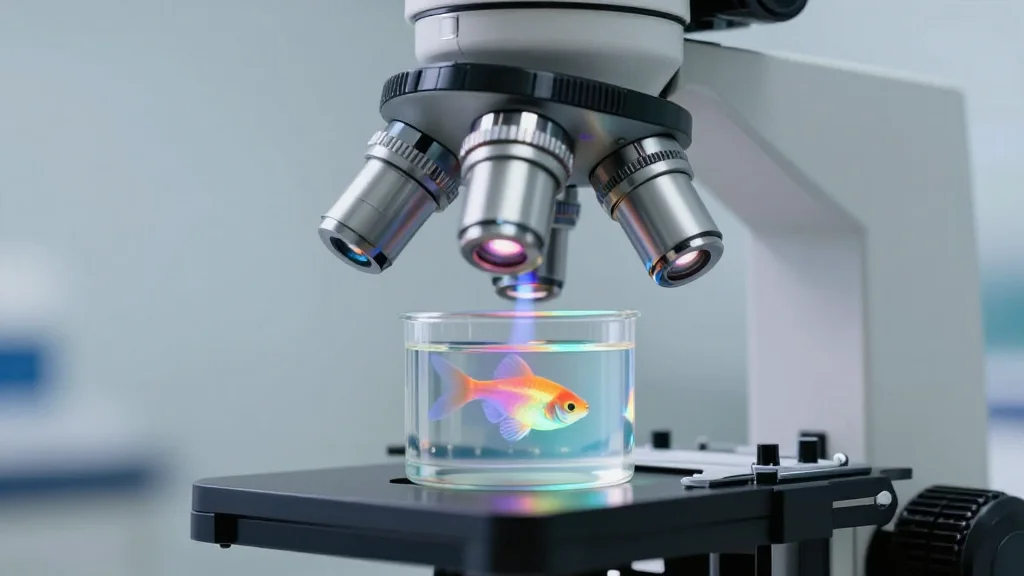
Hi-Res Microscopes Give Biologists Petabytes of Data. Scientists Are Creating an AI Assistant to Make Sense of It
Why It Matters
MOSAIC’s data volume exceeds human analytical capacity, so an AI assistant is essential for turning raw imaging into actionable biological insights, accelerating discovery in fields from developmental biology to cancer research.
Key Takeaways
- •MOSAIC combines 12 imaging modalities in one switchable instrument
- •Petabyte‑scale 5D movies capture cells, tissues, and whole organisms
- •AI vision‑language model will enable natural‑language queries of imaging data
- •Cell Observatory aims to make high‑resolution imaging a routine discovery tool
Pulse Analysis
The launch of MOSAIC marks a watershed moment for bioimaging, merging light‑sheet, super‑resolution, multi‑photon and label‑free techniques into a single, adaptable platform. By delivering five‑dimensional data—spatial, temporal and spectral—researchers can now observe cellular processes in living tissue with a fidelity that was previously limited to static snapshots. This capability is especially valuable for studying dynamic events such as embryonic development, tissue regeneration, and metastatic cancer, where the interplay of thousands of proteins unfolds over minutes to days.
However, the sheer scale of MOSAIC’s output—petabytes of high‑resolution video—creates a bottleneck that traditional image analysis tools cannot overcome. To address this, Berkeley’s Advanced Bioimaging Center is training a large vision‑language model (LVLM) designed to reason across three spatial dimensions, time, and molecular identity. By allowing scientists to ask questions like “How many macrophages infiltrate the wound?” the AI acts as a conversational interface, turning raw movies into quantifiable metrics and hypothesis‑driven insights. This approach mirrors the broader trend of embedding generative AI into scientific workflows, where language models serve as both data curators and analytical partners.
The broader implications extend beyond academia. Pharmaceutical pipelines that rely on high‑content screening could leverage MOSAIC‑AI to accelerate target validation and drug‑response profiling, reducing time‑to‑market. Moreover, the open‑source nature of the microscope’s design—already replicated in over a dozen labs—promises rapid dissemination of the technology, fostering a new ecosystem where AI‑augmented imaging becomes a standard research tool. As the Cell Observatory initiative matures, it could redefine how biologists explore the living world, turning petabyte‑scale visual data into a readily searchable knowledge base.
Hi-res microscopes give biologists petabytes of data. Scientists are creating an AI assistant to make sense of it
Comments
Want to join the conversation?
Loading comments...