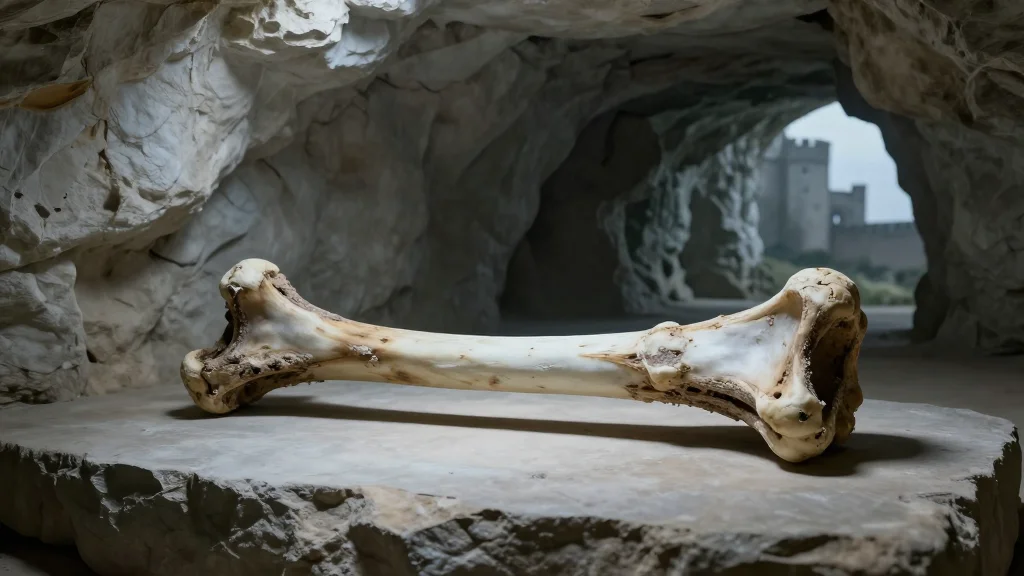
Hidden Cave, Hippo Bones Under Welsh Castle May Rewrite History
Why It Matters
The cave offers an unprecedented archive of Britain’s deep‑time environment and human presence, potentially reshaping theories on species migration and early human settlement in the British Isles.
Key Takeaways
- •Hippo bones date to 120,000‑year‑old interglacial period
- •Cave may contain Neanderthal and early Homo sapiens evidence
- •Excavation spans five years, led by University of Aberdeen
- •Finds include mammoth, woolly rhino, reindeer, wild horse
- •Site could reshape understanding of Britain’s prehistoric climate
Pulse Analysis
The discovery of Wogan Cavern beneath Pembroke Castle adds a remarkable chapter to Britain’s archaeological record. While the medieval fortress is famed as the birthplace of Henry VII, the subterranean chamber reveals a landscape once teeming with megafauna such as hippos, mammoths and woolly rhinoceroses. These remains, dated to the last interglacial period roughly 120,000 years ago, suggest that southern Britain experienced a climate warm enough to support species now associated with Africa and the Eurasian steppe. The find challenges long‑standing assumptions about the island’s paleoclimate and its capacity to host large mammals during interglacial windows.
Beyond the fauna, the cave’s stratigraphy holds promise for unraveling human occupation patterns spanning multiple epochs. Preliminary evidence points to Neanderthal activity, followed by early Homo sapiens presence between 45,000 and 35,000 years ago, and later hunter‑gatherer use after the last Ice Age. Modern analytical techniques—ancient DNA sequencing, isotopic climate reconstruction, and high‑resolution 3D mapping—will allow researchers to piece together dietary habits, migration routes, and environmental shifts with unprecedented precision. Such interdisciplinary insights are vital for understanding how early humans adapted to rapid climate fluctuations, a lesson increasingly relevant in today’s warming world.
The project also carries significant cultural and economic implications. By integrating the cave’s narrative into Pembroke Castle’s visitor experience, the site can attract scholars, tourists and heritage enthusiasts alike, boosting regional tourism. Collaboration between the University of Aberdeen, local authorities and international research institutions exemplifies a model for leveraging academic discoveries to benefit communities. As excavations progress over the next five years, the findings are poised to influence textbooks, museum exhibits, and future funding priorities for prehistoric research across Europe.
Hidden cave, hippo bones under Welsh castle may rewrite history
Comments
Want to join the conversation?
Loading comments...