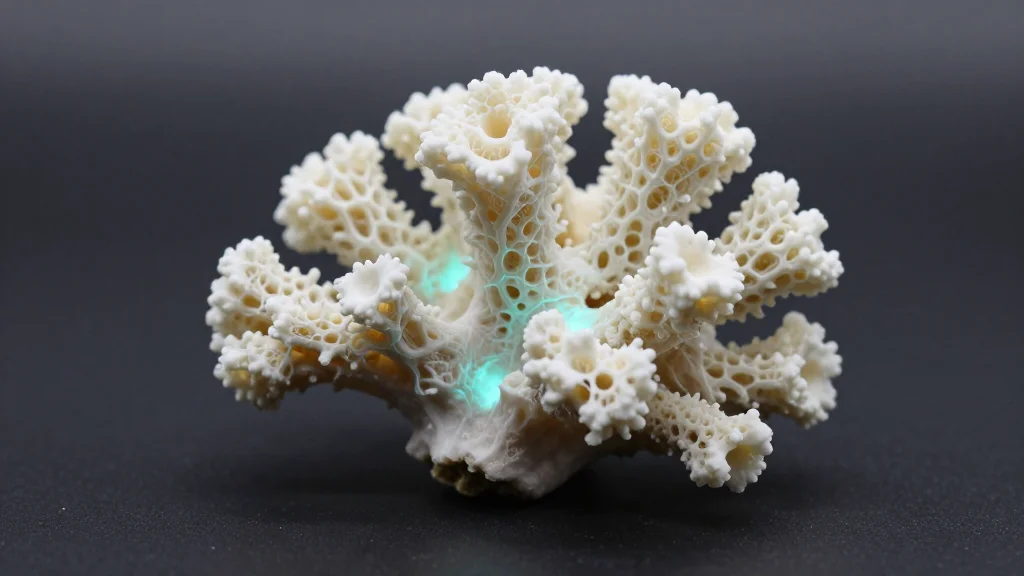
Hidden Damage in Stony Corals Revealed Using 3D Imaging and AI
Why It Matters
The breakthrough provides a rapid, non‑destructive way to quantify disease‑induced structural damage, enabling more precise reef‑risk assessments and targeted restoration efforts.
Key Takeaways
- •Micro‑CT + AI achieves >98% accuracy segmenting coral skeletons
- •Attention U‑Net reduces segmentation time to seven hours
- •Study maps hidden porosity changes in SCTLD‑affected corals
- •Findings differentiate disease impact between Montastraea cavernosa and Porites astreoides
- •Technique offers scalable tool for reef health monitoring
Pulse Analysis
Coral reefs worldwide face mounting threats, with Florida's Stony Coral Tissue Loss Disease (SCTLD) decimating key reef‑building species since 2014. Traditional microscopy methods struggle to capture the minute alterations in coral skeletons that underlie structural weakening, leaving scientists with an incomplete picture of disease impact. Understanding these microscopic changes is essential because skeletal integrity determines a reef's ability to withstand storms, erosion, and further biological stressors.
Enter X‑ray micro‑computed tomography (micro‑CT), a non‑invasive imaging technique that renders three‑dimensional reconstructions of coral skeletons down to individual pores. By pairing micro‑CT data with convolutional neural networks—specifically U‑Net, U‑Net++ and Attention U‑Net—the FAU team automated segmentation of skeletal material versus voids. All models surpassed 98% accuracy, but Attention U‑Net stood out, halving processing time to just seven hours for high‑resolution datasets. This speed‑accuracy combo unlocks the ability to analyze large sample sets quickly, delivering quantitative maps of porosity, density, and thickness that were previously invisible.
The implications extend beyond academic insight. Precise 3D skeletal maps enable reef managers to identify colonies most vulnerable to collapse, prioritize restoration sites, and monitor the efficacy of intervention strategies over time. Moreover, the workflow is adaptable to other biomineralized structures, engineered composites, and geological samples, suggesting a broader revolution in materials analysis. As climate change accelerates ocean warming, tools that swiftly reveal hidden damage will be pivotal in safeguarding the structural backbone of coral ecosystems.
Hidden damage in stony corals revealed using 3D imaging and AI
Comments
Want to join the conversation?
Loading comments...