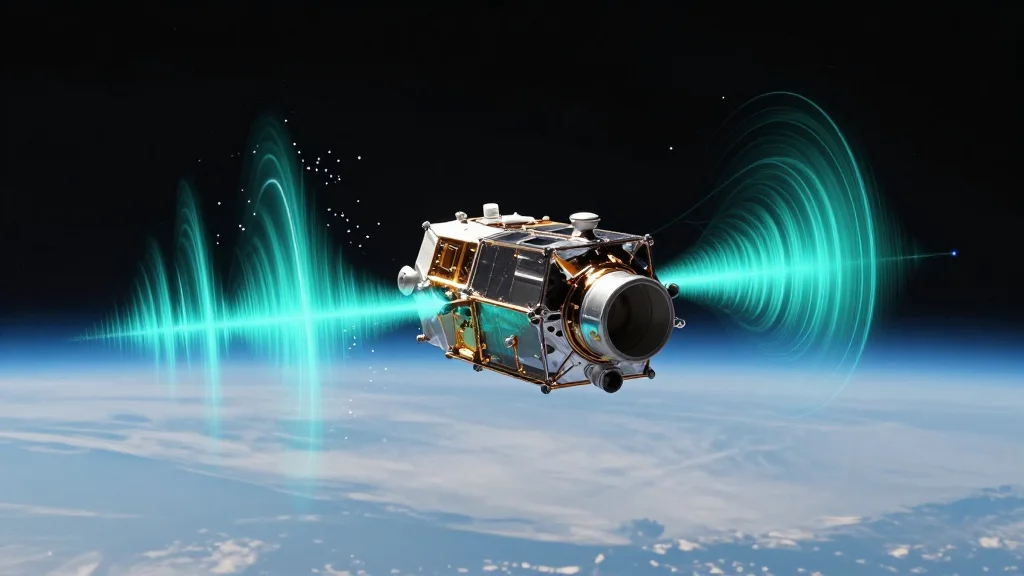
Hidden Electric Space Waves Are Quietly Cleaning Earth's 'Killer' Electrons
Why It Matters
HOQE chorus waves offer a powerful, previously unaccounted‑for pathway for removing hazardous MeV electrons, directly enhancing satellite protection and astronaut safety. Their inclusion in predictive models will sharpen space‑weather forecasts, reducing costly disruptions to communications and navigation systems.
Key Takeaways
- •HOQE chorus waves dominate electron scattering at high oblique angles
- •Waves thrive in low‑density plasma pockets, boosting electric field strength
- •Scattering removes electrons up to 2 MeV, reducing satellite risk
- •Incorporating HOQE waves improves radiation belt forecasting models
- •Findings reshape understanding of magnetospheric self‑regulation mechanisms
Pulse Analysis
The Van Allen radiation belts have long been a double‑edged sword for Earth: they shield the planet from solar radiation but also trap high‑energy electrons that can degrade satellite components and endanger crewed missions. Traditional space‑weather models attribute electron loss primarily to magnetic‑dominant chorus waves that travel parallel to Earth’s field lines. While these models capture many aspects of belt dynamics, they have consistently under‑predicted the rate at which the most dangerous, relativistic electrons disappear, leaving a critical gap in forecasting capabilities.
Recent analysis of Van Allen Probes measurements (2013‑2015) uncovers a covert population of highly oblique quasi‑electrostatic (HOQE) chorus waves. By leaning at extreme angles, these waves suppress their magnetic component and amplify an electric field that can resonate with electrons up to 2 MeV. In low‑density plasma pockets—regions where particle collisions are scarce—the electric punch becomes especially effective, driving higher‑order resonances that scatter electrons into the atmosphere. This mechanism operates far more efficiently than standard diffusion processes, offering a concrete explanation for the rapid clearing of the inner belt’s most hazardous particles.
The practical implications are substantial. Satellite operators rely on accurate radiation forecasts to schedule maneuvers, protect hardware, and avoid costly downtime. By integrating HOQE wave dynamics and realistic plasma density profiles into global magnetospheric models, forecasters can better anticipate sudden spikes or drops in MeV electron fluxes. Moreover, the discovery highlights the Earth’s innate ability to self‑regulate its radiation environment, a factor that could inform the design of next‑generation spacecraft shielding and mission planning for lunar or Martian endeavors. Continued research into these electric‑heavy waves promises to refine our understanding of space weather and safeguard the increasingly crowded orbital ecosystem.
Hidden electric space waves are quietly cleaning Earth's 'killer' electrons
Comments
Want to join the conversation?
Loading comments...