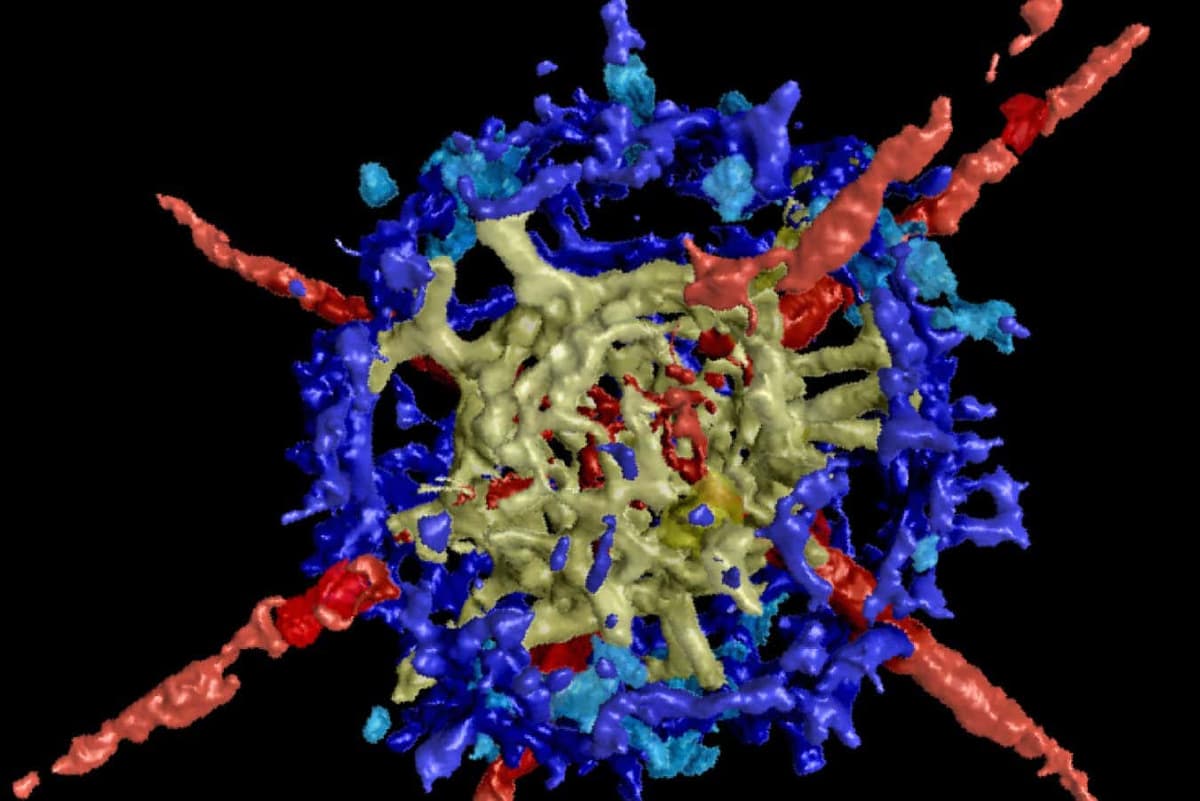
Hidden Fossils Reveal Secrets of Oceans Before Major Mass Extinction
Why It Matters
The discovery shows that diverse, carbon‑cycling plankton thrived before the Late Ordovician crisis, offering new clues about how marine ecosystems respond to rapid environmental change.
Key Takeaways
- •20 microfossils from 445‑million‑year‑old rock reveal eight species
- •New radiolarian species has elongated spines and unique pore pattern
- •X‑ray tomography reconstructed fossils without damaging specimens
- •Findings suggest sophisticated oceanic carbon pump before Ordovician extinction
- •Micro‑rock analysis can refine timelines of past biodiversity crises
Pulse Analysis
Advanced imaging techniques are redefining the limits of paleontological research. By applying high‑resolution X‑ray tomography to a sub‑millimetric rock fragment, scientists have extracted a wealth of data that traditional thin‑section methods would have missed. This non‑destructive approach preserves delicate microfossils while delivering three‑dimensional reconstructions, allowing researchers to identify subtle morphological features such as internal chamber arrangements and surface ornamentation. The ability to study such minute specimens opens a new frontier for uncovering hidden biodiversity in the deep past.
The Late Ordovician mass extinction, responsible for the loss of roughly 85% of marine species, has long been linked to dramatic climate shifts and sea‑level changes. The newly documented radiolarian diversity indicates that planktonic communities were already highly complex before the crisis, suggesting a robust carbon‑pumping mechanism that could have moderated oceanic chemistry. Understanding the pre‑extinction state of these microscopic organisms helps scientists model how carbon cycling and food‑web dynamics were altered during the event, providing a clearer picture of the feedback loops that amplified environmental stress.
Beyond its immediate scientific value, the study highlights the broader potential of micro‑rock analysis for reconstructing Earth’s evolutionary timeline. Similar techniques can be applied to other understudied sedimentary deposits, potentially revealing undiscovered species and refining extinction chronologies. As modern climate change accelerates oceanic shifts, insights from ancient planktonic ecosystems offer valuable analogues for predicting how current marine life may adapt—or falter—in response to rapid environmental perturbations.
Hidden fossils reveal secrets of oceans before major mass extinction
Comments
Want to join the conversation?
Loading comments...