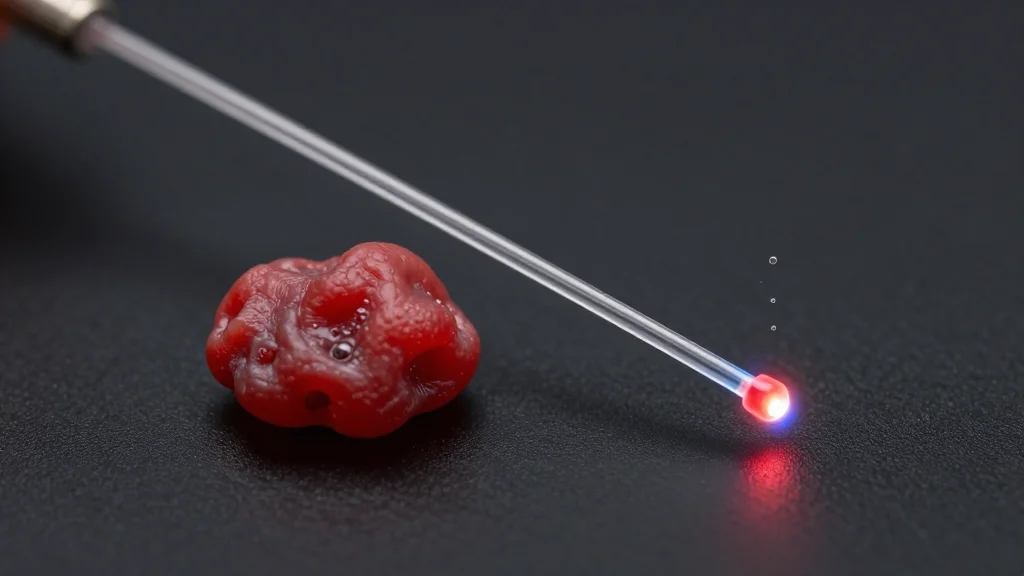
Hierarchically Multifunctional Fiber‐optic Theranostic Probe for Cancer Photothermal‐photodynamic Synergism
Why It Matters
By solving photodynamic therapy’s hypoxia and light‑penetration challenges, the probe could broaden optical oncology to previously untreatable tumors, boosting efficacy and safety.
Key Takeaways
- •Layered fiber probe separates sensor, photosensitizer, and oxygen generator.
- •Oxygen generator (CaO2@LA) restores PDT efficacy in hypoxic tumors.
- •In vivo mouse model achieved full tumor growth inhibition.
- •Dissolved‑oxygen sensor resolves 0.12 mg/L with 1 s response time.
Pulse Analysis
Photodynamic therapy (PDT) has long been limited by shallow light penetration and the oxygen‑starved microenvironment of solid tumors. The new fiber‑optic theranostic probe tackles these hurdles through a spatially stratified design that leverages evanescent‑field excitation. An inner Ru(dpp) layer provides real‑time dissolved‑oxygen (DO) readings, an outer indocyanine‑green (ICG) layer generates reactive oxygen species when illuminated, and a thermally triggered calcium peroxide (CaO2@LA) coating releases oxygen on demand. This separation prevents signal interference while delivering oxygen precisely where PDT needs it most.
Preclinical validation underscores the probe’s dual capability. In vitro, the sensor achieved a resolution of 0.12 mg/L and responded within one second, enabling rapid detection of hypoxic niches. Concurrently, the combined photothermal‑photodynamic regimen produced robust ROS generation under mild hyperthermia, enhancing tumor cell kill without excessive heating. In murine models, the device mapped intratumoral hypoxia heterogeneity point‑by‑point and achieved complete inhibition of tumor growth, demonstrating both diagnostic precision and therapeutic potency in a single minimally invasive insertion.
The clinical implications are significant. By integrating oxygen sensing with synergistic therapy, the probe could expand the reach of optical oncology to deep‑seated malignancies that are currently unsuitable for conventional PDT. Its modular architecture aligns with existing fiber‑optic delivery systems, potentially easing regulatory pathways and adoption in interventional suites. Future work will focus on scaling the technology for human trials, optimizing light delivery wavelengths, and exploring combinatorial regimens with immunotherapy, positioning the platform as a next‑generation solution for precision cancer care.
Hierarchically Multifunctional Fiber‐optic Theranostic Probe for Cancer Photothermal‐photodynamic Synergism
Comments
Want to join the conversation?
Loading comments...