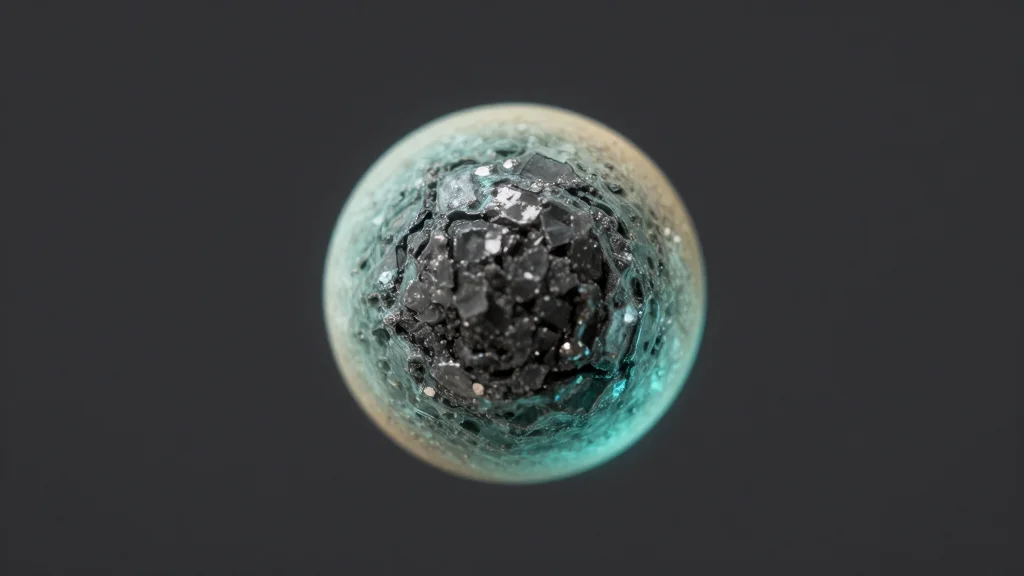
High‐Entropy Gradient‐Like Design Enables 4.7 V High‐Stability LiCoO2 for Lithium‐Ion Battery
Why It Matters
By stabilizing LiCoO₂ at voltages above 4.7 V, the technology enables higher energy density without sacrificing cycle life, addressing a key bottleneck for next‑generation smartphones and electric‑vehicle batteries.
Key Takeaways
- •1.35 nm high‑entropy coating suppresses side reactions at 4.7 V
- •Subsurface gradient doping limits lattice distortion during O3‑H1‑3‑O1 transition
- •Delivers 197 mAh g⁻¹ at 1C with 92.4% retention over 400 cycles
- •Full pouch cell achieves 210 mAh g⁻¹ at 0.5C and 95.5% after 100 cycles
- •High‑entropy design improves Li⁺ diffusion kinetics and high‑voltage stability
Pulse Analysis
The race for higher energy density in lithium‑ion batteries has pushed researchers to operate cathodes at ever‑higher voltages. Lithium cobalt oxide (LiCoO₂) remains attractive because of its high volumetric capacity and mature manufacturing base, yet conventional LCO suffers rapid capacity fade and safety concerns once the cut‑off voltage exceeds 4.7 V. At elevated potentials the crystal lattice undergoes an O3‑H1‑3‑O1 phase transition that triggers oxygen release, surface electrolyte oxidation, and mechanical strain. Overcoming these degradation pathways is essential for extending the runtime of premium smartphones, wearables, and electric‑vehicle platforms that demand compact, high‑energy packs.
The study introduces a high‑entropy gradient‑like architecture that tackles both surface chemistry and bulk stability in a single step. An ultra‑thin (1.35 nm) coating composed of TiO₂, Al₂O₃, MgO, In₂O₃ and La₂O₃ creates a chemically inert barrier, curbing parasitic side reactions while preserving electronic conductivity. Beneath the coating, a 1 nm gradient of the same oxides is doped into the LCO lattice, softening the structural strain associated with the O3‑H1‑3‑O1 transition. In‑situ spectroscopy and density‑functional theory calculations reveal that the high‑entropy layer homogenizes local charge distribution, accelerates Li⁺ diffusion, and stabilizes the oxygen framework.
Electrochemical testing validates the concept: half‑cell measurements show 197 mAh g⁻¹ at 1C with 92.4% capacity retention after 400 cycles, while a full LCO//graphite pouch cell delivers 210 mAh g⁻¹ at 0.5C and retains 95.5% after 100 cycles within a 3–4.6 V window. These figures translate into a noticeable boost in volumetric energy density and a longer service life compared with legacy LCO cathodes. For manufacturers, the approach leverages existing coating equipment and modest material additions, offering a scalable route to high‑voltage batteries that could accelerate adoption in premium consumer electronics and future electric‑vehicle models.
High‐Entropy Gradient‐Like Design Enables 4.7 V High‐Stability LiCoO2 for Lithium‐Ion Battery
Comments
Want to join the conversation?
Loading comments...