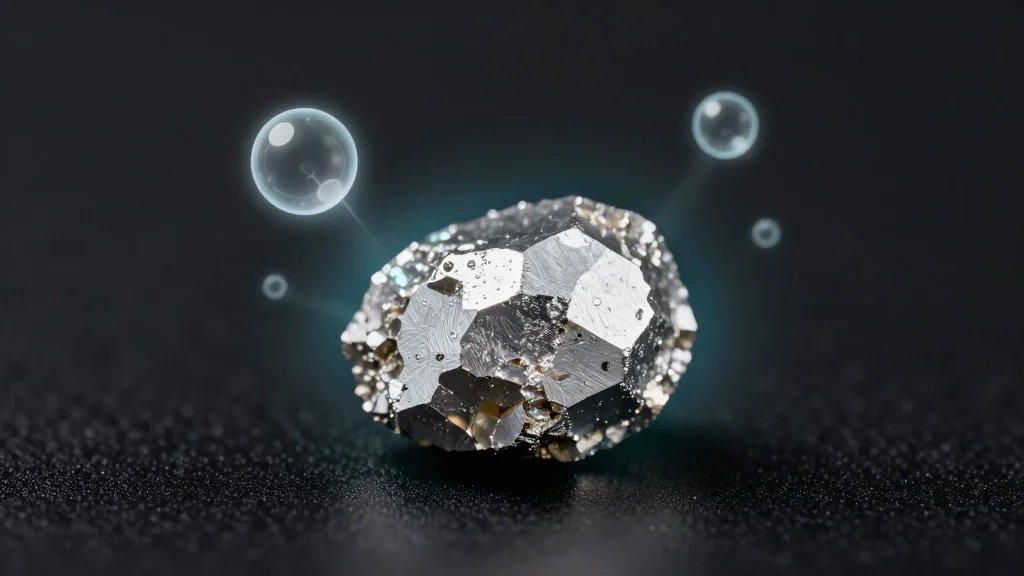
Highly Selective Electroreduction of CO2 to Formate Over Intermetallic Ag3Sn Catalysts
Why It Matters
A catalyst that converts CO₂ to formate with >90% efficiency accelerates carbon‑capture value chains and reduces dependence on fossil‑derived chemicals, making sustainable chemical production more viable.
Key Takeaways
- •Ag3Sn intermetallic delivers 92.3% Faradaic efficiency for formate
- •DFT shows Ag3Sn optimally binds HCOO* intermediate
- •Excess Ag or SnO2 reduces selectivity, confirming phase importance
- •Hydrogen spillover pathway enhances formate production over physical mixtures
Pulse Analysis
Electrochemical reduction of carbon dioxide has emerged as a promising route to transform a greenhouse gas into market‑ready chemicals. Among the myriad products, formate stands out for its applications in fuel cells, textile processing, and as a hydrogen‑storage vector. Traditional catalysts face a trade‑off: silver excels at converting CO₂ to carbon monoxide, while tin favors formate but suffers from low current densities and stability issues. Researchers have therefore pursued Ag‑Sn composites, hoping to blend the strengths of each metal, yet the precise active sites driving selectivity remained ambiguous.
The breakthrough comes from pinpointing the intermetallic Ag₃Sn phase as the decisive structure for formate production. Density‑functional theory calculations reveal that the ordered lattice creates a synergistic electronic environment that weakens competing CO pathways and stabilizes the HCOO* intermediate, lowering the reaction barrier. Experimentally, electrodes fabricated with pure Ag₃Sn deliver a Faradaic efficiency of 92.3% for HCOOH at –1.0 V versus RHE, surpassing both pure Ag and SnO₂ controls. Control studies demonstrate that adding extra Ag or SnO₂ dilutes the intermetallic’s unique surface geometry, reducing selectivity and confirming that the ordered phase—not merely a physical mixture—is essential.
From an industry perspective, the Ag₃Sn catalyst offers a scalable pathway to high‑purity formate using renewable electricity. Its superior selectivity reduces downstream separation costs, while the modest operating voltage aligns with the efficiency targets of electrolyzer manufacturers. The hydrogen spillover mechanism identified in the study suggests that catalyst designs leveraging interfacial hydrogen transport could further boost performance. As policymakers and investors prioritize carbon‑neutral chemical production, catalysts like Ag₃Sn that combine efficiency, durability, and product specificity are poised to become cornerstones of the emerging CO₂‑value‑chain ecosystem.
Highly Selective Electroreduction of CO2 to Formate Over Intermetallic Ag3Sn Catalysts
Comments
Want to join the conversation?
Loading comments...