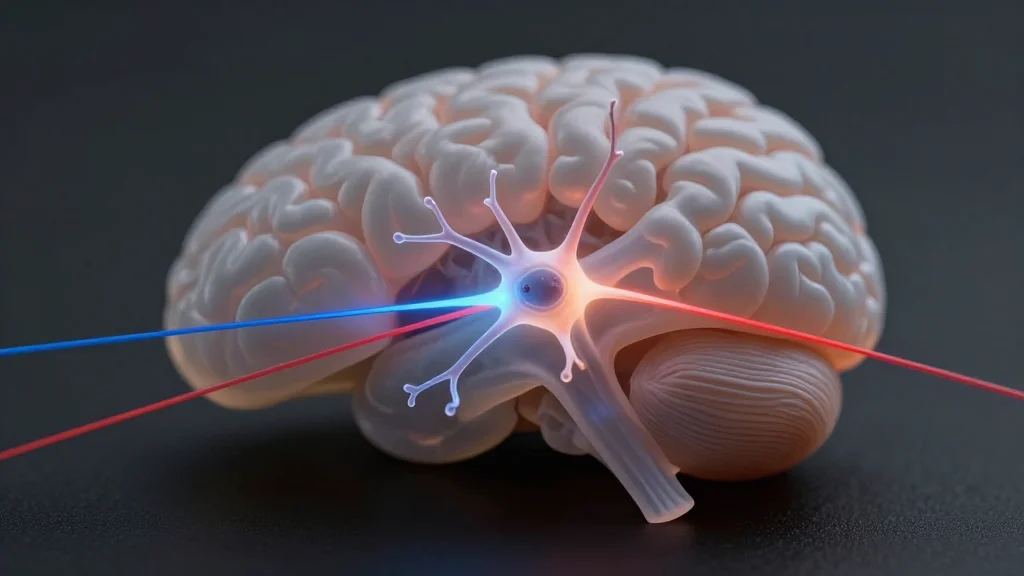
Hippocampal Pathways Merge to Integrate Spatial and Motivational Signals in Reward Processing
Why It Matters
Integrating spatial and emotional signals at the neuronal level reshapes our understanding of decision‑making circuitry and opens new therapeutic avenues for neuropsychiatric conditions that involve reward dysfunction.
Key Takeaways
- •Dorsal and ventral hippocampus converge on nucleus accumbens neurons
- •Combined inputs produce synergistic, super‑additive neuronal responses
- •Optogenetic dual‑color stimulation mapped precise hippocampal‑accumbens synapses
- •Disrupted convergence may underlie depression, addiction, and anxiety
- •Future work will link cellular integration to real‑world behavior
Pulse Analysis
The hippocampus has long been split into two functional domains: the dorsal region that maps space and the ventral region that encodes emotion. The UMBC study overturns this dichotomy by demonstrating that both streams feed directly into the same medium spiny neurons of the ventromedial nucleus accumbens. This anatomical convergence creates a neural hub where a "where" map meets a "why" valuation, allowing the brain to rapidly associate a location with its reward significance. By revealing that the two inputs interact in a super‑additive fashion, the research provides a mechanistic explanation for how contextual memories can amplify motivational drives.
Cutting‑edge dual‑color optogenetics enabled the researchers to activate dorsal and ventral hippocampal fibers independently while recording real‑time electrophysiological responses. The precise control of red and blue light, combined with ultrathin 0.2‑micron brain slice imaging, uncovered synapses positioned mere microns apart on the same dendritic branches. This proximity underlies the observed synergistic firing, suggesting that even subtle changes in one pathway could disproportionately affect reward processing. Such insights are especially relevant for neuropsychiatric disorders, where dysregulated hippocampal‑accumbens communication may contribute to the anhedonia of depression or the compulsive seeking in addiction.
Looking ahead, the lab plans to translate these cellular findings into behavioral paradigms, tracking identified neurons during navigation and reward‑based tasks. Mapping how stress, drugs, or therapeutic interventions remodel this integrative circuit could yield biomarkers for motivation‑related illnesses and inform the design of targeted neuromodulation therapies. Moreover, the principle of convergent hippocampal inputs may extend to other brain regions, hinting at a broader neural strategy for binding environmental cues with affective states, a cornerstone of adaptive behavior.
Hippocampal Pathways Merge to Integrate Spatial and Motivational Signals in Reward Processing
Comments
Want to join the conversation?
Loading comments...