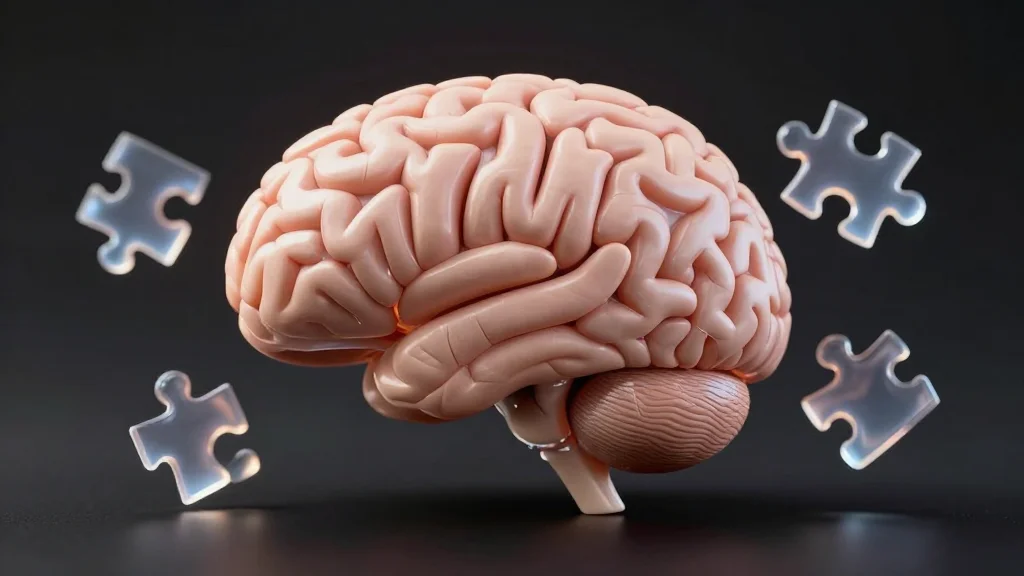
Hippocampal Ripples and Replay Reveal How Brain Recombines Past Knowledge for Flexible Planning
Why It Matters
Understanding ripple‑driven replay clarifies how the brain recombines memories for adaptive decision‑making, offering targets for treating planning deficits and guiding brain‑inspired AI architectures.
Key Takeaways
- •Study recorded intracranial EEG from 28 epilepsy patients during inference tasks.
- •Hippocampal ripples triggered rapid replay of past experiences.
- •mPFC representations shifted toward inferred solutions during ripple events.
- •Replay strength predicted participants' inferential performance.
- •Findings may inform AI models that emulate human compositional reasoning.
Pulse Analysis
The ability to solve novel problems by reusing fragments of past experience defines human cognition. The hippocampus is known for memory consolidation, while the medial prefrontal cortex (mPFC) supports goal‑directed planning. How these regions stitch old elements into new solutions has been unclear. Intracranial electrophysiology now captures millisecond‑scale hippocampal ripples—brief high‑frequency bursts linked to memory replay. Observing ripples in awake, task‑engaged humans lets researchers probe real‑time reorganization of information. These findings also revive long‑standing theories that memory replay supports on‑the‑fly problem solving.
Using intracranial EEG from 28 epilepsy patients, the international team presented two LEGO‑like inference tasks that required participants to combine familiar shapes into novel silhouettes. Analysis revealed that hippocampal ripples consistently preceded rapid replay of sequence fragments, and that the mPFC updated its activity patterns to reflect the inferred relational configuration. The strength of replay during ripple windows correlated with faster, more accurate solutions, indicating a causal link between ripple‑driven replay and efficient planning. These results confirm that hippocampal‑mPFC communication implements a compositional coding scheme in real time.
The discovery that brief ripple events orchestrate cortical recombination has broad ramifications. Clinically, disruptions in ripple‑mediated replay may underlie planning deficits observed in schizophrenia, Alzheimer's disease, and other disorders, suggesting new biomarkers or stimulation targets. In artificial intelligence, mimicking this fast, hierarchical replay could improve generative models that need to flexibly recombine learned primitives for novel tasks. Future work will test whether enhancing ripple activity can boost inferential performance, bridging basic neuroscience with therapeutic and computational innovation. Such cross‑disciplinary insights could accelerate the development of neuromorphic systems that learn from fewer examples.
Hippocampal ripples and replay reveal how brain recombines past knowledge for flexible planning
Comments
Want to join the conversation?
Loading comments...