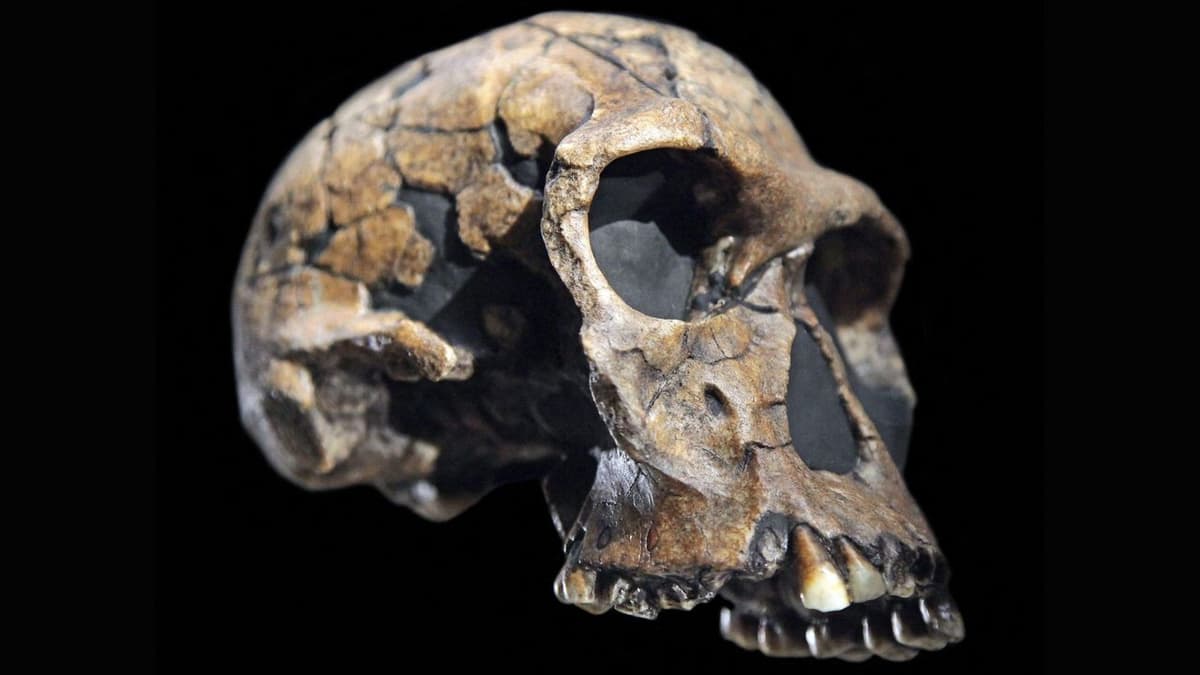
Homo Habilis Is the Earliest Named Human. But Is It Even Human?
Why It Matters
The classification of H. habilis influences our understanding of when distinctly human traits emerged, affecting models of brain and locomotor evolution. Resolving its taxonomic status could reshape timelines for the origin of the Homo lineage.
Key Takeaways
- •New 2‑million‑year‑old skeleton shows ape‑like arms.
- •Brain size larger than australopiths but smaller than modern humans.
- •Debate resurfaces over genus classification of Homo habilis.
- •Some propose moving habilis to Australopithecus; others retain Homo.
- •Arm length reduction likely gradual, not driven by tool use.
Pulse Analysis
The 2026 discovery of a partial Homo habilis skeleton in Kenya provides the most detailed view yet of the species’ upper limb anatomy. Measuring roughly 2 million years old, the fossil exhibits elongated forearms and curved phalanges, traits more characteristic of tree‑climbing australopiths than of later Homo members. Coupled with a cranial capacity estimated at 45 % of modern humans, the specimen straddles the line between primitive and derived features, prompting fresh scrutiny of early hominin taxonomy.
The anatomical paradox has reignited a long‑standing debate among paleoanthropologists about genus boundaries. Proponents of reclassification argue that the ape‑like arms and overall limb proportions align H. habilis more closely with Australopithecus, suggesting a rename to Australopithecus habilis or the creation of a distinct genus. Opponents counter that brain size, dental morphology, and tool‑use evidence retain a clear Homo signal, emphasizing that early Homo likely retained ancestral arm lengths during a gradual evolutionary shift toward bipedalism. This discourse reflects broader methodological tensions in the field, where morphological, genetic, and behavioral data must be weighed against evolving species concepts.
Beyond academic taxonomy, the controversy bears on our broader narrative of human evolution. Determining when hallmark Homo traits—larger brains, refined dentition, and reduced forelimb length—emerged informs models of cognitive and cultural development, including the advent of stone tool industries. As new fossils continue to fill gaps, the Homo habilis debate illustrates the fluidity of evolutionary pathways and underscores the need for interdisciplinary approaches to reconstruct our deep past.
Homo habilis is the earliest named human. But is it even human?
Comments
Want to join the conversation?
Loading comments...