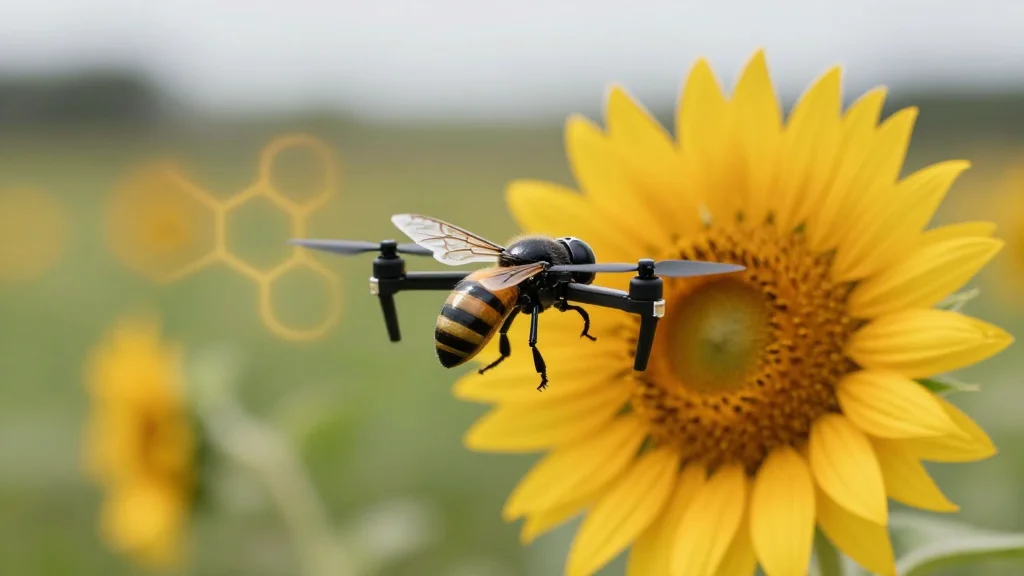
Honeybees Teach Drones How to Navigate
Why It Matters
Bee‑Nav dramatically reduces the computational and energy load of autonomous drones, opening cost‑effective, safe solutions for precision agriculture and other GPS‑restricted applications.
Key Takeaways
- •Bee‑Nav uses 42 KB neural memory for homing
- •Drone learns from a brief flight capturing panoramic images
- •Successful 600 m return demonstrated in outdoor field lab
- •Wind reduces success to 70 % due to image distortion
Pulse Analysis
The rise of bio‑inspired robotics is reshaping how autonomous systems navigate complex, GPS‑denied spaces. Traditional drone navigation relies on dense mapping and heavy processors, inflating cost and power consumption. By studying honeybees—nature's most efficient long‑range foragers—researchers identified a minimalist strategy that couples odometry with a compact visual memory. This approach sidesteps the need for bulky SLAM algorithms, delivering a lean solution that fits on micro‑drones.
Bee‑Nav’s core consists of a 3.4 KB neural network trained during a short “learning flight” near the home base. The drone captures panoramic images, encoding key visual landmarks into a 42 KB memory bank. During outbound travel, odometry estimates distance and direction; as the robot nears home, the visual memory corrects drift, enabling a near‑straight return path. Field trials confirmed reliable homing over 600 m, with a 70 % success rate in windy outdoor conditions, highlighting both the promise and current robustness challenges.
For industry, the technology unlocks lightweight, low‑cost drones capable of continuous greenhouse surveillance, early pest detection, and targeted crop treatment—tasks that demand minimal payload and safe operation around plants and workers. The reduced computational footprint also extends battery life, improving operational efficiency. As the system matures, we can expect broader adoption in logistics, infrastructure inspection, and search‑and‑rescue, where GPS signals are unreliable. Bee‑Nav exemplifies how translating insect cognition into engineering can drive sustainable innovation across the robotics market.
Honeybees teach drones how to navigate
Comments
Want to join the conversation?
Loading comments...