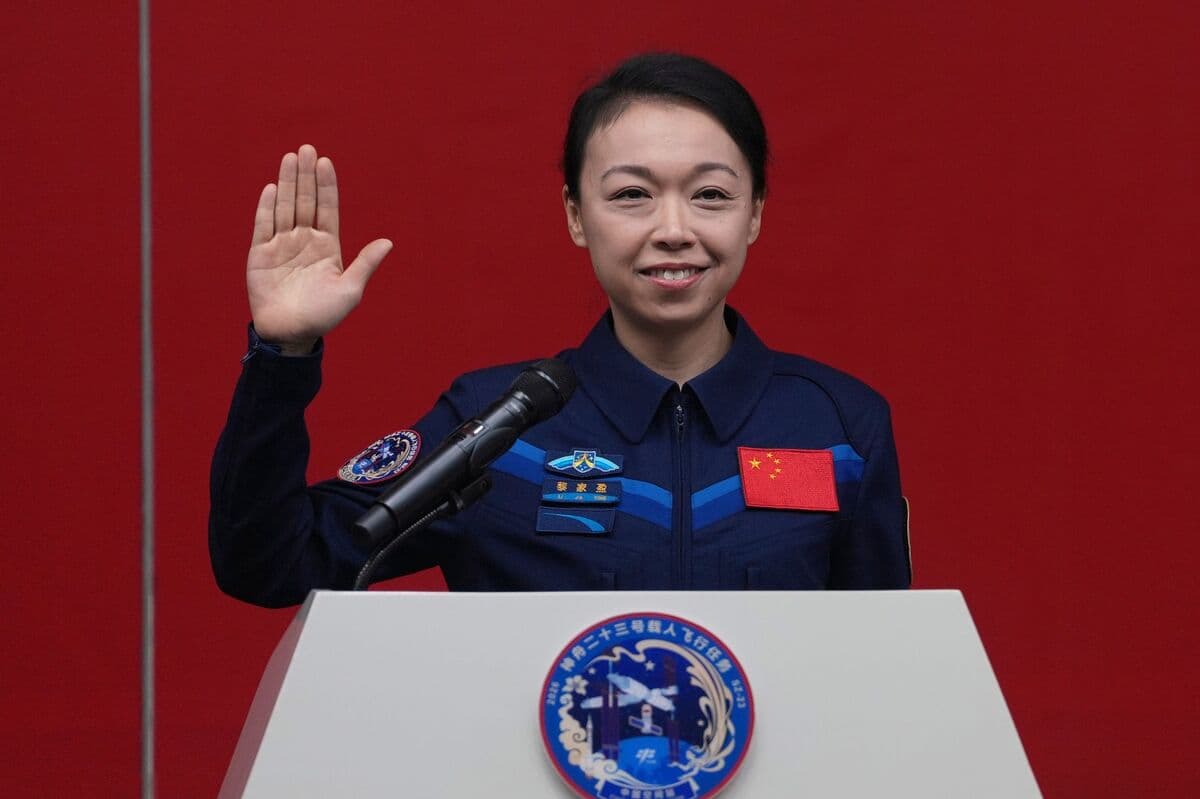
Hong Kong’s First Astronaut Joins Mission to China Space Station
Why It Matters
The mission showcases Hong Kong’s emerging role in advanced aerospace, boosting its global tech reputation and deepening ties with China’s rapidly expanding space ambitions. It also signals new pathways for local talent to participate in high‑profile scientific endeavors.
Key Takeaways
- •Lai Ka‑ying becomes Hong Kong’s first astronaut on Shenzhou‑23.
- •Former police officer holds PhD in computer forensics.
- •Mission marks deeper integration of Hong Kong talent into China’s space program.
- •Chief Executive John Lee calls the flight a historic affirmation of I&T.
Pulse Analysis
Hong Kong’s entry into crewed spaceflight marks a watershed for the city’s science and technology landscape. Lai Ka‑ying, a native of Hong Kong with a background in law enforcement and a PhD in computer forensics, was selected as a payload specialist for the Shenzhou‑23 mission to China’s Tiangong space station. Her appointment reflects a strategic push to leverage Hong Kong’s highly educated workforce in cutting‑edge fields, aligning the region’s talent pool with mainland China’s ambitious space agenda.
The Shenzhou‑23 flight, part of China’s long‑term plan to maintain a continuously inhabited orbital outpost, brings together seasoned Chinese astronauts and now a Hong Kong representative. This integration signals Beijing’s intent to showcase a unified national capability, blending expertise from across its Special Administrative Regions. For the Chinese space program, incorporating diverse technical backgrounds—such as Lai’s computer forensics expertise—enhances mission resilience and data security, crucial as the station expands its scientific payloads and commercial activities.
For Hong Kong, the historic launch could catalyze a new wave of investment in aerospace research, education, and private‑sector partnerships. Local universities may see increased funding for space‑related curricula, while startups could attract venture capital seeking to supply satellite components, AI‑driven analytics, or cybersecurity solutions for orbital operations. In the broader market, the event positions Hong Kong as a bridge between Western investors and China’s space industry, potentially unlocking cross‑border collaborations that drive innovation and economic growth.
Hong Kong’s First Astronaut Joins Mission to China Space Station
Comments
Want to join the conversation?
Loading comments...