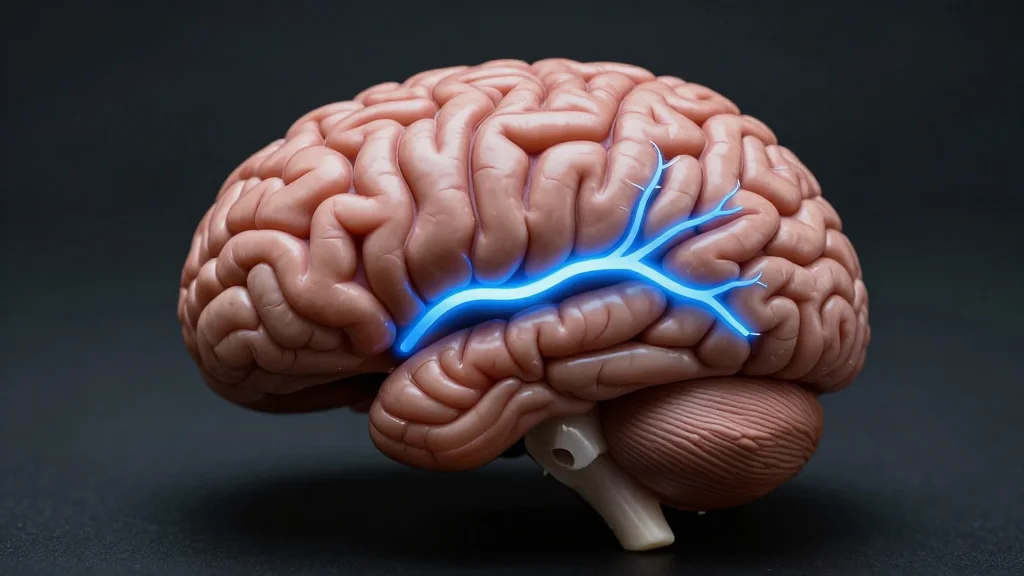
How a Distinct Communication Subspace in the Brain Turns Goals Into Actions
Why It Matters
Understanding how abstract goals become motor commands clarifies a core brain function and opens pathways for brain‑machine interfaces and treatments for planning deficits.
Key Takeaways
- •Researchers identified a low‑dimensional communication subspace linking PFC to M1
- •Study used intracranial recordings from 12 epilepsy patients performing a target task
- •Subspace activity predicts context‑dependent actions better than individual regions
- •Findings may guide neuro‑prosthetic designs that decode intent into movement commands
- •Results could inform therapies for disorders affecting action planning, like Parkinson’s
Pulse Analysis
The discovery of a communication subspace between the prefrontal and motor cortices challenges the prevailing view that inter‑areal coordination relies solely on high‑dimensional neural dynamics. By isolating a low‑dimensional channel that selectively relays behaviorally relevant context, the researchers provide concrete evidence that the brain compresses abstract goals into a streamlined signal before execution. This insight refines theoretical models of cognitive control and offers a measurable target for future electrophysiological studies.
From a technology standpoint, a predictable subspace that bridges intention and movement is a gold mine for brain‑machine interface engineers. Neuro‑prosthetic devices could tap this channel to translate a user’s goal directly into motor commands, reducing latency and improving accuracy compared with decoding raw cortical activity. Likewise, robotics researchers can emulate the subspace architecture to build adaptive controllers that adjust actions based on shifting environmental cues, mirroring human flexibility.
Clinically, the subspace framework may illuminate why conditions such as Parkinson’s disease, schizophrenia, or severe obsessive‑compulsive disorder disrupt goal‑directed behavior. If the relay between PFC and M1 is compromised, patients could struggle to convert plans into actions. Targeted neuromodulation or pharmacological strategies that restore or enhance subspace signaling could become a new therapeutic avenue. However, the current evidence rests on a modest cohort of twelve patients, underscoring the need for larger, diverse samples before translational applications can be validated.
How a distinct communication subspace in the brain turns goals into actions
Comments
Want to join the conversation?
Loading comments...