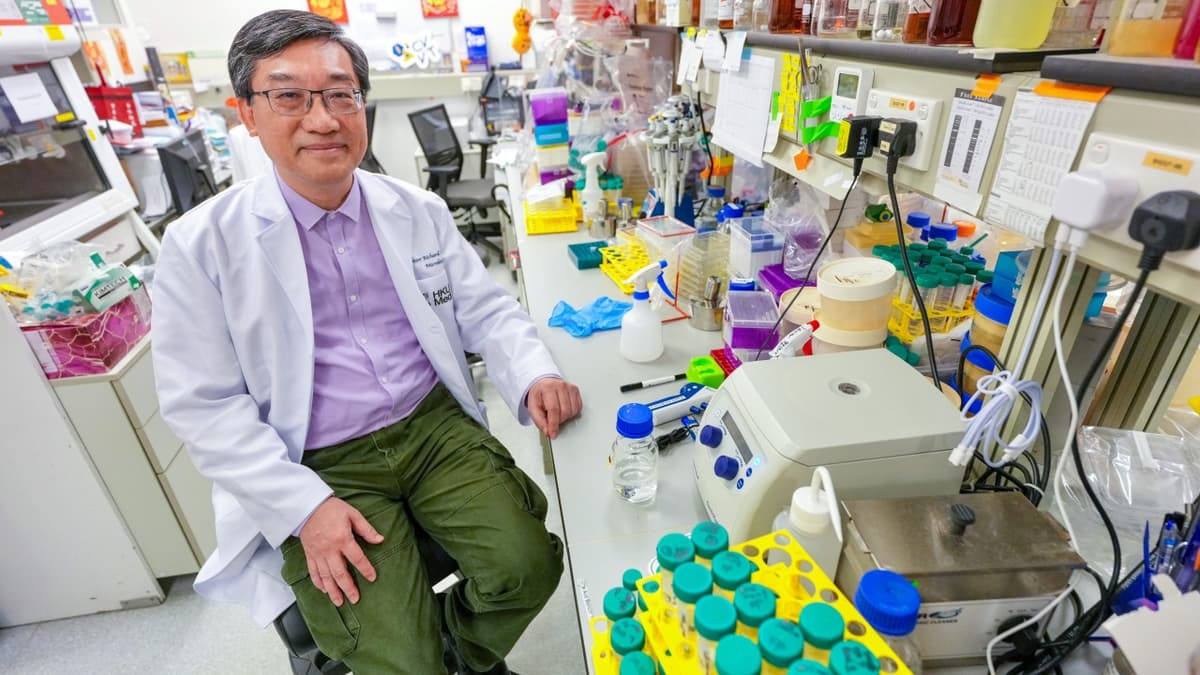
How an HKU-Developed Eczema Product Could Help Fight Superbug Threat
Why It Matters
By treating eczema without antibiotics, the HKU formulation may reduce reliance on traditional drugs and help curb resistance, while its vast patient base offers commercial viability and spurs investment in microbiome‑preserving therapeutics.
Key Takeaways
- •HKU scientists engineered eczema cream that controls bacteria without killing them
- •Product preserves skin microbiome while lowering infection risk
- •Eczema impacts 800 million people, offering a sizable global market
- •Approach could spawn non‑antibiotic therapies against superbugs
Pulse Analysis
Antimicrobial resistance (AMR) has moved from a niche concern to a global health emergency. A 2014 UK projection warned that, without decisive action, resistant infections could claim 10 million lives each year by 2050—surpassing cancer as the leading cause of death. The driver is decades of antibiotic overuse in medicine and agriculture, which has allowed bacteria to evolve defenses that render many first‑line drugs ineffective. As hospitals grapple with multi‑drug‑resistant pathogens, the pharmaceutical pipeline for new antibiotics has thinned, prompting scientists to explore alternative strategies that sidestep traditional killing mechanisms.
In this context, a team at the University of Hong Kong (HKU) has taken an unconventional route by engineering a topical eczema treatment that modulates bacterial behavior rather than eradicating it. The formulation contains a proprietary peptide that interferes with the virulence factors of Staphylococcus aureus, a common culprit in eczema flare‑ups, while leaving the broader skin microbiome intact. By reducing bacterial colonization without applying selective pressure, the product aims to prevent infection and inflammation without contributing to resistance. With eczema affecting roughly 800 million people worldwide, the therapy addresses a massive unmet need while serving as a proof‑of‑concept for microbiome‑friendly anti‑AMR interventions.
If clinical trials confirm safety and efficacy, the HKU cream could open a new market segment for non‑antibiotic therapeutics, attracting investment from both biotech startups and established pharma firms seeking to diversify away from dwindling antibiotic pipelines. The approach also aligns with emerging regulatory incentives that reward innovations reducing antimicrobial usage. Beyond dermatology, the underlying technology may be adapted to wound care, respiratory infections, or agricultural applications, amplifying its impact on the broader fight against superbugs. Ultimately, preserving the natural microbial ecosystem while managing disease could become a cornerstone of next‑generation antimicrobial stewardship.
How an HKU-developed eczema product could help fight superbug threat
Comments
Want to join the conversation?
Loading comments...