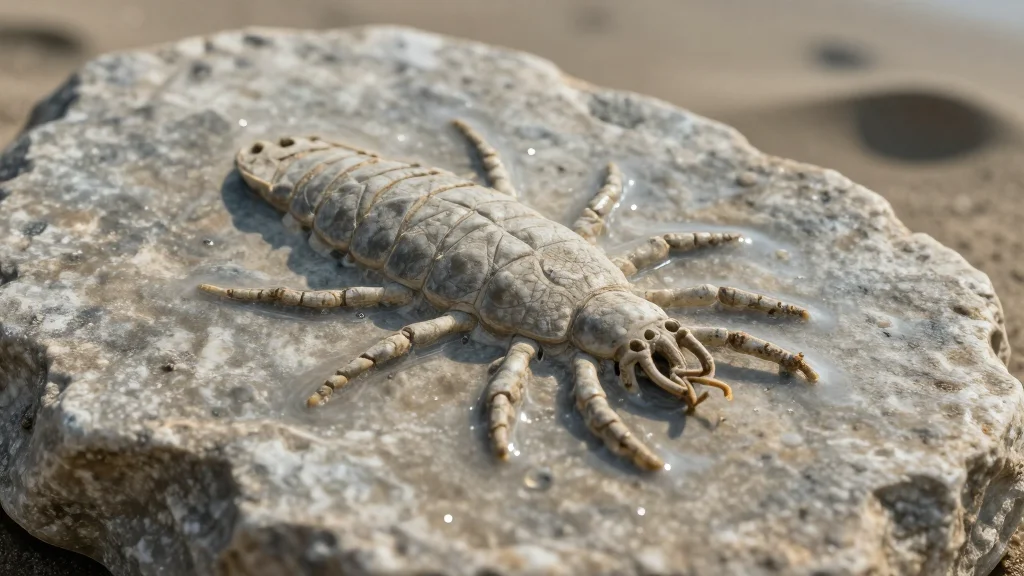
How Ancient Centipede Ancestors Conquered the Earth
Why It Matters
By extending the timeline for arthropod terrestrialization, the discovery reshapes our understanding of early ecosystem development and informs modern bio‑inspired design. It also provides a rare glimpse into the evolutionary innovations that enabled life to thrive on land.
Key Takeaways
- •New Silurian myriapod species named Waukartus muscularis discovered
- •Fossils show segmented legs adapted for early land locomotion
- •Findings push back terrestrial adaptation timeline by ~10 million years
- •Study reveals Silurian Wisconsin was equatorial coastal ecosystem
- •Research aids models of arthropod evolution and bioinspired engineering
Pulse Analysis
The emergence of land‑dwelling arthropods marks a pivotal chapter in Earth’s biological history, yet the fossil record for early myriapods has long been frustratingly thin. By unearthing well‑preserved specimens in a Waukesha quarry, researchers have filled a crucial gap, showing that myriapods possessed the morphological toolkit—segmented, jointed legs—to navigate terrestrial substrates over 425 million years ago. This pushes the accepted timeline for arthropod terrestrialization back by roughly ten million years, prompting a reevaluation of Silurian ecosystem dynamics.
The Wisconsin site, once a warm equatorial shoreline, hosted a bustling community of trilobites, jawless vertebrates, and early scorpions. Within this context, Waukartus muscularis likely exploited the moist intertidal zones, using its streamlined limbs to crawl across damp sediments. The study’s lead author, Derek Briggs of Yale, emphasizes that such adaptations gave myriapods a “head start” in colonizing dry land, predating similar innovations in other arthropod lineages. This nuanced view of early terrestrial ecosystems underscores the complexity of evolutionary pressures during the Silurian period.
Beyond paleontological intrigue, the discovery carries practical implications for modern science and industry. Understanding how ancient organisms solved locomotion and respiration challenges informs bio‑inspired robotics, especially in designing machines that traverse uneven, low‑friction surfaces. Moreover, the genetic pathways inferred from these early adaptations could guide synthetic biology efforts aimed at engineering resilient, multi‑legged platforms. As researchers integrate these findings into broader evolutionary models, they open new avenues for interdisciplinary collaboration across geology, biology, and engineering.
How Ancient Centipede Ancestors Conquered the Earth
Comments
Want to join the conversation?
Loading comments...