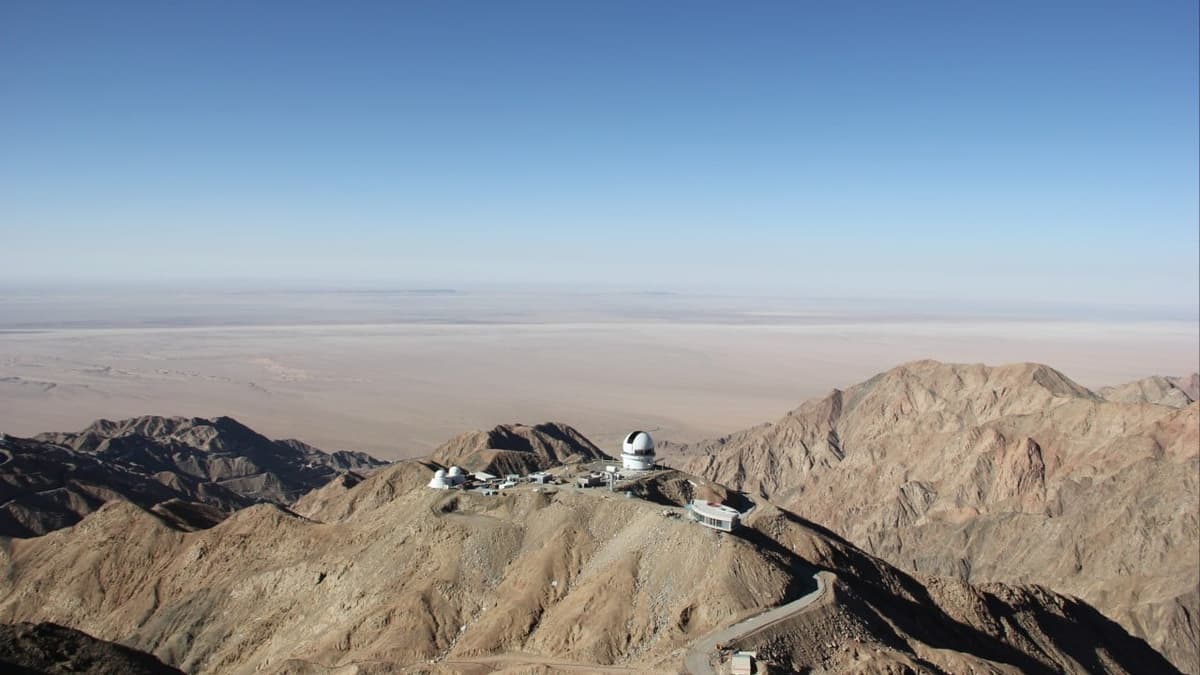
How China Is Working to Turn Saishiteng Mountain Into the World’s Largest Astronomy Base
Why It Matters
The development repositions China as a leading hub for cutting‑edge astrophysics, reshaping data access and research collaborations worldwide. It also diversifies the geographic concentration of premier observatories, reducing reliance on existing sites.
Key Takeaways
- •Saishiteng Mountain will host telescopes exceeding Mauna Kea’s aperture
- •Project aims to complete primary facilities by 2035
- •Site offers high altitude, dry climate, minimal light pollution
- •China plans integrated AI-driven observation network
- •International collaborations welcomed despite geopolitical tensions
Pulse Analysis
China’s Saishiteng Mountain project reflects a broader trend of nations seeking high‑performance astronomical sites beyond traditional locales. Mauna Kea in Hawaii has long dominated the field due to its altitude and clear skies, but its growing light pollution and cultural disputes have opened space for alternatives. Saishiteng, perched over 5,000 meters on the Tibetan plateau, offers an exceptionally thin atmosphere, low humidity, and negligible artificial illumination, creating conditions ideal for deep‑space imaging and spectroscopy.
The technical blueprint for Saishiteng includes multiple telescopes with primary mirrors surpassing 30 meters, dwarfing the 10‑meter class instruments at Mauna Kea. These facilities will integrate AI‑driven adaptive optics and real‑time data processing pipelines, dramatically increasing observation efficiency and reducing human error. Researchers anticipate breakthroughs in exoplanet characterization, dark matter mapping, and early‑universe studies, leveraging the site’s superior light‑gathering power to capture fainter, more distant signals than ever before.
Strategically, the base positions China at the forefront of astrophysical discovery while fostering a new ecosystem of international partnerships. Although geopolitical tensions could complicate data sharing, the project’s open‑access policy aims to attract global scientists, mirroring the collaborative spirit of major observatories. As the mid‑2030s approach, Saishiteng is poised to become a cornerstone of next‑generation astronomy, influencing funding priorities, talent migration, and the competitive landscape of space science.
How China is working to turn Saishiteng Mountain into the world’s largest astronomy base
Comments
Want to join the conversation?
Loading comments...