Why It Matters
The findings give policymakers a clear financial rationale to expand proactive forest‑management, potentially curbing the billions‑dollar wildfire toll. They also highlight gaps in current accounting that could further boost the case for prescribed burns.
Key Takeaways
- •Study finds $3.73 saved for every $1 spent on fuel treatments
- •Treatments cut burned area by 36% and high‑severity fire by 26%
- •Large projects (>2,400 acres) deliver highest cost‑effectiveness
- •Study omits recreation, smoke emissions, and non‑market ecosystem values
- •Policymakers could use findings to expand proactive forest management
Pulse Analysis
Wildfires have become a fiscal and public‑health crisis, with suppression costs soaring into the hundreds of billions. While emergency response dominates headlines, a growing body of research points to prevention as a more sustainable strategy. Indigenous fire‑management practices, now echoed in federal prescribed‑burn programs, aim to thin fuels before they ignite, reducing the intensity and spread of future blazes. This shift from reactive suppression to proactive treatment reflects a broader recognition that ecosystems and communities benefit from a balanced fire regime.
The Science paper provides the first large‑scale, dollar‑based accounting of those benefits. By linking high‑resolution fire data from 2017‑2023 to treatment maps, researchers showed a 36% drop in total acreage burned and a 26% decline in high‑severity fire on treated lands. Translating those physical outcomes into economic terms yielded $1.39 billion in avoided health and productivity losses, $895 million in prevented structural damage, and $503 million in reduced carbon emissions—totaling roughly $2.8 billion in savings. Notably, projects exceeding 2,400 acres generated the strongest cost‑effectiveness, suggesting economies of scale in fuel‑treatment operations.
For decision‑makers, the study offers a compelling argument to allocate more budget toward large‑scale prescribed burns and mechanical thinning. Yet critics caution that the analysis excludes non‑market values such as recreation, biodiversity, and the emissions from the burns themselves, potentially under‑ or over‑estimating true net benefits. As federal agencies grapple with budget constraints and political pressure to prioritize suppression, this evidence‑based economic case could reshape policy, encouraging a more balanced portfolio that funds both fire‑hardening of communities and the preventive stewardship of public lands.
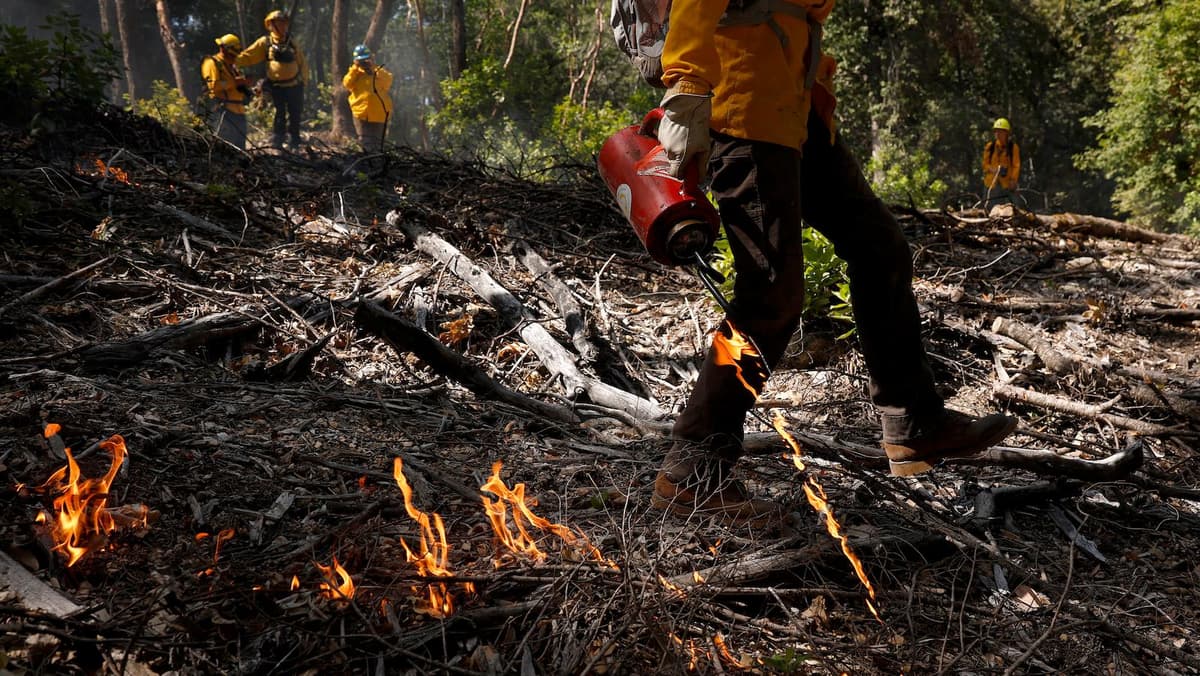
How controlled burns can help save taxpayers billions
Comments
Want to join the conversation?
Loading comments...