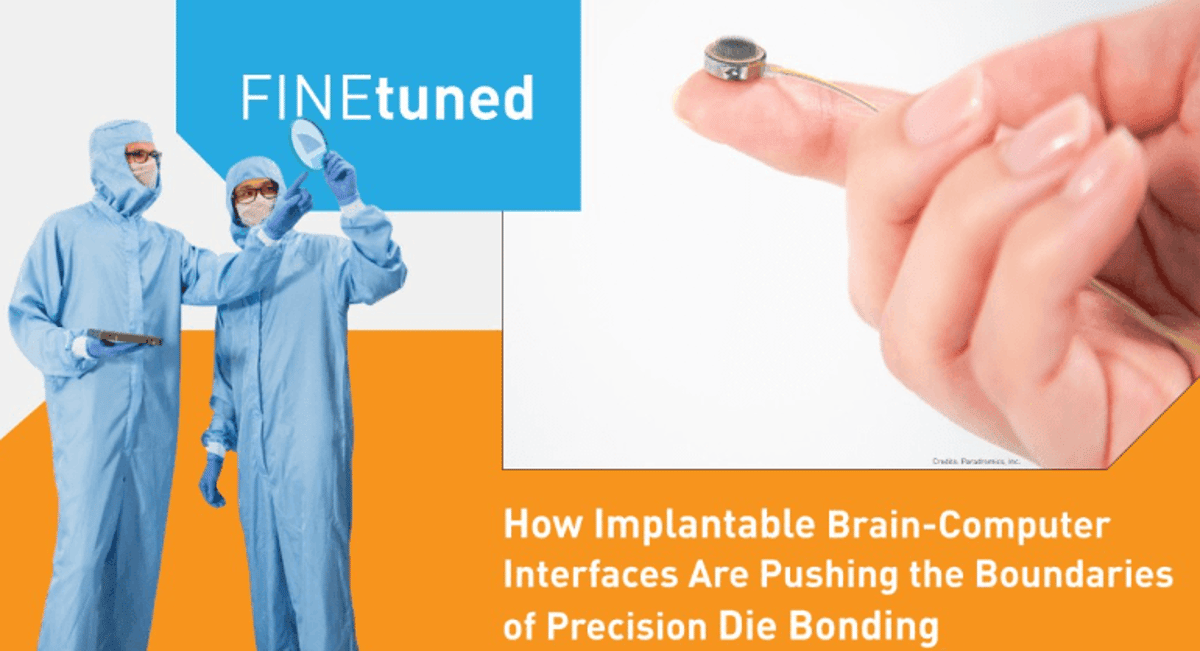
How Implantable Brain-Computer Interfaces Are Pushing the Boundaries of Precision Die Bonding
Companies Mentioned
Why It Matters
Reliable, high‑precision assembly determines whether BCIs can move from experimental prototypes to FDA‑approved, long‑term medical devices, unlocking new therapies for paralysis, speech loss, and neurological disorders.
Key Takeaways
- •BCI implants demand sub‑micron die placement for signal integrity
- •Moisture, corrosion and micromovements challenge long‑term reliability
- •Flexible electrodes improve tissue compatibility but complicate assembly
- •Finetech’s FiNEXT P3 targets high‑mix, volume BCI manufacturing
Pulse Analysis
The surge of implantable brain‑computer interfaces marks a pivotal shift in neuro‑technology, moving beyond proof‑of‑concept demonstrations toward therapeutic solutions for speech‑impairment, paralysis, and chronic neurological conditions. Companies such as Neuralink, Paradromics and Synchron are scaling up electrode counts and integrating CMOS, MEMS and thin‑film components into millimeter‑scale packages. This convergence of high‑density electronics with biocompatible materials creates a unique market where device performance hinges on both neural decoding algorithms and the physical robustness of the implant.
At the heart of this robustness lies precision die‑bonding, a manufacturing discipline traditionally reserved for aerospace and high‑frequency communications. BCI assemblies require placement accuracies better than one micron, force control that avoids damaging flexible substrates, and bonding techniques—thermocompression, ultrasonic, adhesive or laser‑assisted—that can accommodate a variety of biocompatible metals and polymers. Even minute misalignments can degrade signal fidelity or cause premature failure under the body’s constant thermal and mechanical stresses. Vendors like Finetech are responding with modular, high‑mix platforms capable of rapid process iteration, ensuring that evolving implant designs can be qualified without costly re‑tooling.
The broader implication for the medical device sector is clear: as BCIs approach commercial viability, the supply chain must evolve to support low‑volume, high‑complexity production runs while maintaining regulatory‑grade reliability. Precision assembly will become a differentiator, influencing device cost, time‑to‑market and ultimately patient outcomes. Stakeholders—from investors to clinicians—should monitor advancements in die‑bonding technology as a leading indicator of which BCI candidates are poised for scalable, long‑term clinical adoption.
How Implantable Brain-Computer Interfaces Are Pushing the Boundaries of Precision Die Bonding
Comments
Want to join the conversation?
Loading comments...