How One New Telescope Is Going to Change Astronomy Forever
Companies Mentioned
Why It Matters
The DSA will dramatically accelerate radio‑astronomy data collection, unlocking discoveries that could reshape our understanding of cosmic phenomena and drive new technologies in high‑performance computing. Its private‑funded, cost‑effective model may also shift how large‑scale scientific infrastructure is financed.
Key Takeaways
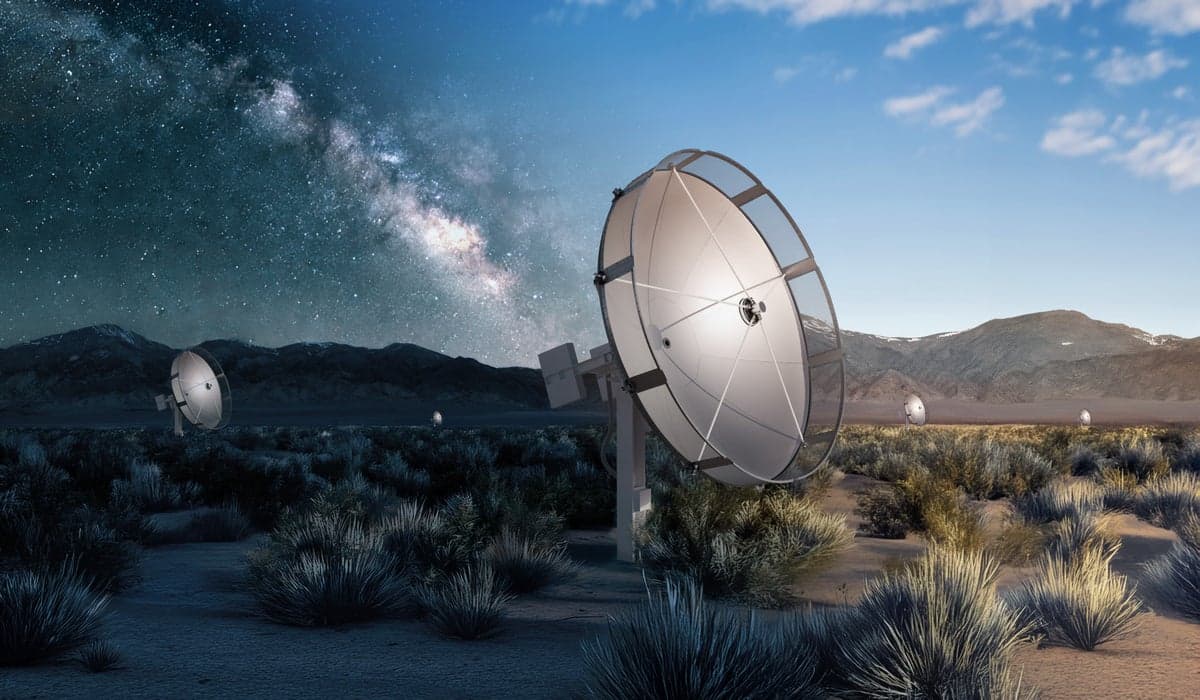
- •DSA will consist of 1,650 20‑ft dishes over 120 sq mi.
- •Real‑time signal combination cuts data storage, speeds surveys 100×.
- •Will localize tens of thousands of fast radio bursts.
- •Tests pulsar timing anomalies to detect low‑frequency gravitational waves.
- •Employs cheap bakeware‑derived dish backs, reducing build costs.
Pulse Analysis
Radio astronomy has long been constrained by the trade‑off between sensitivity and data handling. Traditional arrays capture raw feeds from each antenna, creating petabytes of data that strain storage and processing pipelines. The Deep Synoptic Array sidesteps this bottleneck by merging signals in real time, leveraging next‑generation NVIDIA Vera Rubin GPUs. This approach not only slashes the data deluge—comparable to all U.S. internet traffic—but also enables rapid, high‑resolution imaging across the entire sky, a capability that could redefine survey strategies for decades.
Scientifically, the DSA’s unprecedented speed and breadth open doors to several high‑impact investigations. By pinpointing the origins of tens of thousands of fast radio bursts, researchers can finally test competing models that link these millisecond flashes to neutron star activity or exotic cataclysms. Simultaneously, the array will monitor pulsar timing across the Milky Way, providing a new avenue to confirm low‑frequency gravitational wave signatures that may arise from supermassive black‑hole binaries or cosmic strings. Its synergy with optical and space‑based observatories will also accelerate multi‑messenger follow‑ups of transient events, from supernovae to potential technosignatures.
Beyond pure science, the DSA illustrates a shifting paradigm in large‑scale research funding and engineering. Backed by Schmidt Sciences, the project demonstrates how private philanthropy can complement, and sometimes outpace, traditional government budgets. Cost‑saving innovations—such as repurposing commercial bakeware for dish backs—highlight a pragmatic mindset that could inspire future infrastructure projects. Moreover, the massive GPU deployment fuels advances in high‑performance computing, with spillover benefits for industries ranging from AI to climate modeling. As the DSA comes online, its blend of technological agility and scientific ambition promises to reshape both the cosmos and the economics of discovery.
How one new telescope is going to change astronomy forever
Comments
Want to join the conversation?
Loading comments...