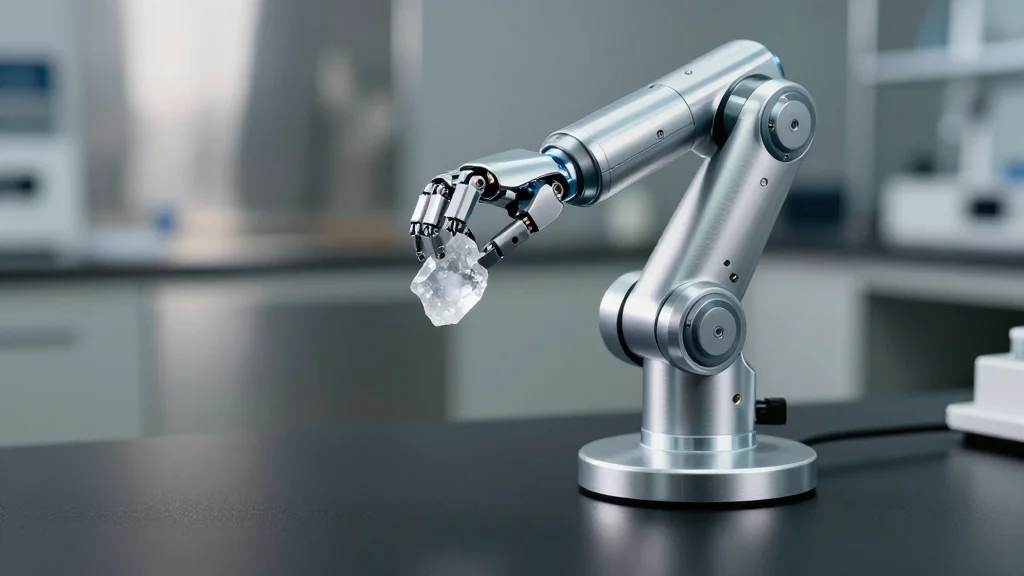
How Scientists Are Building the AI-Powered Laboratory
Why It Matters
By integrating AI into experimental design, researchers can accelerate breakthroughs while conserving expensive equipment and compute resources, reshaping the pace of scientific innovation.
Key Takeaways
- •AI selects optimal next experiments, slashing lab time.
- •Active learning reduces reliance on supercomputer simulations.
- •Case studies span new materials, drug discovery, cosmology.
- •SLAC’s Machine Learning group leads AI‑powered research initiatives.
- •Event accessible in‑person and live‑streamed for global audience.
Pulse Analysis
Laboratories have long grappled with the high cost and limited throughput of traditional experiments and large‑scale simulations. Each measurement consumes precious person‑hours and specialized equipment, while supercomputer runs can stretch over days or weeks. Artificial intelligence offers a way to break this bottleneck by not only crunching data faster but also by guiding scientists toward the most informative next steps, a concept known as active learning. This shift promises to turn experimental cycles from reactive to predictive, dramatically improving resource efficiency.
At SLAC, Sean Gasiorowski illustrates how AI‑driven active experimental guidance is already delivering results across disparate fields. In materials science, machine‑learning models predict promising compound compositions, allowing researchers to test only the top candidates. In particle physics, AI helps prioritize detector settings that maximize the chance of observing rare events such as Higgs‑boson pair production. Drug‑discovery pipelines benefit from AI‑suggested assay designs that cut down on costly wet‑lab iterations. These examples underscore a broader trend: AI is becoming a co‑pilot in the scientific method, accelerating discovery while reducing dependence on expensive hardware.
Looking ahead, the integration of AI into the laboratory will reshape how companies and research institutions allocate budgets, hire talent, and plan projects. Firms that adopt AI‑guided experimentation can expect faster time‑to‑market for new materials or therapeutics, giving them a competitive edge. Moreover, the democratization of AI tools lowers barriers for smaller labs, expanding the pool of innovators. As AI continues to mature, its role in scientific research will likely evolve from a supportive analytics layer to a strategic decision‑making engine, redefining the economics of discovery.
How scientists are building the AI-powered laboratory
Comments
Want to join the conversation?
Loading comments...