Why It Matters
Understanding wave‑driven energy transfer improves space‑weather forecasting, protecting satellites, power grids, and communications from solar‑induced disruptions.
Key Takeaways
- •Solar Orbiter samples solar wind near Sun.
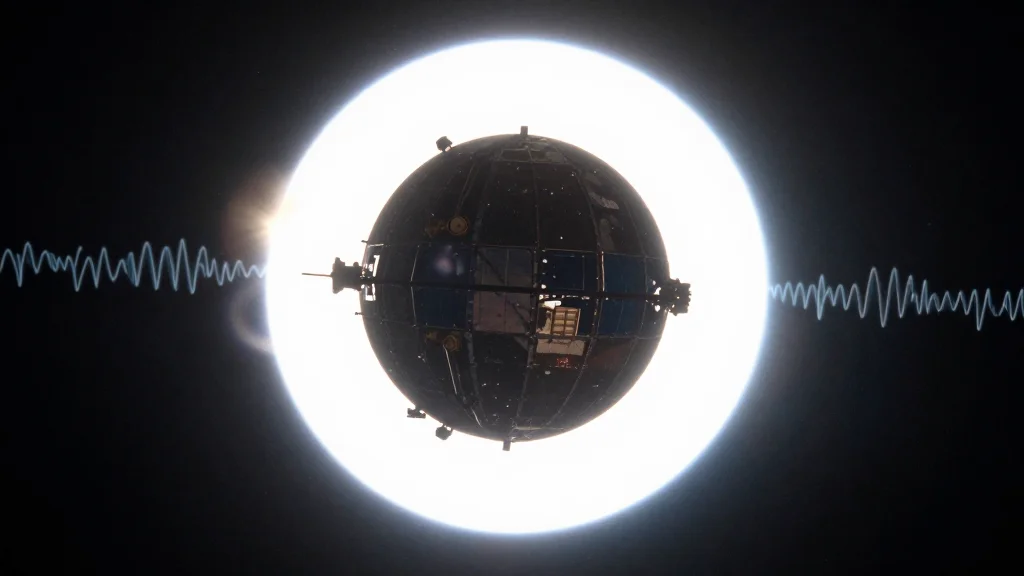
- •High‑frequency Langmuir and ion‑acoustic waves dominate energy transfer.
- •Resonant particles sync with waves, redistributing plasma energy.
- •Wave activity shapes geomagnetic storms affecting Earth infrastructure.
- •Early‑stage observations clarify space‑weather prediction models.
Pulse Analysis
The solar wind, a continuous outflow of charged particles from the Sun, has long been modeled as a relatively uniform stream. Recent advances, however, highlight its turbulent nature, driven by plasma waves that ripple through the ionized medium. These waves, unlike oceanic or acoustic waves, operate at frequencies capable of interacting directly with individual particles, creating a complex energy landscape that evolves as the wind expands through the heliosphere.
Solar Orbiter’s close‑approach trajectory offers an unprecedented glimpse of the wind’s infancy, capturing high‑frequency electrostatic phenomena that are otherwise masked near Earth. By focusing on Langmuir and ion‑acoustic waves, Boldú’s team demonstrated that resonance—where particle velocities align with wave phase speeds—facilitates rapid energy exchange. This mechanism continuously reshapes particle distributions, influencing the wind’s temperature, density, and magnetic characteristics long before it encounters planetary magnetospheres.
For industry and policymakers, the practical stakes are clear. Wave‑mediated energy redistribution directly affects the intensity and timing of geomagnetic storms, which can degrade satellite electronics, trigger power‑grid failures, and interrupt global communications. Incorporating these micro‑scale processes into space‑weather models promises more accurate forecasts, enabling operators to implement protective measures proactively. As missions like Solar Orbiter continue to deliver high‑resolution data, the scientific community moves closer to a predictive framework that safeguards critical infrastructure from solar volatility.
How the solar wind really works
Comments
Want to join the conversation?
Loading comments...