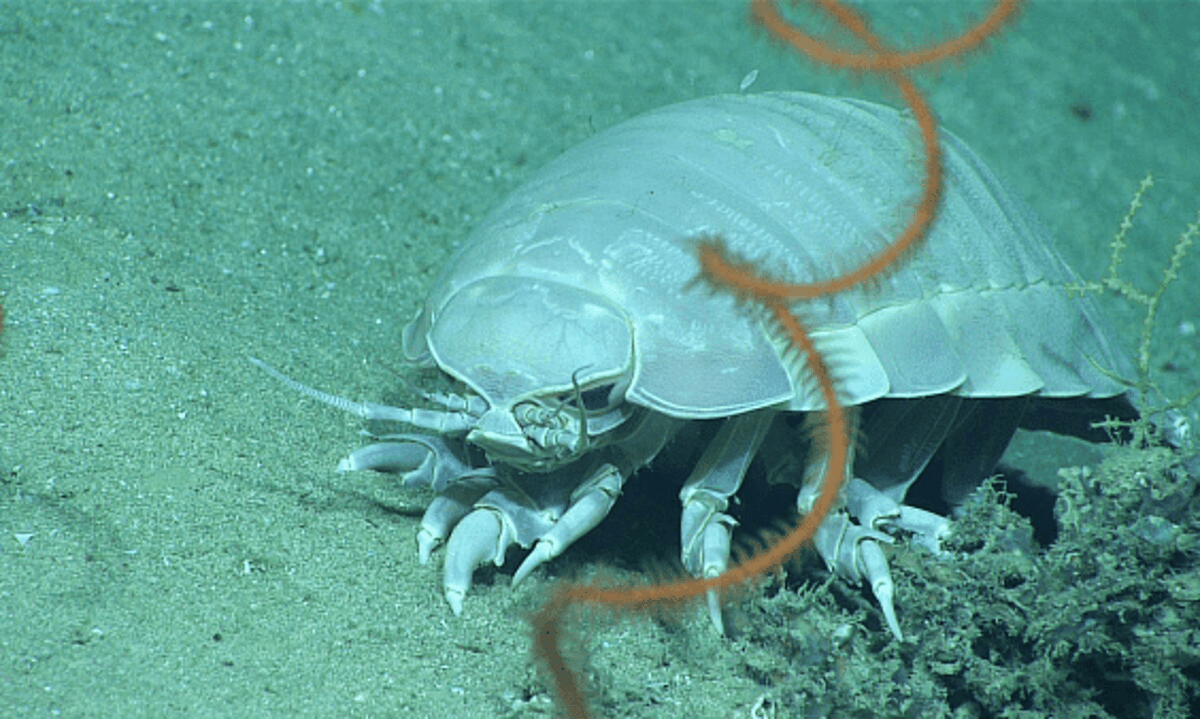
How These Supergiant Sea Creatures Survive More Than 5 Years Without Eating
Why It Matters
Understanding how these crustaceans balance growth and ultra‑long starvation offers a natural blueprint for metabolic engineering and informs deep‑sea ecosystem management as human activity expands into abyssal zones.
Key Takeaways
- •Supergiant isopods can survive up to five years without food
- •Deeper species have larger stomachs and dramatically lower metabolic rates
- •Genomic analysis shows expanded digestion genes and bacterial gene transfer
- •Microbiome rich in Chlamydiae aids fat storage for long‑term energy
Pulse Analysis
The discovery that Bathynomus isopods can endure half‑decades without feeding reshapes our view of extreme survival strategies. In the pitch‑black abyss, food arrives sporadically, prompting these crustaceans to bulk up their stomach capacity and throttle their metabolism to a crawl. By storing excess calories during rare feeding bouts, they stretch the energy yield far beyond what surface‑dwelling relatives can manage. This physiological gamble mirrors a financial model of investing heavily during boom periods and conserving resources during lean times.
At the molecular level, the study uncovers a suite of adaptations that enable this endurance. Genome sequencing revealed an expansion of gene families tied to digestion and lipid metabolism, while a horizontally transferred bacterial gene, ND1, appears to dampen cellular respiration in cold, high‑pressure conditions. The gut microbiome, dominated by Chlamydiae, further boosts fat storage, acting as an internal battery. Such co‑evolution of host and microbes illustrates a sophisticated, symbiotic energy‑management system that could inspire synthetic biology approaches to create low‑metabolism bio‑factories or improve livestock feed efficiency.
Beyond academic intrigue, these findings have practical implications as commercial interest in deep‑sea mining, bioprospecting, and carbon sequestration grows. Knowing how organisms naturally mitigate nutrient scarcity can guide the design of resilient offshore infrastructure and inform environmental impact assessments. Moreover, the metabolic pathways identified may become targets for drug discovery, offering new angles for treating human metabolic disorders. In essence, the isopod’s five‑year fasting feat provides a living laboratory for translating extreme marine biology into innovative, market‑relevant technologies.
How These Supergiant Sea Creatures Survive More Than 5 Years Without Eating
Comments
Want to join the conversation?
Loading comments...