How to Delaminate End-of-Life Solar Modules with Ultrasonic Cavitation
Why It Matters
The approach offers a low‑impact, chemical‑free pathway to recover valuable materials from solar panels, addressing mounting PV waste and supporting circular‑economy goals.
Key Takeaways
- •Ultrasonic cavitation delaminates glass from EVA without chemicals
- •Achieved 82.2% mass-based delamination efficiency on test samples
- •Process yields net CO₂ reduction of about -5.75 kg per kilogram
- •Method scales from lab to pilot with CFD and LCA insights
- •EVA deformation identified as primary mechanism for clean separation
Pulse Analysis
The rapid growth of solar installations worldwide has created a looming challenge: disposing of millions of end‑of‑life photovoltaic (PV) modules. Traditional recycling routes often rely on harsh solvents or energy‑intensive mechanical grinding, which can generate hazardous waste and diminish the overall sustainability of solar energy. As the industry seeks greener solutions, researchers are turning to innovative physical processes that minimize chemical inputs while preserving material integrity.
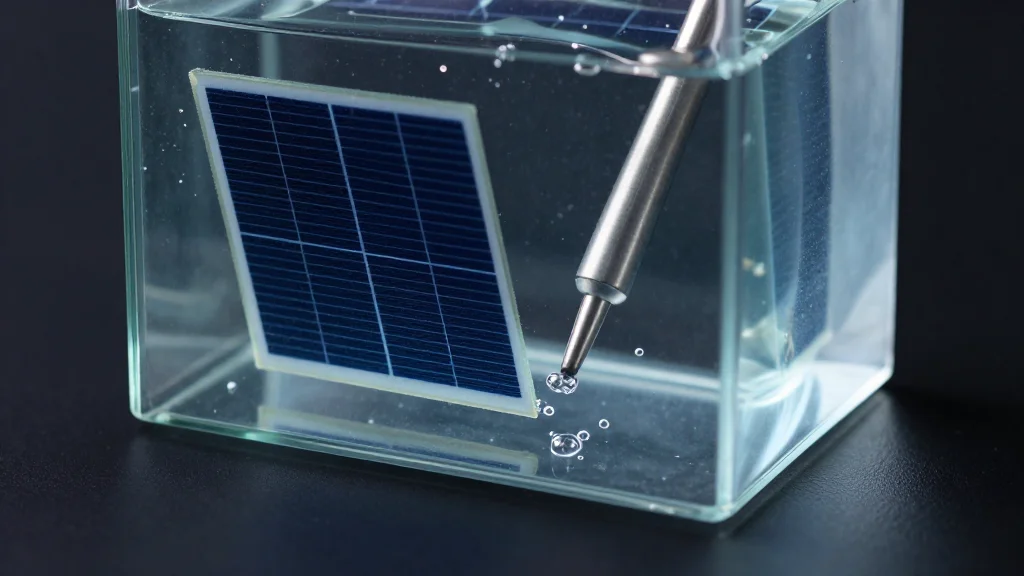
In the latest study, scientists from Germany’s Fraunhofer Institute for Ceramic Technologies and Systems and Turkey’s Ege University demonstrated that ultrasonic cavitation can serve as an effective, solvent‑free delamination tool. By immersing small module fragments in heated distilled water and applying 20 kHz ultrasonic waves, the team induced micro‑bubble collapse that mechanically weakened the ethylene‑vinyl acetate (EVA) interlayer. The result was an 82.2% mass‑based delamination efficiency, with clean separation of glass and partial recovery of crystalline silicon. A life‑cycle assessment revealed a net CO₂‑equivalent reduction of –5.75 kg per kilogram of processed material, underscoring the environmental advantage over conventional chemical methods.
Looking ahead, the technology’s scalability will be critical for commercial adoption. Computational fluid dynamics modeling and detailed material characterisation have already provided insights into optimizing cavitation intensity and exposure time. If pilot‑scale trials confirm the laboratory findings, solar manufacturers and recyclers could integrate ultrasonic cavitation into existing recycling lines, reducing reliance on solvents, cutting emissions, and improving recovery rates of critical raw materials. This could accelerate the transition toward a circular solar economy, where end‑of‑life panels are efficiently reclaimed and re‑entered into the supply chain.
How to delaminate end-of-life solar modules with ultrasonic cavitation
Comments
Want to join the conversation?
Loading comments...