Why It Matters
Understanding solar activity is critical for protecting satellite infrastructure, power grids, and communication networks from disruptive space‑weather events, while also advancing fundamental astrophysics.
Key Takeaways
- •Sunspots first recorded by Babylonians, later identified as magnetic storms
- •Helium discovered in solar spectrum before isolated on Earth
- •1859 Carrington Event linked solar flare to worldwide telegraph failures
- •Parker Solar Probe reached closest approach to a star in 2024
- •Solar Orbiter delivered first detailed view of the Sun’s south pole
Pulse Analysis
The quest to decode our star began with naked‑eye observations and crude sketches, but the scientific leap came with the telescope in the 1600s. Pioneers such as Galileo, Scheiner, and Hale transformed sunspot tracking into a study of magnetic storms, while spectroscopy in the 1800s turned the Sun into a laboratory, exposing helium—a new element that would later reshape chemistry. These milestones laid the groundwork for modern solar physics, turning curiosity into a disciplined field that bridges astronomy, plasma physics, and Earth‑impact studies.
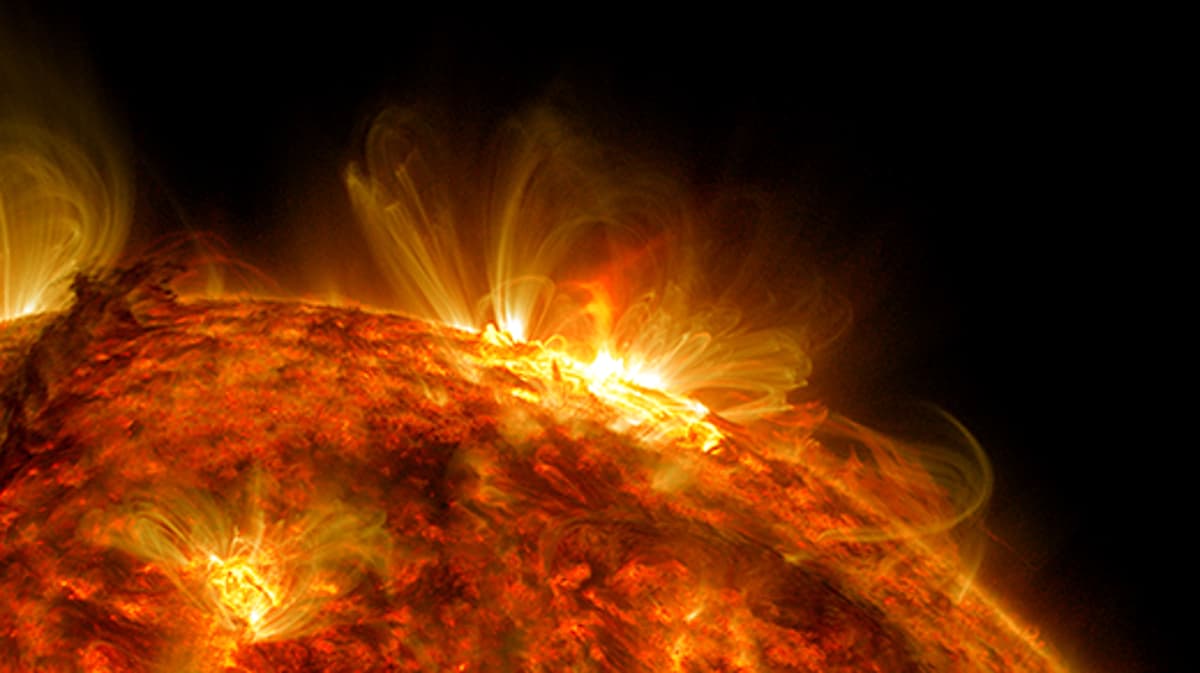
Space‑based platforms have rewritten what we can see. The 1995 launch of SOHO gave scientists an uninterrupted view of the solar disk, revolutionizing real‑time space‑weather forecasting. SDO added high‑resolution imaging, capturing flares and coronal mass ejections in unprecedented detail. The Parker Solar Probe’s daring 2024 perihelion—closer than any human‑made object—provided direct measurements of the solar wind’s extreme conditions. Meanwhile, ESA‑NASA’s Solar Orbiter, by tilting its gaze toward the Sun’s south pole, revealed polar magnetic fields and plasma flows that were previously hidden, offering fresh clues to the Sun’s 11‑year cycle.
These advances matter beyond academic circles. Solar storms can induce geomagnetic currents that cripple power grids, disrupt GPS signals, and damage satellites worth billions of dollars. Accurate forecasting, powered by continuous data streams from missions like SOHO, SDO, Parker, and Solar Orbiter, enables utilities and aerospace firms to mitigate risk and plan resilient infrastructure. Looking ahead, resolving the corona‑heating mystery and predicting flare onset will require even tighter instrument integration, AI‑driven analytics, and international collaboration, ensuring that humanity stays ahead of the Sun’s volatile temperament.
How We See the Beautiful, Violent Sun
Comments
Want to join the conversation?
Loading comments...