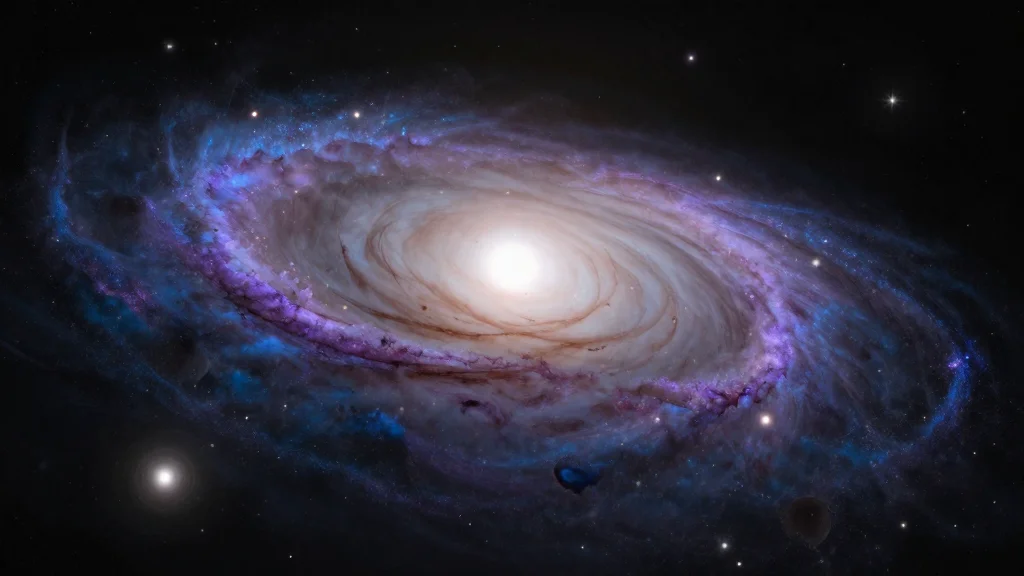
Hubble Captures Galaxy Swarm with Lensed Arcs From Early Universe
Why It Matters
The image provides a rare, magnified glimpse of primordial galaxies, informing models of cosmic structure formation and the role of galaxy clusters as gravitational lenses.
Key Takeaways
- •Hubble imaged galaxy cluster MACS0329‑0211 with ACS and WFC3.
- •Lensed arcs reveal galaxies from the early universe.
- •Cluster acts as natural gravitational lens magnifying distant sources.
- •Observations span visible and infrared wavelengths for comprehensive data.
- •Findings aid models of cosmic structure evolution.
Pulse Analysis
Gravitational lensing by massive galaxy clusters has long been a cornerstone of observational cosmology, and Hubble’s latest portrait of MACS0329‑0211 underscores why. By bending and amplifying light from background galaxies, the cluster functions as a natural telescope, allowing astronomers to resolve structures that would otherwise remain invisible. The combination of Hubble’s Advanced Camera for Surveys and the infrared‑sensitive Wide Field Camera 3 captures both the bright cluster members and the faint, stretched arcs of distant galaxies, delivering a multi‑wavelength view that bridges the gap between optical and near‑infrared studies.
The newly revealed arcs trace galaxies formed less than a billion years after the Big Bang, offering a direct window into the universe’s formative epochs. Their distorted, elongated shapes encode information about the cluster’s mass distribution, enabling precise mapping of dark matter through lens‑modeling techniques. Moreover, the visible‑to‑infrared coverage helps characterize the stellar populations and star‑formation rates of these early galaxies, feeding into broader efforts to chart the timeline of galaxy assembly across cosmic history.
Beyond the immediate scientific payoff, the MACS0329‑0211 observations set the stage for synergistic campaigns with next‑generation observatories such as the James Webb Space Telescope and the upcoming Nancy Grace Roman Space Telescope. By pinpointing promising lensed targets, Hubble paves the way for deeper spectroscopic follow‑ups that can probe chemical abundances, ionization states, and the reionization process itself. In essence, each new lensing snapshot not only refines our understanding of cluster physics but also expands the frontier of early‑universe exploration, reinforcing Hubble’s enduring role in the astronomical toolkit.
Hubble captures galaxy swarm with lensed arcs from early universe
Comments
Want to join the conversation?
Loading comments...