Hubble Sees Swarm of Galaxies
Why It Matters
The discovery provides a rare window into galaxy assembly during the universe’s formative years, offering data that could refine cosmological models of structure formation. It also highlights Hubble’s continued relevance alongside newer observatories.
Key Takeaways
- •Hubble captured high‑resolution images of a dense galaxy swarm
- •Swarm resides ~10 billion light‑years away, revealing early‑universe structures
- •Astronomers estimate total mass exceeds 10¹⁴ solar masses
- •Findings challenge models of galaxy formation during cosmic dawn
Pulse Analysis
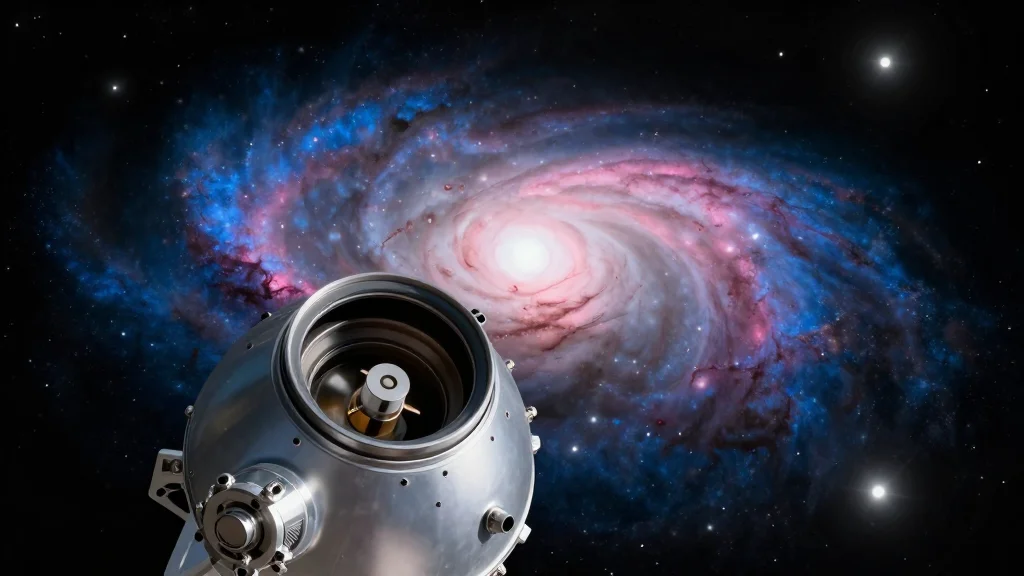
The Hubble Space Telescope’s latest deep‑field observation reveals a compact swarm of galaxies at a redshift corresponding to roughly 10 billion light‑years. This region, densely populated with hundreds of galaxies, appears to be a protocluster—a precursor to the massive galaxy clusters we see today. By resolving individual galactic structures, Hubble provides astronomers with a rare snapshot of how matter coalesced when the universe was only about 3.5 billion years old, a period often referred to as the cosmic dawn.
Understanding such early‑universe assemblages is critical for testing the Lambda‑Cold Dark Matter (ΛCDM) paradigm, which predicts how dark matter halos attract baryonic matter to form galaxies. The observed mass, estimated at over 10¹⁴ solar masses, exceeds expectations for typical protoclusters at this epoch, prompting theorists to revisit assumptions about the rate of galaxy merging and star‑formation efficiency. Moreover, the swarm’s composition—mixing mature elliptical galaxies with actively star‑forming spirals—offers clues about environmental effects that accelerate galaxy evolution.
Future observations with the James Webb Space Telescope (JWST) and upcoming ground‑based facilities like the Extremely Large Telescope will target this swarm to map its gas content, metallicity, and dark‑matter distribution. These data will help refine simulations of large‑scale structure formation and may uncover the mechanisms driving early supermassive black hole growth. As Hubble continues to deliver high‑resolution imagery, its synergy with next‑generation observatories ensures a deeper, more nuanced understanding of the universe’s formative stages.
Hubble Sees Swarm of Galaxies
Comments
Want to join the conversation?
Loading comments...