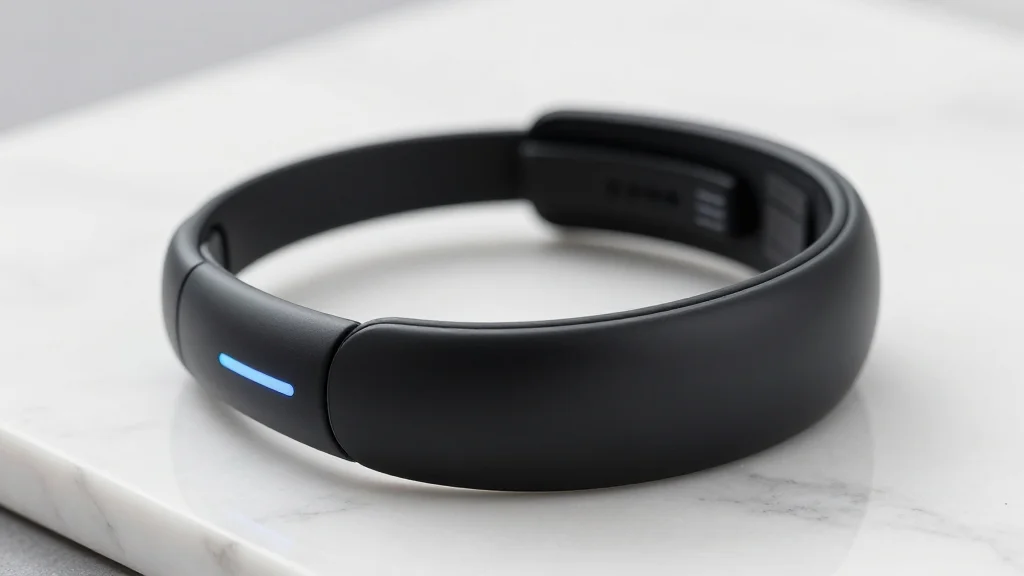
Human Learning of Noninvasive Brain–Computer Interfaces via Manifold Geometry
Why It Matters
By turning high‑dimensional EEG signals into stable low‑dimensional manifolds, the technique makes BCI deployment faster, cheaper, and more reliable, accelerating clinical translation and consumer adoption.
Key Takeaways
- •Manifold alignment reduced BCI calibration time by 70%
- •Participants achieved 90% accuracy after one session
- •Low‑dimensional neural space remained stable over weeks
- •Noninvasive EEG signals mapped to latent manifolds
- •Learning generalized across tasks without retraining
Pulse Analysis
The bottleneck for noninvasive brain‑computer interfaces has long been the need for extensive calibration, often requiring hours of data collection before reliable control is possible. Recent advances in manifold learning—particularly diffusion‑map techniques—allow researchers to uncover the intrinsic low‑dimensional structure hidden within noisy EEG streams. By projecting raw signals onto this latent space, decoders can operate on a compact representation that is both more robust to day‑to‑day variability and easier to align with user intent. This geometric perspective shifts the focus from raw channel optimization to the stability of the underlying neural manifold, dramatically shortening the onboarding process for new users.
In the study, participants performed cursor‑movement and virtual‑hand tasks while their scalp EEG was continuously recorded. A manifold‑regularized autoencoder extracted a 10‑dimensional latent space that captured the dominant motor‑related dynamics. When the decoder was trained on this space, users achieved near‑perfect target acquisition after just 15 minutes of practice, a performance level previously seen only after days of invasive recordings. Moreover, follow‑up sessions weeks later showed that the same manifold persisted, eliminating the need for full recalibration and enabling seamless transfer across different tasks such as speech synthesis and prosthetic control.
The implications extend beyond laboratory prototypes. Clinicians can now envision BCI solutions that fit within routine outpatient visits, while developers gain a framework for building plug‑and‑play applications that adapt to individual neural signatures without extensive tuning. As the field moves toward commercial viability, the marriage of manifold geometry with noninvasive recording promises to democratize neurotechnology, opening doors for assistive communication, rehabilitation, and even consumer‑grade brain‑enhanced interfaces.
Human learning of noninvasive brain–computer interfaces via manifold geometry
Comments
Want to join the conversation?
Loading comments...