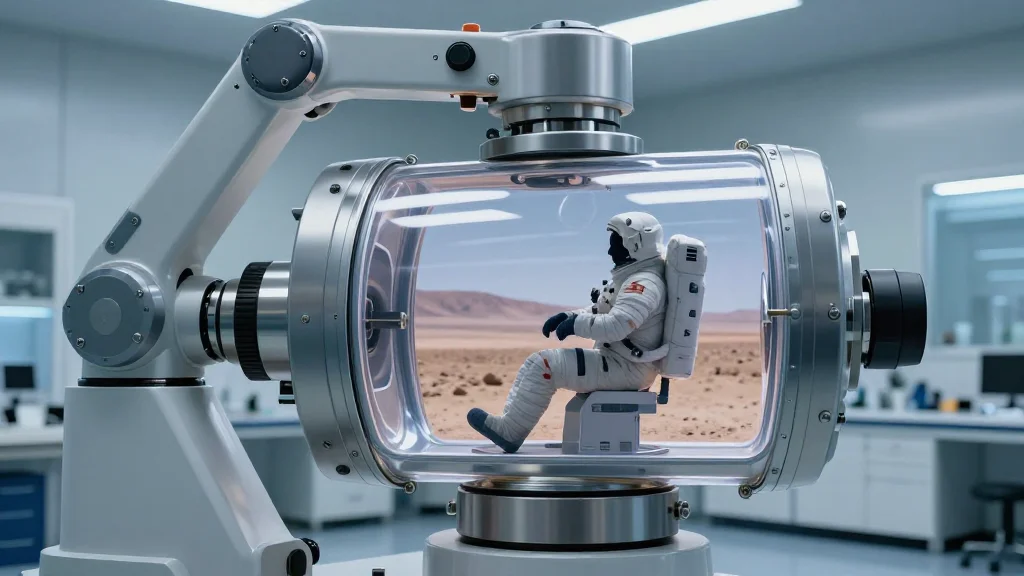
Human Space Research Gets a Boost From Retired NASA Centrifuge
Why It Matters
Domestic access to long‑duration artificial‑gravity testing cuts costs and accelerates health solutions for astronauts, directly supporting the United States’ lunar return and Mars exploration goals.
Key Takeaways
- •Texas A&M receives NASA’s retired human centrifuge for artificial‑gravity studies
- •Facility enables multi‑hour lunar and Martian gravity simulations, a U.S. first
- •Supports integrated bed‑rest and centrifuge experiments to cut overseas costs
- •Data will inform spacesuit design, countermeasures, and Mars mission planning
Pulse Analysis
The United States has long depended on overseas centrifuge facilities to conduct combined bed‑rest and artificial‑gravity experiments, a logistical hurdle that adds millions of dollars to NASA’s research budget. By acquiring the retired NASA centrifuge and installing it at Texas A&M’s Anthony Wood ’87 Artificial Gravity Lab, the nation now has a domestic platform capable of long‑duration partial‑gravity studies. This shift not only reduces cost and scheduling complexity but also aligns with the Artemis program’s push for home‑grown solutions to keep American astronauts healthy on the Moon and beyond.
The centrifuge can generate lunar gravity at one‑sixth Earth g and Martian gravity at three‑eighths g by adjusting spin speed and arm length, allowing continuous exposure for up to two hours—far longer than traditional parabolic flights. Researchers will pair these simulations with bed‑rest protocols to isolate cardiovascular, musculoskeletal, and thermoregulatory responses. Ongoing projects, such as Dr. Ana Diaz Artiles’ “Gravity Dose” study and Dr. Bonnie Dunbar’s skin‑blood‑flow experiments, aim to refine countermeasure regimens and inform next‑generation spacesuit thermal management. KBR’s operational support ensures precise control and safety.
Beyond NASA, the lab offers a testbed for commercial partners developing lunar habitats and private crew transport, accelerating the translation of biomedical findings into market‑ready health solutions. By centralizing expertise at Texas A&M, the United States creates a national hub that can attract federal grants, industry contracts, and interdisciplinary talent, reinforcing the country’s leadership in human spaceflight research. In the long run, the ability to conduct on‑site recovery and rehabilitation studies will shorten post‑mission downtime, making lunar and Martian missions more sustainable and cost‑effective.
Human space research gets a boost from retired NASA centrifuge
Comments
Want to join the conversation?
Loading comments...