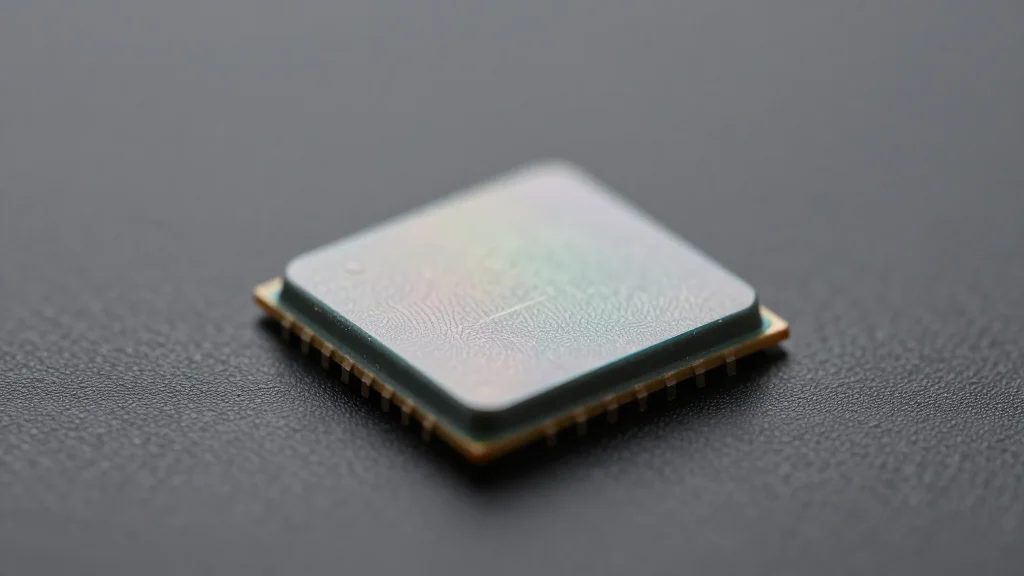
Humidity-Activated Optical Chip Reveals Hidden Images for Secure Data Storage
Key Takeaways
- •Humidity triggers image swap in 300 ms
- •Phase‑change layer stores rewritable optical data
- •Hydrogel swells to alter color and spacing
- •Potential for low‑cost anti‑counterfeit tags
- •Scalable fabrication across large areas
Pulse Analysis
The UC San Diego breakthrough leverages two complementary materials to turn a simple environmental variable—humidity—into a functional security mechanism. The bottom antimony trisulfide layer acts as a reusable optical memory, where laser‑etched patterns can be written, erased, and rewritten. Meanwhile, the top hydrogel expands and contracts with moisture, physically shifting the photonic spacing and revealing a second image. This dual‑layer approach creates a reversible, on‑demand data display that can be activated by a breath, a finger, or ambient conditions.
Beyond anti‑counterfeiting, the technology opens avenues for dynamic data storage in constrained form factors. By stacking multiple image sets across the phase‑change substrate, each humidity tier could unlock a distinct data block, effectively multiplexing information in a single square‑centimeter footprint. Such capability aligns with emerging needs for secure, low‑power authentication in the Internet of Things, where devices must verify identity without complex electronics. The rapid 300‑millisecond transition ensures real‑time feedback, a critical factor for user‑facing applications like credit‑card security tags.
Scalability and cost are central to commercial viability. Both antimony trisulfide and the azido‑grafted carboxymethyl cellulose hydrogel can be deposited over large areas using standard printing or roll‑to‑roll processes, keeping production expenses low. Future research aims to replace humidity triggers with electrical stimuli, which would integrate the chip into existing electronic platforms and broaden its utility. As industries seek more sophisticated yet inexpensive authentication methods, humidity‑activated optical chips could become a cornerstone of next‑generation secure labeling and sensing solutions.
Humidity-activated optical chip reveals hidden images for secure data storage
Comments
Want to join the conversation?