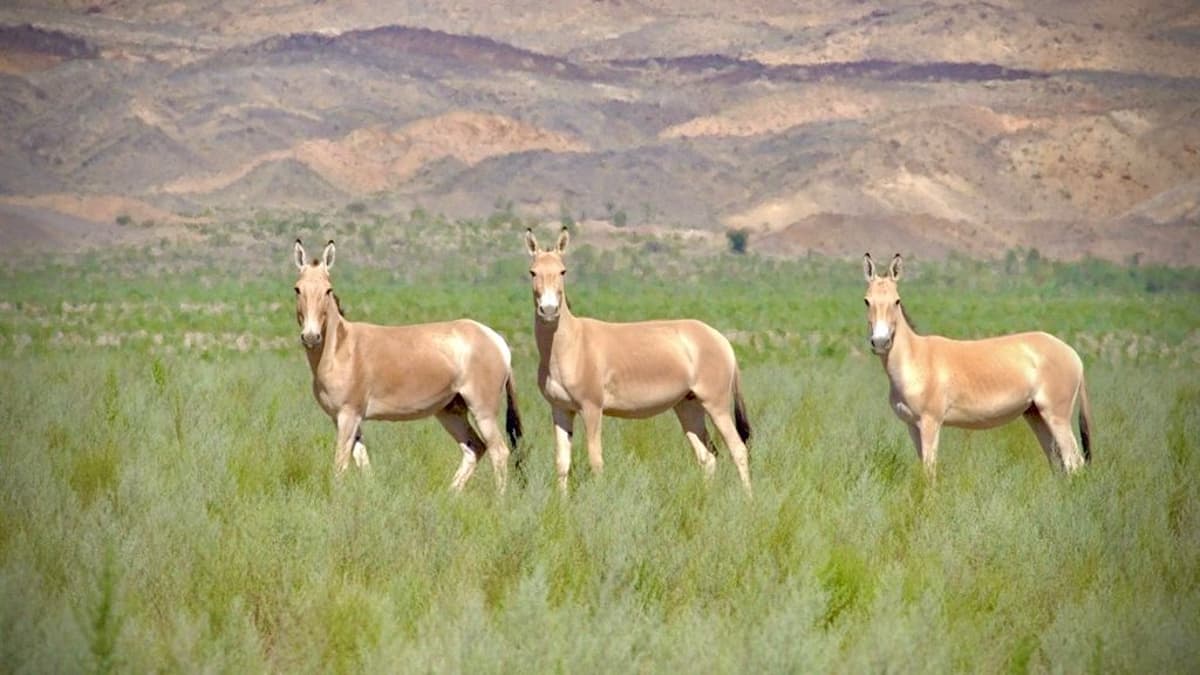
Hundreds of Khulan Return to Eastern Mongolia After 65-Year Absence
Why It Matters
Restoring wildlife corridors across the railway revives a keystone species and demonstrates a scalable model for mitigating infrastructure‑driven habitat fragmentation in dryland ecosystems.
Key Takeaways
- •Khulan crossed railway gap, reoccupying east Mongolia after 65 years
- •Study documented 384 individuals in four groups by Oct 2024
- •Safe passage zone near Zamiin‑Uud formalized in May 2025
- •GPS collars on 29 khulan confirmed crossings and range expansion
- •Restored 4,000 km² habitat supports nomadic mobility and drought resilience
Pulse Analysis
The Trans‑Mongolian Railway, built in the mid‑20th century, has long acted as a near‑continuous fence that split the Gobi’s open steppe, limiting the movement of wide‑roaming ungulates such as the khulan. Habitat fragmentation reduces access to seasonal pastures and water sources, undermining the species’ natural adaptation to extreme droughts and harsh winters. By creating a temporary 1.5‑km fence‑free corridor in 2019, conservationists tested whether a modest breach could restore connectivity without compromising livestock safety, a critical balance in Mongolia’s pastoral economy.
Data collected from GPS‑collared khulan, camera traps, and extensive field surveys reveal a rapid response: dozens of individuals traversed the gap, and by late 2024, nearly 400 animals were recorded east of the tracks. The establishment of a formal safe‑passage zone near Zamiin‑Uud in May 2025 institutionalizes this corridor, integrating ranger patrols, continuous monitoring, and cross‑agency coordination. This approach not only safeguards the khulan’s migratory routes but also provides a template for reconciling wildlife needs with infrastructure in other fragmented landscapes across Central Asia.
Beyond the immediate recovery of the khulan, the project signals a shift toward evidence‑based wildlife management in Mongolia. By quantifying range expansion—over 4,000 km² reclaimed—the study underscores the economic value of ecosystem services such as biodiversity tourism and predator‑prey balance. The success may encourage similar corridor initiatives along other rail or road networks, fostering regional cooperation and reinforcing Mongolia’s commitments under international conservation agreements. Continued monitoring will be essential to ensure long‑term viability and to adapt the corridor as climate pressures evolve.
Hundreds of Khulan return to Eastern Mongolia after 65-year absence
Comments
Want to join the conversation?
Loading comments...