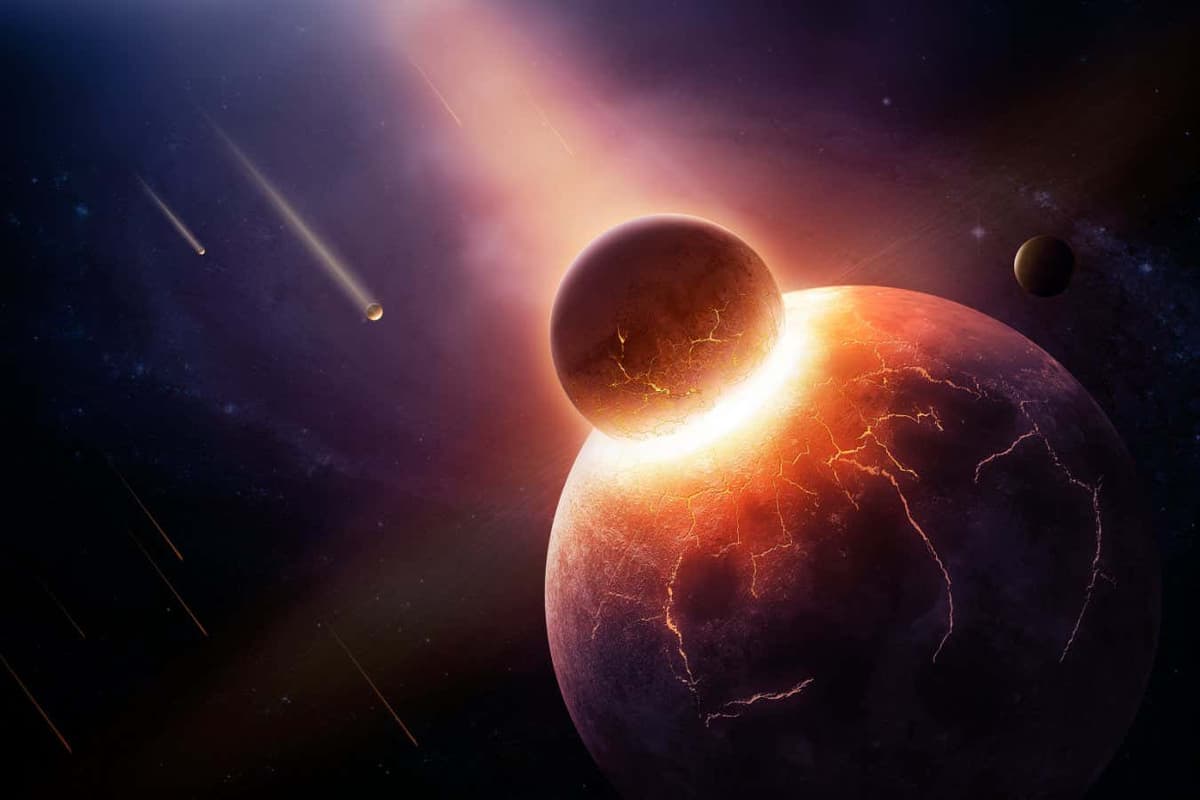
Hundreds of New Moons Are Revealing Our Solar System's Violent History
Why It Matters
Understanding the surge of irregular moons reshapes models of planetary formation and collision history, offering crucial clues to the origin of Saturn’s rings and the long‑term stability of distant planetary systems.
Key Takeaways
- •Over 100 new irregular moons discovered around outer planets
- •Orbits are highly eccentric and inclined, indicating capture events
- •Findings suggest recent violent collisions in the outer solar system
- •Moon fragments may have supplied material for Saturn’s rings
- •Survey highlights need to revisit models of solar system evolution
Pulse Analysis
The outer reaches of our solar system have long been portrayed as a tranquil backwater, but a new wave of observations is overturning that narrative. Using high‑sensitivity telescopes and sophisticated image‑processing algorithms, researchers have teased out faint, fast‑moving points of light that belong to more than a hundred previously hidden moons. These irregular satellites are diminutive, dark, and follow chaotic trajectories that differ sharply from the well‑ordered orbits of the Galilean moons or Titan. Their discovery underscores the power of modern survey techniques to reveal the solar system’s hidden architecture.
Beyond the sheer numbers, the orbital characteristics of these moons carry a story of recent turbulence. Their extreme eccentricities and steep inclinations point to capture events, likely the aftermath of massive collisions that shattered larger progenitor bodies. Such violent episodes challenge the conventional view that the outer planets settled into a stable configuration billions of years ago. Instead, the data suggest that the distant planetary neighborhood may have undergone significant reshaping as recently as a few hundred million years ago, prompting a reevaluation of dynamical models that govern planet‑moon interactions and long‑term orbital stability.
One of the most tantalizing implications lies in the mystery of Saturn’s rings. The irregular moons, especially those orbiting Saturn, could be the source of the icy debris that coalesced into the planet’s spectacular ring system after a catastrophic breakup. If a captured moon was torn apart by tidal forces, its fragments would disperse into a thin, reflective disk—a scenario now gaining empirical support. Understanding this process not only solves a long‑standing puzzle but also informs how ring systems might arise around exoplanets. Future missions equipped with high‑resolution imaging and spectroscopic tools will aim to map these moons in detail, offering fresh insights into planetary formation, collision cascades, and the dynamic history of our cosmic backyard.
Hundreds of new moons are revealing our solar system's violent history
Comments
Want to join the conversation?
Loading comments...