Why It Matters
The Eta Aquariids provide a rare southern‑hemisphere meteor show for northern hobbyists, highlighting the influence of historic cometary debris on current skywatching. Understanding its timing and visibility helps astronomers and enthusiasts maximize observations despite lunar interference.
Key Takeaways
- •Eta Aquariids peak May 5‑6 with ZHR up to 100 meteors/hour.
- •Radiant lies just south of celestial equator, limiting northern pre‑dawn visibility.
- •2026 shower coincides with 84% illuminated waning gibbous moon, reducing visibility.
- •Halley's Comet is parent body; meteoroids were ejected millennia ago.
- •Southern observers enjoy higher altitude, making Eta Aquariids a prime summer show.
Pulse Analysis
Meteor showers like the Eta Aquariids are a cornerstone of amateur astronomy, ranking third after the Perseids and Geminids in annual activity. Their southern‑hemisphere origin means the radiant rises late for most North American observers, creating a narrow pre‑dawn window that challenges casual skywatchers. Yet the shower’s high velocity (≈ 65 km s⁻¹) and frequent persistent trains make it a compelling target for those willing to chase the early morning sky.
The Eta Aquariids owe their existence to Halley's Comet, the legendary 74.7‑year visitor that last passed Earth in 1986 and will return in 2061. The meteoroids we encounter today were expelled thousands of years ago during historic outbursts, especially in the 5th and 10th centuries AD. While typical rates hover around 50 meteors per hour, past peaks—such as the 140‑meteor hour in 2013—show the shower’s potential for surprise. Astronomers monitor the comet’s dust trails to forecast future spikes, making the 2026 season a point of interest for both observers and researchers.
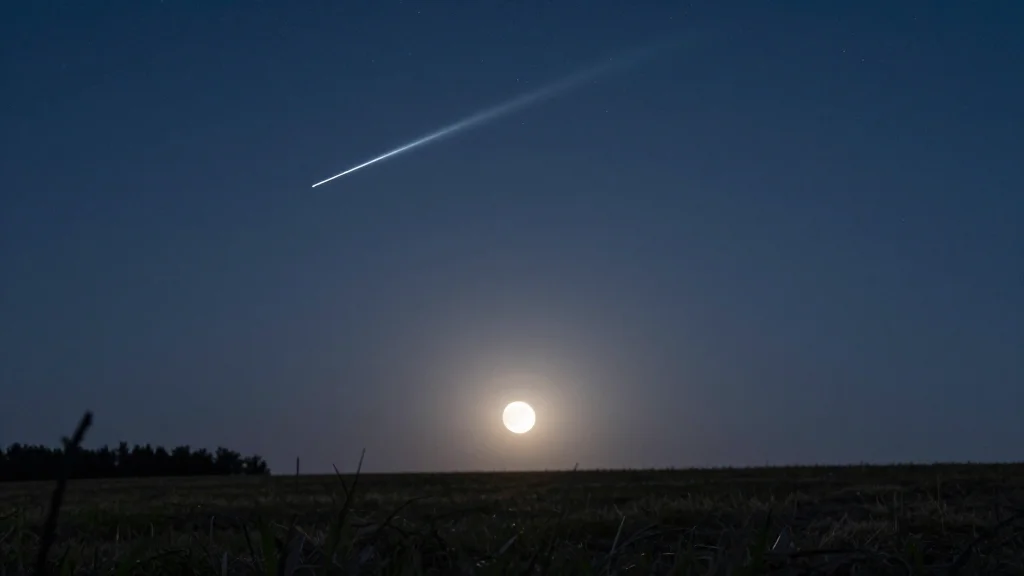
For 2026, the waning gibbous moon will be 84% illuminated, casting a bright glow that can drown out fainter meteors. Observers can mitigate this by positioning themselves with the moon blocked by terrain or structures, and by using wide‑field optics that capture the radiant’s low horizon. Dark‑adapted eyes, minimal light pollution, and a clear pre‑dawn sky are essential. Despite the lunar challenge, the Eta Aquariids remain a valuable reminder of how ancient cometary debris continues to shape modern night‑time experiences.
Hunting the elusive Eta Aquariid meteors
Comments
Want to join the conversation?
Loading comments...