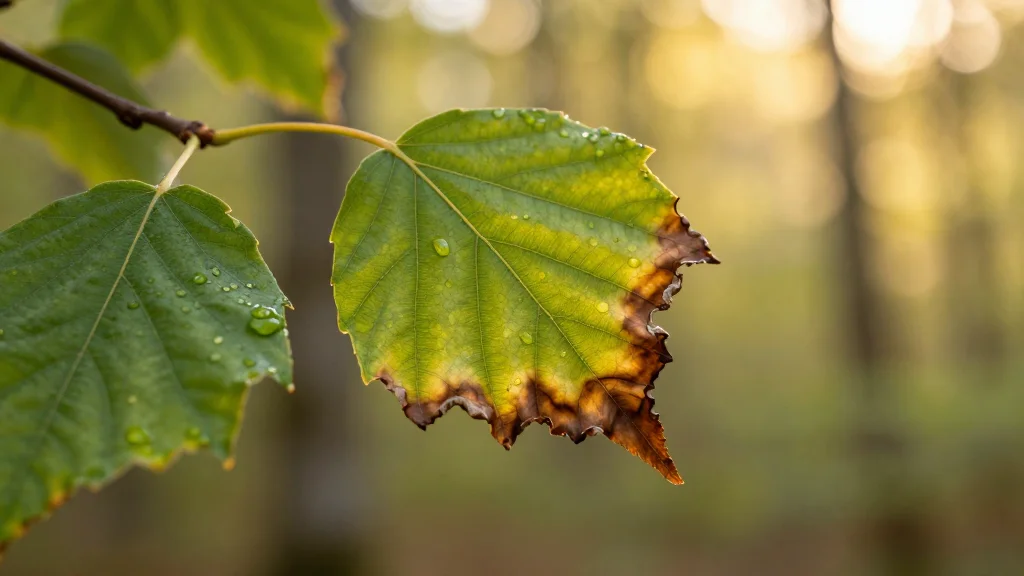
Hydraulic Stress Limits Thermal Acclimation in Trees Under Chronic Drought
Why It Matters
The research reveals that the coexistence of heat and drought can override trees’ adaptive capacity, raising the risk of widespread forest die‑back and challenging climate‑resilience strategies.
Key Takeaways
- •Five-year drought+heat experiment on European beech and downy oak.
- •Trees maintained leaf cooling under warming alone, but not with drought.
- •Soil moisture deficit narrowed hydraulic safety margins, causing stomatal closure.
- •Stomatal closure eliminated evaporative cooling, leading to leaf scorching in beech.
- •Findings highlight vulnerability of temperate forests to combined hot‑drought events.
Pulse Analysis
Rising global temperatures are increasingly paired with prolonged dry spells, creating "hot‑drought" events that stress forest ecosystems. Researchers at the University of Utah and collaborators set up a multiyear manipulation of soil moisture and air temperature to probe how two cornerstone European species—beech and downy oak—adjust leaf thermoregulation under such stress. By maintaining separate warming‑only and combined warming‑plus‑drought plots for five years, the study isolates the physiological pathways that enable—or block—thermal acclimation, offering a rare long‑term perspective often missing from short‑term heatwave experiments.
The results reveal a stark divergence: when water is abundant, both species sustain leaf cooling, preserving positive thermal safety margins despite higher ambient temperatures. However, chronic drought narrows hydraulic safety margins, prompting stomatal closure that halts evaporative cooling. This hydraulic‑thermal feedback drives leaf temperatures beyond critical thresholds, causing photosystem II failure and visible scorching, particularly in beech, which is more drought‑sensitive. Oak displays slightly greater resilience but still suffers reduced cooling efficiency, underscoring that hydraulic stress, not temperature alone, caps acclimation potential.
These insights have immediate implications for forest management and climate‑impact modeling. Predictive frameworks must integrate hydraulic constraints alongside temperature projections to avoid underestimating mortality risk. Silvicultural practices may need to prioritize species or genotypes with broader hydraulic safety margins, and assisted migration strategies should consider both thermal and water‑use traits. As policymakers design mitigation and adaptation plans, acknowledging the hydraulic‑thermal cascade highlighted by this study will be essential to safeguard temperate forest carbon stocks and biodiversity against an era of more frequent hot‑drought extremes.
Hydraulic stress limits thermal acclimation in trees under chronic drought
Comments
Want to join the conversation?
Loading comments...