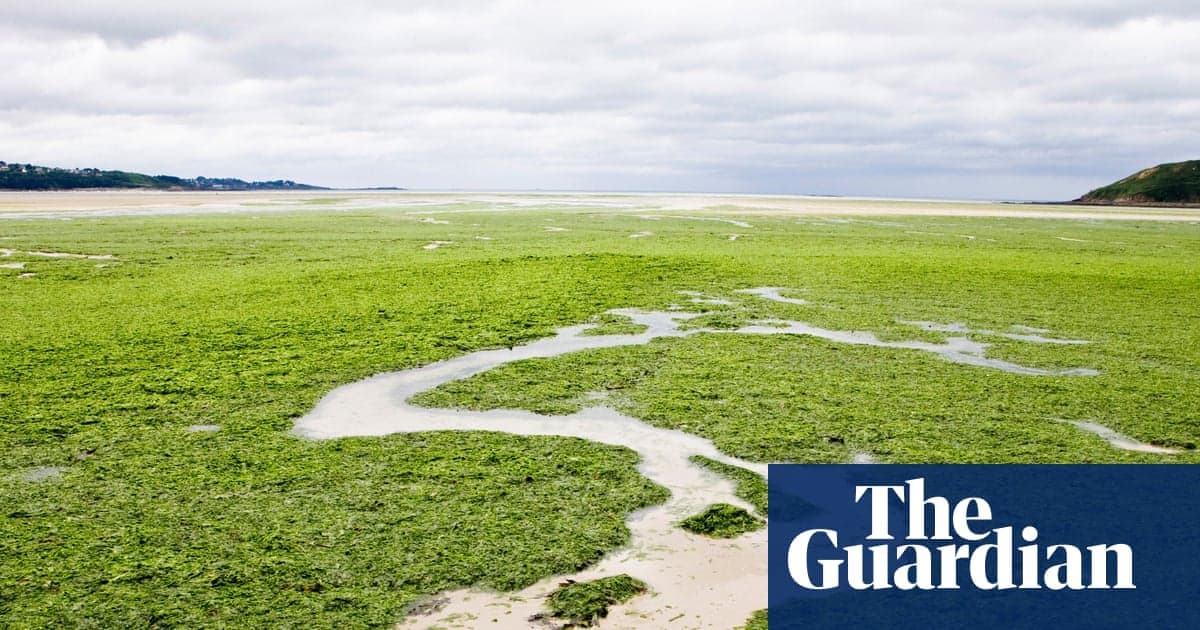
‘I Couldn’t Breathe’: The Sinister Spread of France’s Killer Seaweed
Why It Matters
The lethal seaweed threatens public health, undermines Brittany’s tourism economy, and highlights the broader cost of agricultural nitrogen pollution in Europe.
Key Takeaways
- •Ulva armoricana blooms release lethal hydrogen sulfide on Brittany beaches
- •Nitrate runoff from intensive pig farms fuels algal overgrowth
- •At least five human deaths linked to seaweed gas since 1989
- •Government action plans criticized as ineffective and under‑funded
- •Tourism and agriculture clash over responsibility for blooms
Pulse Analysis
Brittany’s iconic coastline is now shadowed by a green menace: Ulva armoricana, a fast‑growing seaweed that forms thick, airtight mats on beaches. When these mats rot, they emit hydrogen sulfide, a gas that smells of rotten eggs at 0.05 ppm and becomes fatal above 500 ppm. Documented incidents—from the 1989 jogger’s death to the 2016 collapse of Jean‑René Auffray—show that sudden exposure, often when the crust is broken by tractors or horses, can cause rapid pulmonary edema and death. While low‑level exposure can trigger headaches and asthma, the lethal spikes occur in confined pockets, making beach clean‑ups both a safety and environmental priority.
The ecological driver behind the blooms is the region’s nitrogen load, largely sourced from intensive pig farming. Brittany, home to over half of France’s pig population on just 5 % of its land, applies massive quantities of synthetic fertilizers and nitrogen‑rich feed, leaching nitrates into rivers and coastal waters. These nutrients create ideal conditions for Ulva to proliferate, especially in shallow, low‑flow estuaries. Scientific studies consistently link nitrate concentrations above 10 mg/L to algal overgrowth, yet agricultural lobbies have resisted stricter limits, arguing economic hardship for rural communities.
The crisis sits at the intersection of public health, tourism, and agricultural policy. Beaches closed for safety deter the millions of visitors who sustain local economies, while farmers face mounting regulation and public blame. Successive government action plans—first in 2010, then 2017—have offered voluntary measures and increased clean‑up funding but lack enforcement teeth, prompting criticism from environmental groups and frustration from growers. A comprehensive solution will require coordinated nutrient‑reduction strategies, robust monitoring of hydrogen sulfide hotspots, and transparent communication to protect both residents and the region’s vital tourism sector.
‘I couldn’t breathe’: the sinister spread of France’s killer seaweed
Comments
Want to join the conversation?
Loading comments...