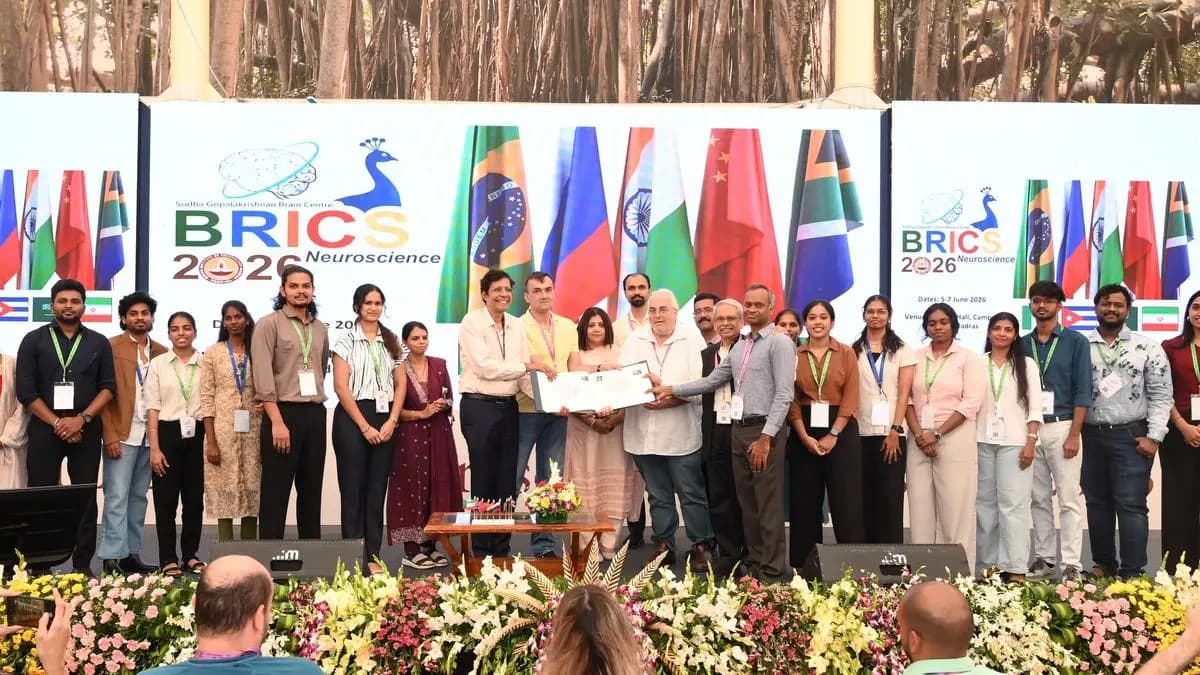
IIT Madras Brain Centre Releases World’s Most Detailed 3D Atlas of Human Brainstem at Cellular Resolution
Companies Mentioned
Why It Matters
By delivering a micron‑resolution, lifespan‑spanning brainstem map, ANCHOR opens new pathways for precision neurosurgery, disease modeling, and drug discovery, accelerating neuroscience research worldwide.
Key Takeaways
- •ANCHOR maps >200 brainstem nuclei at micron resolution
- •Atlas spans prenatal, childhood, and adult human brainstems
- •Publicly accessible via https://anchor.humanbrain.in for global researchers
- •Enables precision neurosurgery beyond MRI/CT capabilities
- •SGBC targets 100 whole‑brain maps by 2028
Pulse Analysis
The release of ANCHOR marks a watershed moment in neuroanatomy, overcoming the long‑standing limitation of macroscopic imaging modalities. Traditional MRI and CT scans resolve the brainstem only to the millimetre scale, obscuring the intricate network of hundreds of nuclei that govern vital functions. By slicing specimens into 10‑20‑micron sections and leveraging advanced AI reconstruction, IIT Madras has produced a truly cellular‑resolution, three‑dimensional reference that can be interrogated digitally. This level of detail not only enriches basic science but also creates a common platform for cross‑institutional collaboration.
Clinicians stand to benefit immediately from the atlas’s precision. Neurosurgeons can now plan interventions with a granular map of critical nuclei, reducing the risk of collateral damage during procedures such as deep‑brain stimulation or tumor resection. Researchers studying neurodegenerative disorders—Alzheimer’s, Parkinson’s, and rare brainstem pathologies—can correlate disease‑specific alterations with exact anatomical landmarks, accelerating biomarker discovery and therapeutic targeting. Moreover, the open‑access model invites pharmaceutical firms to integrate the data into AI‑driven drug design pipelines, potentially shortening the path from target validation to clinical trials.
Beyond the immediate scientific payoff, ANCHOR underscores India’s growing influence in high‑tech biomedical research. Funded by philanthropic contributions from Infosys co‑founder Kris Gopalakrishnan and government seed money, the SGBC’s interdisciplinary team of over 200 experts exemplifies a scalable model of public‑private partnership. As the centre aims to map 100 whole brains—including diseased specimens—within two years, the atlas will evolve into a dynamic repository that tracks structural changes across the lifespan. This ambition positions the platform as a cornerstone for future initiatives in precision medicine, neuro‑AI, and global neuroscience collaboration.
IIT Madras Brain Centre releases world’s most detailed 3D atlas of human brainstem at cellular resolution
Comments
Want to join the conversation?
Loading comments...