Improving Animal Welfare in the Lab: AI Helps Better Detect Pain
Why It Matters
Standardized, objective pain detection improves animal welfare and data reliability, reducing experimental variability and ethical concerns across biomedical research.
Key Takeaways
- •GrimACE provides real‑time, AI‑driven pain scores for lab mice
- •System replaces subjective Mouse Grimace Scale with objective metrics
- •Open‑source kit enables global standardization of welfare assessments
- •Study showed AI scores closely matched expert human ratings
- •Adoption supports 3R principles, reducing animal distress and experimental bias
Pulse Analysis
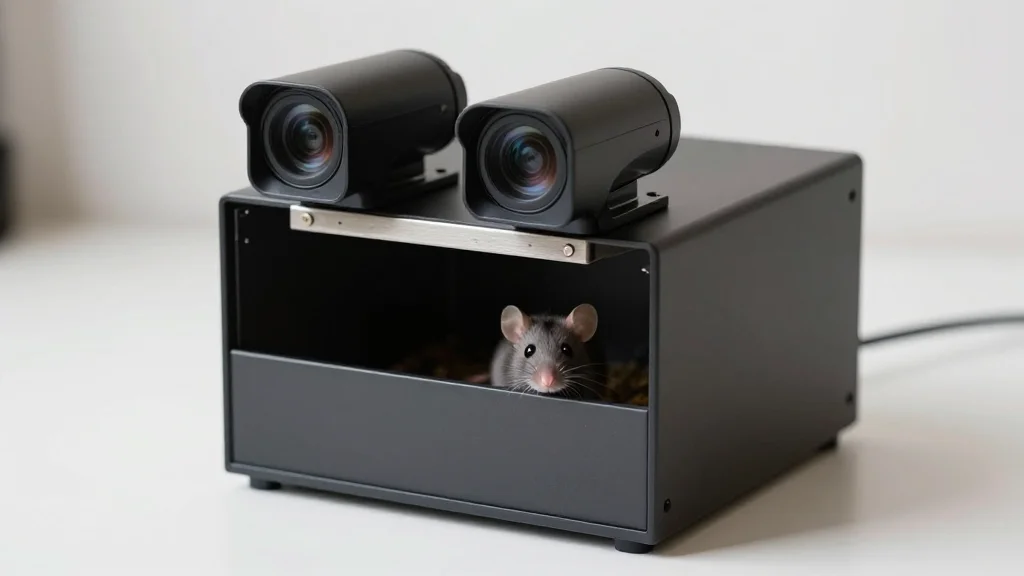
The push for humane research practices has accelerated the adoption of artificial intelligence in pre‑clinical labs. ETH Zurich’s 3R Hub, dedicated to Replace‑Reduce‑Refine principles, introduced GrimACE—a dual‑camera, infrared‑lit enclosure that captures high‑resolution facial and postural data from mice. By feeding these images into a machine‑learning model, the system quantifies subtle pain indicators—eye narrowing, nose bulging, whisker shifts—without human observation, thereby eliminating stress caused by direct handling.
GrimACE’s core advantage lies in its consistency and speed. Traditional Mouse Grimace Scale scoring requires trained observers to compare live or recorded images against reference charts, a labor‑intensive process prone to inter‑rater variability. In a controlled study, the AI’s pain scores aligned closely with those of expert raters, while three human assessors displayed significant rating divergence. The algorithm also extracts behavioral metrics such as limb angles and acceleration, offering a multimodal view of animal well‑being that surpasses visual inspection alone. This precision enables researchers to administer analgesics promptly and adjust protocols based on reliable, quantifiable data.
Beyond the laboratory, GrimACE’s open‑source distribution promises worldwide standardization of welfare monitoring. Early inquiries from the United States and United Kingdom suggest rapid uptake, while integration into ETH’s Phenomics Center demonstrates scalability for high‑throughput studies. As more institutions contribute image datasets, the model’s bias diminishes, further refining accuracy. Ultimately, the technology not only safeguards animal subjects but also enhances reproducibility of experimental outcomes, aligning ethical imperatives with scientific rigor.
Improving animal welfare in the lab: AI helps better detect pain
Comments
Want to join the conversation?
Loading comments...