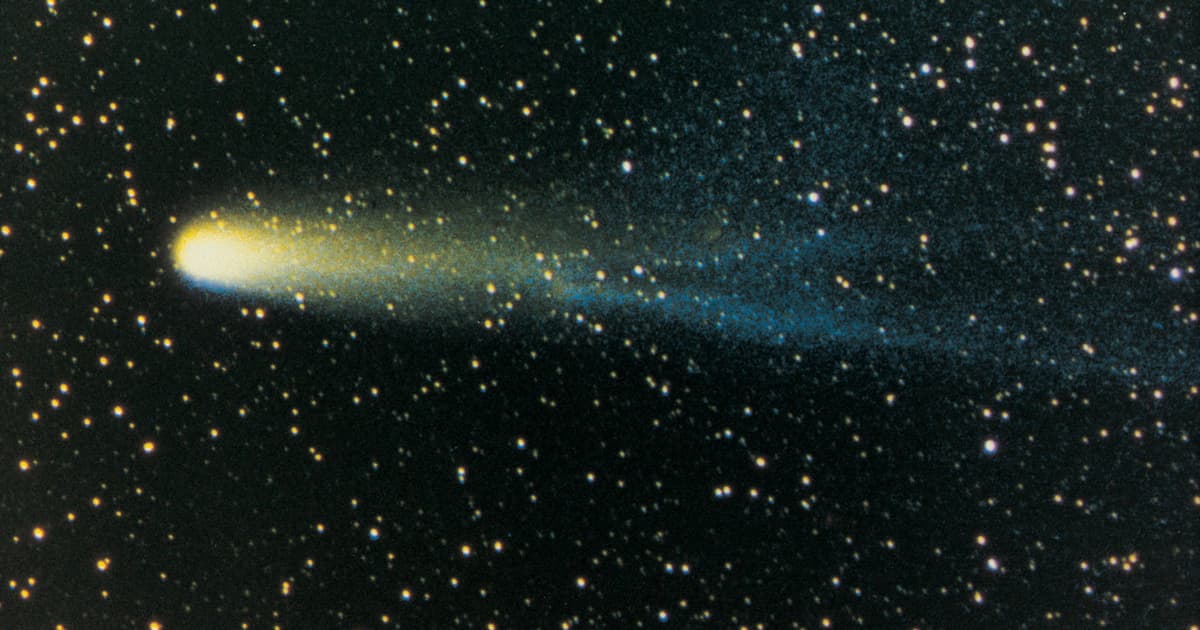
In 2017, the First Confirmed Visitor From Another Star System Tumbled Through the Solar System on a Path that Should Have Been Simple to Read, Then Accelerated Slightly as It Left without Showing the Coma or Tail of an Active Comet — a Gap that Let Harvard Astronomer Avi Loeb Argue It Might Be Alien Technology, a Claim Most Astronomers Reject but One that Has Never Quite Gone Away.
Why It Matters
Understanding ʻOumuamua’s true nature informs how we identify and study future interstellar visitors, shaping planetary‑defense strategies and the search for extraterrestrial technology. The debate also highlights gaps in our ability to characterize fleeting cosmic objects.
Key Takeaways
- •ʻOumuamua exhibited measurable acceleration without a detectable cometary tail
- •Loeb’s light‑sail hypothesis relies on an ultra‑low mass‑to‑area ratio
- •Hydrogen‑ice outgassing offers a leading natural explanation
- •Rubin Observatory expected to detect 1‑3 similar objects annually
Pulse Analysis
The discovery of ʻOumuamua in 2017 marked a watershed moment for astronomy, providing the first direct evidence that material from other star systems can traverse our neighborhood. Detected after perihelion, the object’s trajectory was unmistakably hyperbolic, confirming its interstellar origin. What set it apart was a subtle, non‑gravitational push that persisted as it receded from the Sun, yet telescopes found no coma, dust, or gas that typically accompany cometary acceleration. This mismatch forced scientists to confront an observational gap that standard models could not readily fill.
The scientific community split between two camps. Avi Loeb and collaborator Shmuel Bialy proposed that solar radiation pressure on an ultra‑thin, millimetre‑scale sail could generate the observed thrust, implying an artificial construct. Critics countered that natural mechanisms—such as outgassing of trapped molecular hydrogen from a water‑rich ice matrix, or a porous, fluffy structure—could produce similar effects without invoking alien technology. Recent work on “dark comets” supports the plausibility of invisible outgassing, though debates over surface temperature calculations and compositional assumptions keep the issue unsettled. The lack of follow‑up observations, as ʻOumuamua vanished beyond detection limits, means the hypothesis remains anchored to a brief, noisy dataset.
Future resolution hinges on catching more interstellar interlopers. The Vera C. Rubin Observatory, slated to begin full‑scale surveys, is projected to discover one to three ʻOumuamua‑like bodies each year, alongside more conventional cometary visitors like 2I/Borisov and 3I/ATLAS. Early, high‑resolution tracking of such objects will allow astronomers to measure acceleration, composition, and morphology in real time, potentially confirming or refuting exotic scenarios. As detection capabilities improve, the mystery of ʻOumuamua will transition from speculative debate to empirical science, sharpening our understanding of the galaxy’s small‑body population and the limits of natural versus engineered phenomena.
In 2017, the first confirmed visitor from another star system tumbled through the solar system on a path that should have been simple to read, then accelerated slightly as it left without showing the coma or tail of an active comet — a gap that let Harvard astronomer Avi Loeb argue it might be alien technology, a claim most astronomers reject but one that has never quite gone away.
Comments
Want to join the conversation?
Loading comments...