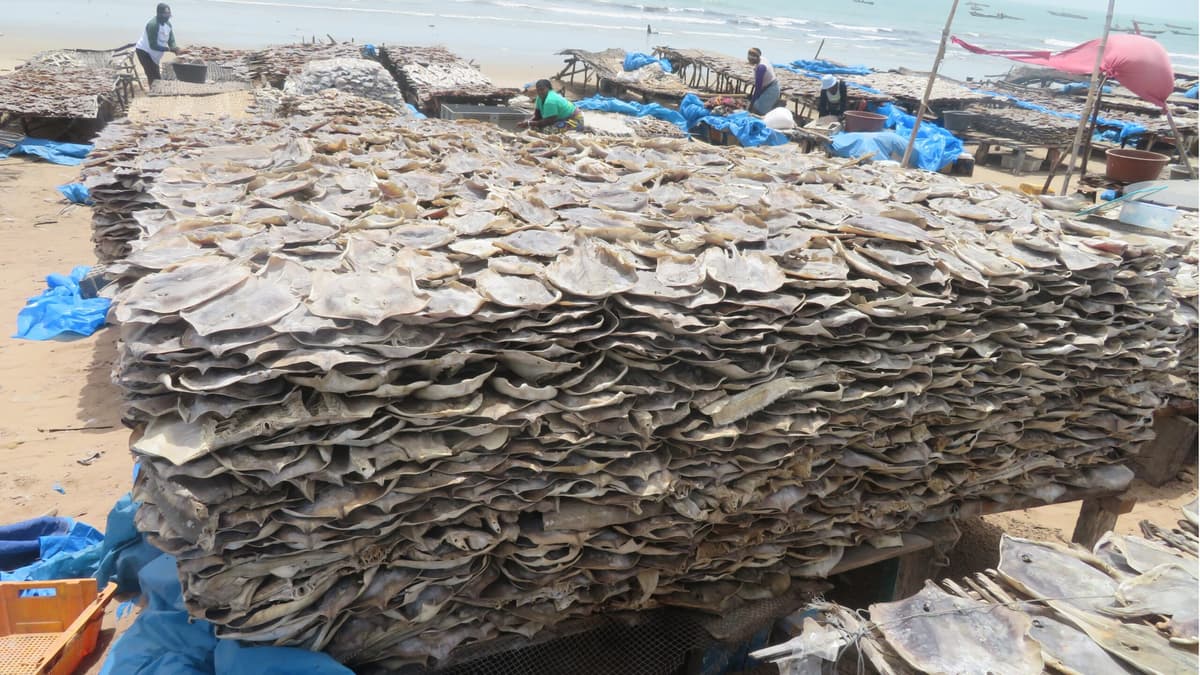
In Senegal, Artisanal Fishing Kills a Surprising Number of Sharks and Rays: Study
Why It Matters
Artisanal catch volumes threaten already endangered shark and ray populations and expose gaps in international trade monitoring, jeopardizing biodiversity and compliance with CITES obligations.
Key Takeaways
- •Artisanal fisheries in Senegal caught over 100,000 sharks, rays, guitarfish
- •Estimated annual catch could rise to 1.7–3.5 million individuals
- •82.6% of landed biomass were CITES‑listed threatened species
- •Most shark and ray exports lack required permits, breaching CITES
- •Artisanal fishing impact may exceed industrial trawling on elasmobranchs
Pulse Analysis
The Senegalese study shines a light on a hidden driver of marine biodiversity loss: small‑scale, or artisanal, fisheries. While offshore industrial trawlers have long been blamed for depleting shark and ray stocks, the research from Kafountine and Elinkine shows that local fishers alone may be removing hundreds of thousands of vulnerable elasmobranchs each year. By counting individual specimens and scaling the data, scientists estimate a national harvest of up to 3.5 million sharks, rays and guitarfish, a figure that dwarfs most regional industrial catches and underscores the sheer magnitude of informal fishing effort along West Africa’s coast.
Compounding the ecological impact is a largely unregulated trade network that moves meat, dried products, and fins across borders with little oversight. Export shipments to Ghana, Nigeria and onward to Asian markets often bypass mandatory CITES documentation, despite more than three‑quarters of the recorded biomass belonging to species listed on the convention’s appendices. This regulatory blind spot not only violates international agreements but also hampers efforts to trace supply chains, assess sustainability, and enforce non‑detriment findings. The study’s authors warn that without robust permit systems and transparent reporting, the illegal trade could continue to fuel population declines.
For policymakers and conservationists, the findings demand a two‑pronged response: improved data collection at landing sites and stronger cross‑border enforcement of CITES provisions. Investing in species‑level monitoring, training fishers to identify protected taxa, and establishing community‑based management plans could curb unsustainable harvests while preserving livelihoods that depend on fish for protein. International donors and NGOs may also play a role by supporting traceability technologies and capacity‑building initiatives. Ultimately, aligning local fishing practices with global conservation standards is essential to prevent the silent extinction of sharks and rays in Senegal and across the tropical Atlantic.
In Senegal, artisanal fishing kills a surprising number of sharks and rays: study
Comments
Want to join the conversation?
Loading comments...