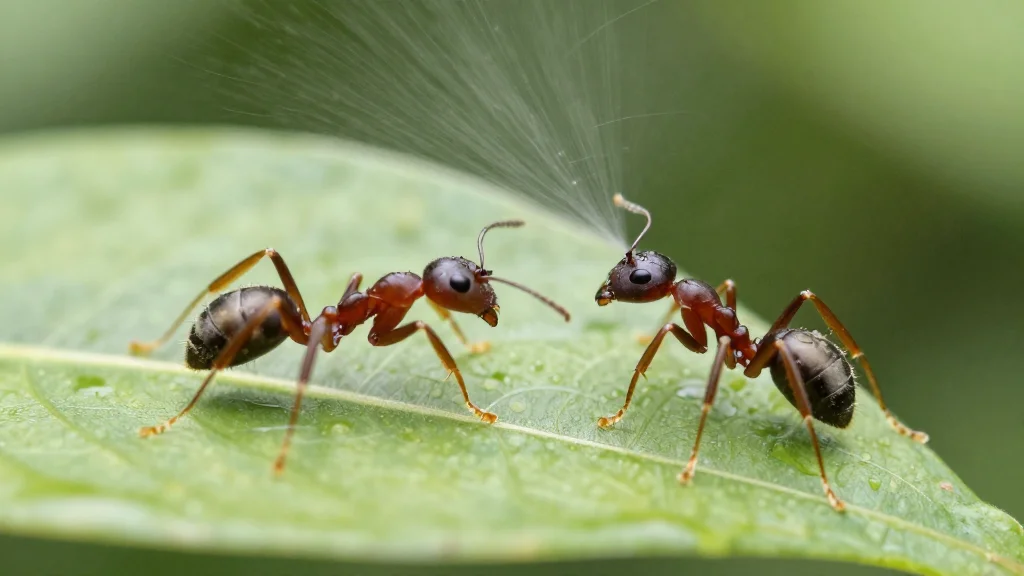
In the Desert, a ‘Cleaning Station’ for Ants
Why It Matters
The discovery reveals a novel form of insect mutualism, prompting new research into ant ecology and the evolution of cooperative behaviors across species.
Key Takeaways
- •Harvester ants host cone ants for grooming in desert
- •Cone ants nibble debris, acting like cleaner fish
- •Observation recorded in 2006, published 2026 after 20 years
- •Study appears in Ecology and Evolution journal
- •Highlights rare interspecies mutualism among insects
Pulse Analysis
The desert tableau captured by Mark Moffett underscores the enduring value of meticulous natural‑history observation. While many modern studies rely on high‑throughput data, a single photograph can unlock decades‑long research pathways. Moffett’s images, taken during a casual coffee break in Portal, Arizona, provide a vivid record of an unexpected interaction, reminding scientists that field curiosity remains a cornerstone of discovery.
The partnership between harvester ants and cone ants mirrors the classic cleaner‑fish dynamic seen on coral reefs, yet it unfolds on sun‑baked soil. Cone ants climb onto the larger hosts, licking away fungal spores, dead tissue, and other contaminants that could impair the harvesters’ foraging efficiency. In return, the cone ants gain a reliable food source and protection from predators. This reciprocal cleaning service challenges the prevailing view that ant interactions are primarily competitive, expanding the ecological lexicon to include mutualistic grooming alliances.
Beyond its immediate intrigue, the finding has broader implications for evolutionary biology and pest management. Understanding how mutualistic networks evolve in harsh environments can inform models of resilience and cooperation among social insects. Moreover, the cleaning behavior could inspire bio‑inspired strategies for managing ant colonies in agriculture, leveraging natural symbionts to reduce disease spread. As researchers delve deeper into the genetic and chemical cues driving this alliance, the desert cleaning station may become a reference point for interdisciplinary studies linking behavior, ecology, and applied entomology.
In the Desert, a ‘Cleaning Station’ for Ants
Comments
Want to join the conversation?
Loading comments...