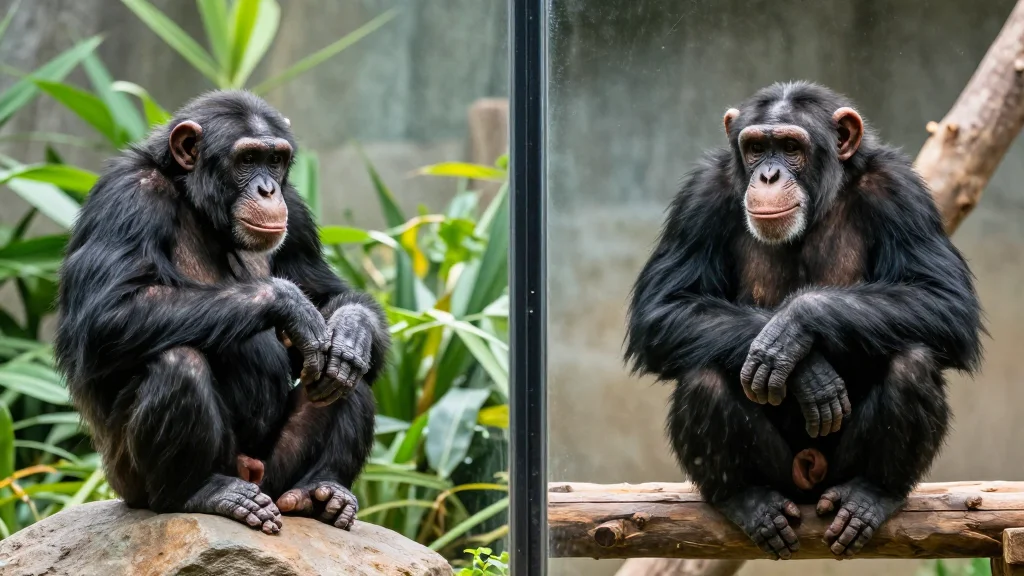
In Zoos, ‘Peaceful’ Bonobos Are Just as Aggressive as Chimps, Study Suggests
Why It Matters
The research highlights that perceived behavioral differences between bonobos and chimpanzees are context‑dependent, influencing captive management practices and interpretations of primate social evolution. It also underscores the need for caution when extrapolating zoo data to wild populations.
Key Takeaways
- •Zoo bonobos show aggression equal to chimpanzees.
- •Male chimpanzees are more aggressive than females.
- •Bonobo males and females display similar aggression levels.
- •Female‑to‑female aggression remains low in both species.
- •Findings limited to single‑group zoo observations.
Pulse Analysis
The new study, published in *Science Advances*, systematically recorded chasing, hitting, wrestling and biting among zoo‑housed bonobos and chimpanzees, providing the first large‑scale, controlled comparison of intra‑group aggression in these close relatives. By focusing on European institutions where diet, space and social composition are relatively uniform, researchers could isolate species‑specific patterns from environmental noise. The findings overturn the popular image of bonobos as universally gentle, showing that in captivity they can be just as aggressive as chimpanzees, though the distribution of aggression across sexes differs markedly.
Understanding these nuances reshapes how primatologists interpret the socio‑ecological drivers of aggression. In the wild, bonobos thrive in resource‑rich habitats that may dampen competition, while chimpanzees often contend with patchy food supplies, fostering male dominance and higher conflict. The zoo setting levels these ecological variables, revealing that intrinsic social structures—such as male‑driven aggression in chimps and more egalitarian aggression in bonobos—persist regardless of external pressures. For zoo managers, this insight emphasizes the importance of monitoring group composition and providing enrichment that mitigates conflict, especially in mixed‑sex bonobo groups where aggression is not sex‑biased.
Beyond captive care, the research carries broader implications for evolutionary anthropology. It cautions against overgeneralizing from limited observations, reminding scholars that intergroup violence—particularly lethal male raids in chimpanzees—remains a critical differentiator in the wild. Future work combining longitudinal field data with controlled zoo experiments could clarify how ecological abundance, social hierarchy, and individual personalities interact to shape aggression. Such integrated approaches will refine our models of primate social evolution and inform conservation messaging that accurately reflects the complex behavioral repertoire of our closest animal relatives.
In zoos, ‘peaceful’ bonobos are just as aggressive as chimps, study suggests
Comments
Want to join the conversation?
Loading comments...