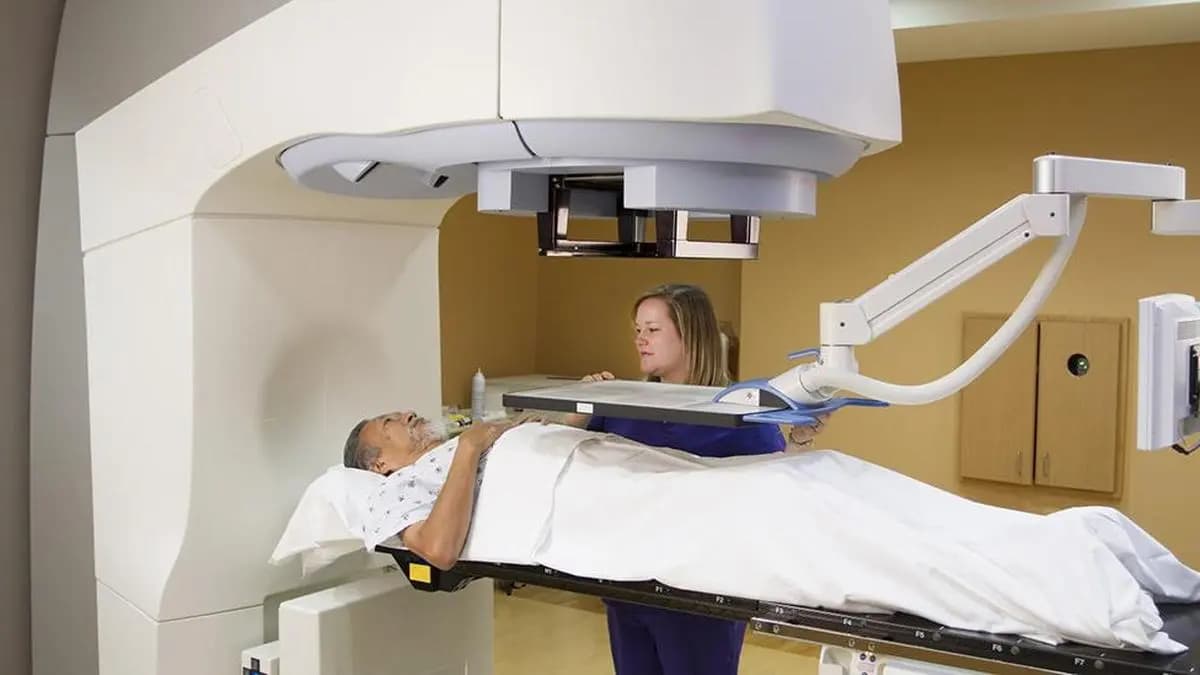
India Achieves AI Breakthrough in Cancer Care with Mask-Free, Simulationless Radiotherapy
Why It Matters
The breakthrough reduces treatment time and discomfort, enabling radiotherapy for patients who cannot tolerate traditional immobilisation. It signals a shift toward more patient‑centric, efficient oncology workflows in emerging markets.
Key Takeaways
- •First Indian use of mask‑free, simulation‑less radiotherapy for head‑neck cancer
- •Combines Surface Guided Radiotherapy with adaptive planning, eliminating immobilisation masks
- •Treatment delivered without simulation CT, cutting preparation time dramatically
- •Patient stabilized and discharged, demonstrating clinical efficacy of the protocol
- •Technique promises faster, precise care for advanced‑stage cancer patients
Pulse Analysis
Radiotherapy remains a cornerstone of curative and palliative cancer treatment, but traditional head‑and‑neck protocols demand rigid immobilisation masks and a dedicated simulation computed‑tomography (CT) scan. These steps, while ensuring geometric accuracy, add hours of preparation and can be intolerable for patients with severe pain, bleeding, or limited mobility. In emerging markets such as India, the logistical burden of simulation suites and the cost of custom masks often delay care, especially for advanced‑stage disease where time is critical. Accelerating access also aligns with national health goals to reduce cancer mortality.
The team at Sir HN Reliance Foundation Hospital leveraged Surface Guided Radiotherapy (SGRT) together with adaptive radiotherapy to bypass both the mask and the simulation CT. SGRT uses optical cameras to track the patient’s surface in real time, allowing the treatment beam to be adjusted instantly for any movement. By generating a treatment plan on the fly, clinicians delivered high‑dose X‑rays directly to the bleeding tumor, stopping hemorrhage within a single session. The 50‑year‑old patient recovered sufficiently to be discharged within weeks, proving the clinical viability of Simulation‑Free Radiotherapy (SFRT).
The successful SFRT case signals a paradigm shift for oncology centers seeking faster, patient‑friendly workflows. Eliminating simulation reduces equipment usage and shortens the overall treatment timeline, which could expand radiotherapy capacity in high‑volume hospitals and lower per‑patient costs. Moreover, the mask‑free approach improves comfort, potentially increasing adherence among frail or pediatric patients. As AI‑driven imaging and real‑time surface tracking mature, we can expect broader adoption across Asia and beyond, prompting manufacturers to integrate SGRT modules into existing linear accelerators.
India achieves AI breakthrough in cancer care with mask-free, simulationless radiotherapy
Comments
Want to join the conversation?
Loading comments...