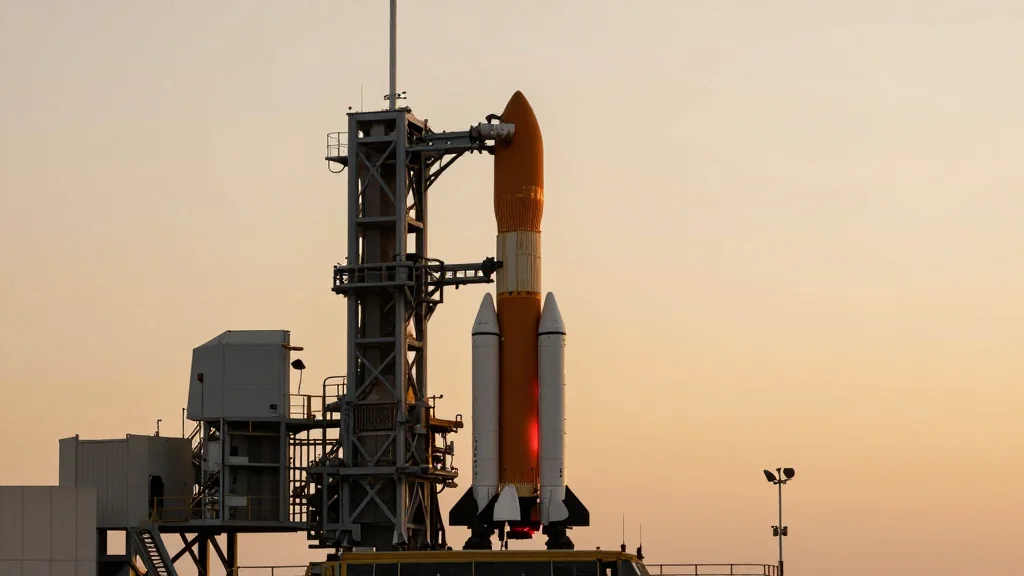
India Won’t Reveal the Cause of Its Two PSLV Rocket Failures
Companies Mentioned
Why It Matters
Without clear technical disclosure, ISRO risks losing confidence from global satellite operators, jeopardising its share of a rapidly expanding commercial launch market. Transparency is essential for attracting customers who demand reliability and accountability.
Key Takeaways
- •ISRO withheld details on PSLV third-stage anomaly despite expert committee report
- •Two consecutive PSLV failures occurred in 2025 and Jan 2026, same stage
- •Lack of transparency risks losing commercial launch customers
- •Upcoming June 2026 PSLV launch delayed despite claimed resolution
- •India's satellite launch market share has eroded post‑COVID
Pulse Analysis
The Polar Satellite Launch Vehicle has been India’s workhorse for delivering Earth‑observation and scientific payloads for decades. Its recent twin failures—first in late 2025 and again in January 2026—both originated in the third stage, a critical propulsion segment. While the Union Minister of State for Science and Technology confirmed an expert panel pinpointed the fault, the agency has not released any technical specifics, leaving the aerospace community to speculate about the root cause and the robustness of the corrective measures.
Transparency is a cornerstone of the commercial launch ecosystem. Satellite operators, especially those from Europe, North America, and emerging Asian markets, evaluate launch providers on reliability, schedule certainty, and openness about risk mitigation. ISRO’s reticence contrasts sharply with competitors such as SpaceX, Arianespace, and Japan’s JAXA, which routinely publish post‑flight analyses. The lack of detail erodes trust, making it harder for ISRO to secure lucrative contracts despite the global satellite market projected to exceed $150 billion this year. The agency’s dwindling commercial share—once buoyed by cost‑effective services—now threatens its long‑term financial sustainability.
Looking ahead, ISRO must balance national security considerations with market expectations. Publishing a concise failure‑analysis report, even in a redacted form, could restore confidence and signal that corrective actions are verifiable. Additionally, accelerating the next PSLV launch, while ensuring rigorous testing, would demonstrate operational resilience. If the agency can pivot toward greater openness, it may reclaim its position as a cost‑competitive alternative in the crowded launch sector, supporting India’s broader ambitions in space‑based services and technology exports.
India won’t reveal the cause of its two PSLV rocket failures
Comments
Want to join the conversation?
Loading comments...