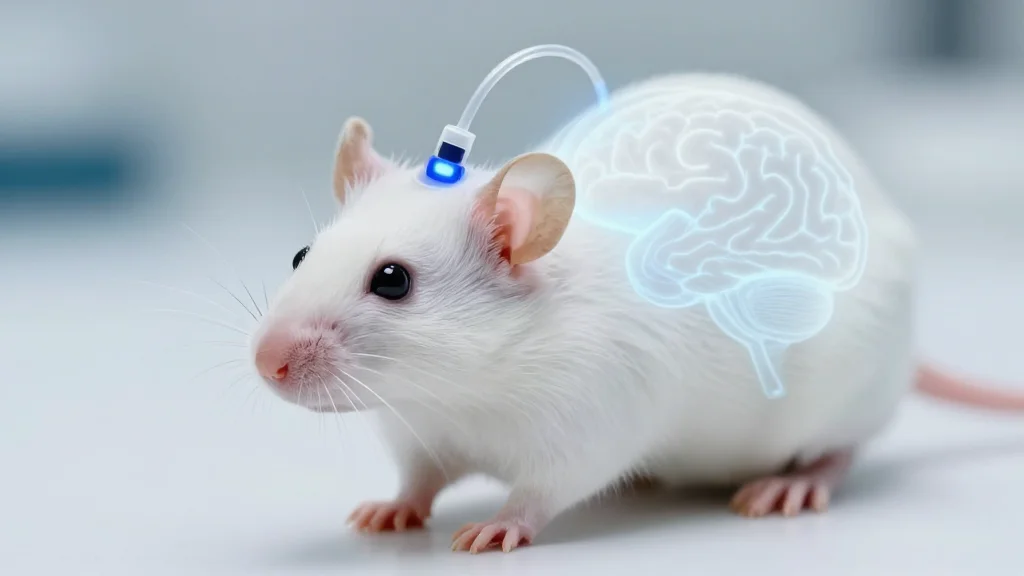
Induced Cortical On/Off Periods Mimic Sleep Functions
Why It Matters
If localized on/off cycles can deliver sleep’s restorative benefits, clinicians may treat insomnia, neurodegeneration, and psychiatric disorders without forcing full sleep episodes. This reshapes how the industry approaches sleep‑related therapeutics and brain‑health interventions.
Key Takeaways
- •Optogenetic off periods improve synaptic homeostasis in awake mice
- •Induced on/off cycles boost cognitive flexibility on memory tasks
- •Findings suggest sleep functions can be localized without whole-brain sleep
- •Approach may inspire therapies for insomnia, neurodegeneration, and psychiatric disorders
- •Provides a platform to dissect sleep mechanisms independent of behavioral sleep
Pulse Analysis
Sleep research has long treated slow‑wave oscillations as a global, whole‑brain phenomenon that only occurs during behavioral quiescence. Recent models, however, propose that sleep may be a locally regulated process, with specific cortical regions entering "offline" states to perform restorative computations. This conceptual shift reframes the classic wake‑sleep dichotomy and suggests that the brain can interleave restorative micro‑events within ongoing wakefulness, a premise now backed by experimental evidence.
In the new Nature Neuroscience paper, scientists engineered mice to express light‑sensitive ion channels in cortical interneurons. Precise optogenetic pulses generated brief off periods that mimicked natural slow‑oscillation dynamics while the animals remained awake. Electrophysiological recordings confirmed transient neuronal silence followed by rapid reactivation, and molecular markers indicated synaptic downscaling. Behaviorally, the mice outperformed controls on tasks requiring cognitive flexibility, demonstrating that the induced rhythms conferred measurable functional benefits comparable to genuine sleep.
The therapeutic implications are profound. By proving that targeted rhythmic silencing can reproduce sleep’s core functions, the study paves the way for neuromodulation strategies—such as transcranial magnetic stimulation or closed‑loop neurofeedback—to mitigate the effects of chronic sleep loss, neurodegenerative disease, and psychiatric conditions linked to disrupted cortical oscillations. Future work will need to translate these findings to humans, explore interactions with REM‑related processes, and assess long‑term safety, but the prospect of “sleep‑on‑demand” could redefine clinical approaches to brain health.
Induced Cortical On/Off Periods Mimic Sleep Functions
Comments
Want to join the conversation?
Loading comments...