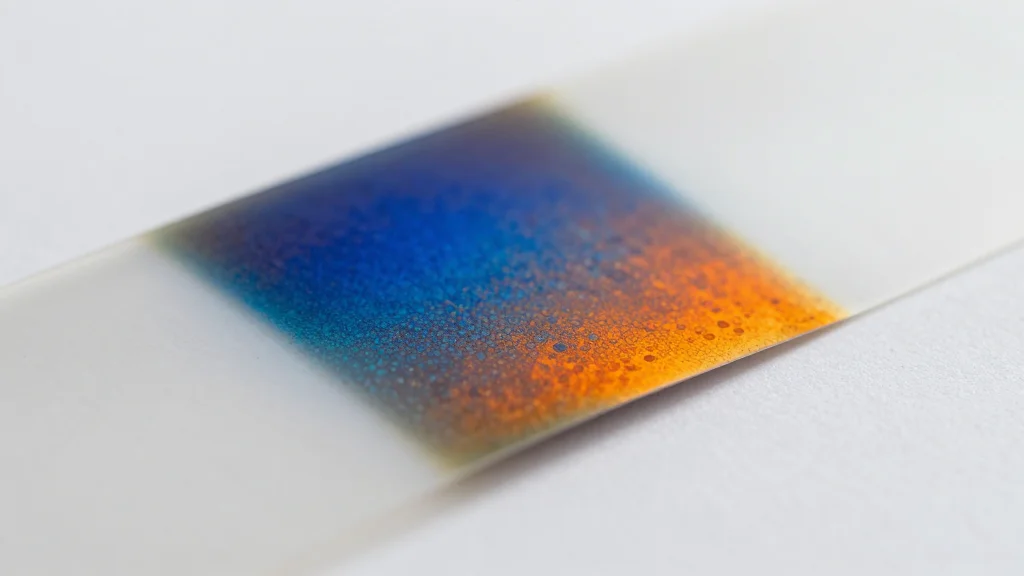
Inkjet Printers Now Capable of Producing Structural Colors
Why It Matters
The technology replaces hazardous pigments with sustainable nanophotonic inks, opening new markets for eco‑friendly, power‑free displays and secure anti‑counterfeit labeling.
Key Takeaways
- •Silicon nanosphere ink creates non‑fading structural colors
- •Silica shells prevent nanoparticle aggregation during printing
- •Prints full‑color images on flat PET and metal
- •Enables zero‑power displays and anti‑counterfeit labels
- •Scalable, eco‑friendly alternative to toxic pigments
Pulse Analysis
Structural color has long been a curiosity of nature—think butterfly wings or peacock feathers—but translating that physics into mass‑production has been elusive. The Kobe University breakthrough sidesteps traditional pigments by exploiting Mie resonance in silicon nanospheres, which scatter specific wavelengths based on particle size. Because silicon is abundant and non‑toxic, the resulting inks eliminate the environmental and health concerns tied to organic dyes, while delivering colors that resist UV‑induced fading. This shift aligns with growing consumer and regulatory pressure for greener manufacturing processes across printing, packaging, and coatings.
The core innovation lies in engineering nanospheres between 100 nm and 200 nm and encasing each in a silica shell that matches the surrounding resin’s refractive index. This design maintains a stable dispersion as the solvent evaporates, preserving the intended optical lattice and enabling high‑resolution (125‑250 dpi) inkjet printing on both flexible PET film and rigid metal surfaces. The dual‑view effect—different colors when viewed from the front versus back—creates a new visual language for designers, while the ability to print on complex geometries expands potential uses into wearable electronics, automotive interiors, and advanced sensor housings.
From a market perspective, the technology unlocks zero‑power information displays that become visible only when a device is off, offering energy‑saving signage and discreet status indicators. Its inherent complexity makes counterfeiting extremely difficult, providing a robust security layer for high‑value goods and official documents. Moreover, the process is compatible with existing inkjet infrastructure, suggesting a relatively smooth path to scale. As industries pursue sustainable, multifunctional materials, structural‑color inks could become a cornerstone for next‑generation packaging, smart textiles, and interactive surfaces, driving both environmental and economic value.
Inkjet Printers Now Capable of Producing Structural Colors
Comments
Want to join the conversation?
Loading comments...