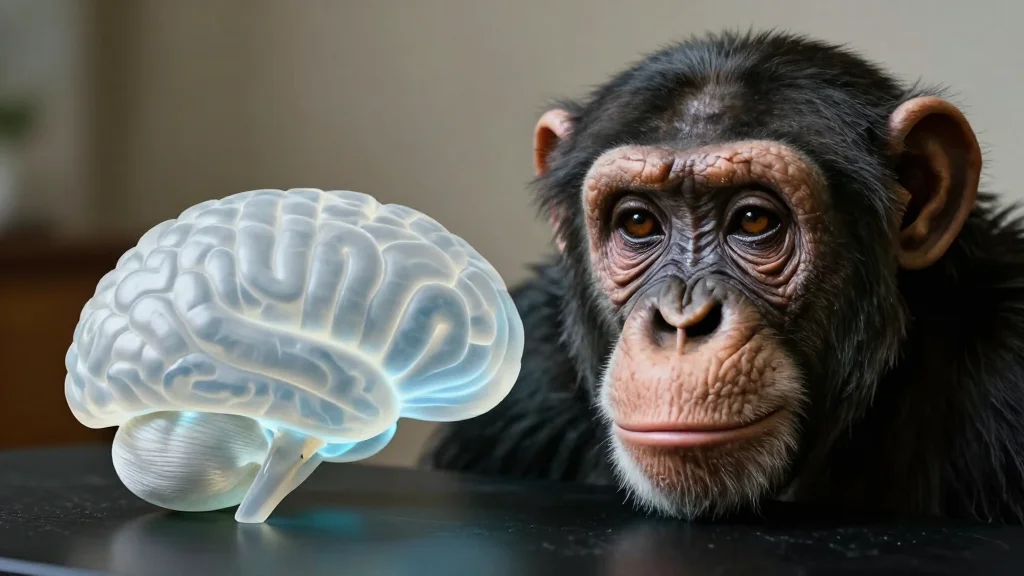
Inside 18 Years of Ape Minds, a Vast Record that May Upend How Human Intelligence Began
Why It Matters
The dataset provides unprecedented scale and accessibility, allowing researchers to tackle long‑standing questions about cognitive evolution that were impossible with isolated, small‑sample studies.
Key Takeaways
- •262 experimental datasets compiled from 150 peer‑reviewed ape studies.
- •Over 80 individual great apes contributed data across 18 years.
- •Dataset spans research from 2001‑2020 at Max Planck’s primate centre.
- •Open‑access repository hosted on GitHub for global scientific use.
- •Enables longitudinal and cross‑species analysis of cognitive evolution.
Pulse Analysis
The EVApeCognition dataset marks a watershed moment for comparative psychology, uniting fragmented experiments into a single, standardized resource. By pulling together 262 studies from 150 peer‑reviewed papers, the project overcomes the chronic limitation of low participant numbers that has hampered ape cognition research. The data, collected from more than 80 chimpanzees, bonobos, orangutans and gorillas between 2001 and 2020, offers a longitudinal view of cognitive development that rivals human developmental studies. This breadth enables scientists to detect patterns of learning, problem‑solving, and social reasoning that were previously invisible.
Beyond pure research, the open‑access nature of EVApeCognition democratizes data for educators and early‑career investigators. The GitHub repository provides ready‑to‑use CSV files, metadata, and code templates, lowering the barrier for interdisciplinary projects that blend psychology, neuroscience, and evolutionary anthropology. Universities can integrate real‑world datasets into curricula, giving students hands‑on experience with large‑scale statistical analysis and reproducible science. Moreover, the standardized format encourages other labs to contribute future findings, fostering a collaborative ecosystem that could evolve into a living database of primate cognition.
The broader implications touch on one of humanity’s deepest questions: how did our unique intelligence arise? By comparing great ape cognition across decades, researchers can isolate traits that are shared, divergent, or uniquely human, refining models of brain evolution and cultural transmission. Insights gleaned may inform artificial intelligence design, conservation strategies, and even public policy on animal welfare. As the scientific community begins to mine this trove, EVApeCognition is poised to reshape theories of cognitive evolution and set a new benchmark for open scientific data.
Inside 18 years of ape minds, a vast record that may upend how human intelligence began
Comments
Want to join the conversation?
Loading comments...