Inside-Out-Engineered CuOx/Ru Sites for Efficient Electrochemical Nitrate Reduction to Ammonia
Why It Matters
The breakthrough offers a highly selective, energy‑efficient route to convert nitrate waste into valuable ammonia, advancing sustainable nitrogen chemistry and enabling integrated energy storage solutions.
Key Takeaways
- •Inside-out CuOx@CNT/Ru yields 146 mg NH₃ h⁻¹ mg_cat⁻¹ at –0.7 V.
- •Achieves 99 % Faradaic efficiency and 43 % energy efficiency at 0 V.
- •Serves as Zn‑NO₃⁻ battery cathode delivering 22.6 mW cm⁻² power.
- •CuOx stabilizes Ru, accelerates *NO₃→*NO₂ conversion and hydrogenation.
- •Demonstrates synergistic active‑site engineering for scalable ammonia electrosynthesis.
Pulse Analysis
Electrochemical nitrate reduction has emerged as a promising alternative to the energy‑intensive Haber‑Bosch process, yet its commercial viability has been hampered by low selectivity, competing hydrogen evolution, and sluggish kinetics in the initial nitrate‑to‑nitrite step. Researchers have explored a variety of metal and alloy catalysts, but achieving both high ammonia yield and energy efficiency under mild conditions remains a challenge. The need for integrated solutions that also address nitrate pollution in water streams adds urgency to the search for advanced electrocatalysts.
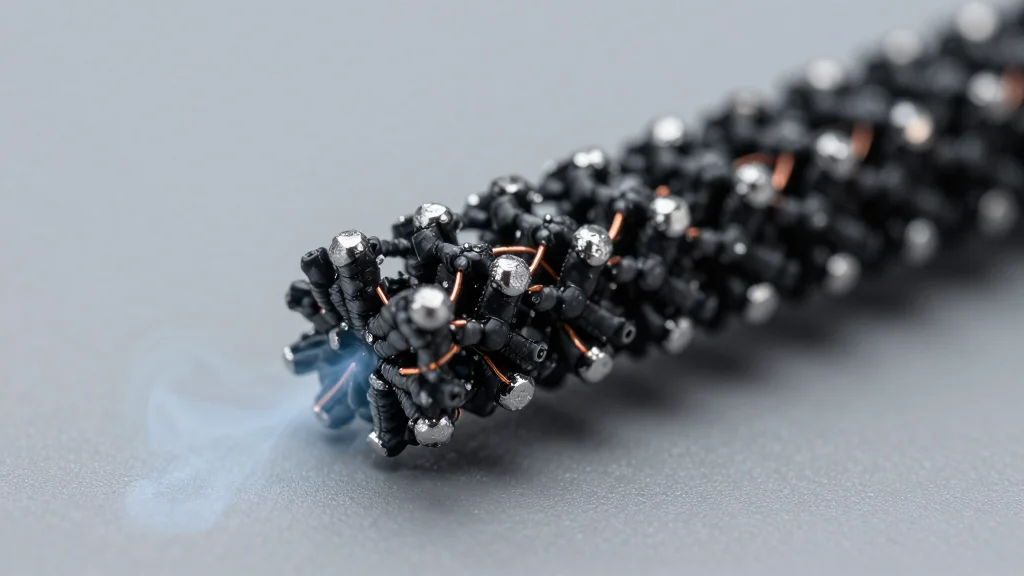
The newly reported CuOx@CNT/Ru catalyst tackles these hurdles through an inside‑out design that positions Ru active sites on the exterior of carbon nanotubes while confining amorphous CuOx nanowires within the tube interior. This spatial arrangement creates a synergistic interface: CuOx stabilizes Ru nanoparticles, promotes the *NO₃→*NO₂ conversion, and supplies active hydrogen from water dissociation, thereby lowering the energy barrier for the rate‑determining *NO→*NOH step. The result is a remarkable ammonia production rate of 146 mg h⁻¹ mg_cat⁻¹ at –0.7 V, coupled with near‑perfect Faradaic efficiency (99 %) and a 43 % energy efficiency at zero overpotential—metrics that surpass most reported nitrate‑reduction systems.
Beyond laboratory performance, the catalyst’s dual functionality as a Zn‑NO₃⁻ battery cathode demonstrates its potential for integrated waste‑to‑resource platforms. Delivering a power density of 22.6 mW cm⁻² while simultaneously generating ammonia positions the technology for decentralized ammonia synthesis, renewable energy storage, and water remediation. As the industry seeks carbon‑neutral nitrogen cycles, the CuOx@CNT/Ru architecture offers a scalable blueprint for engineering active‑site interactions that could accelerate the transition from fossil‑based to electrochemical ammonia production.
Inside-out-engineered CuOx/Ru sites for efficient electrochemical nitrate reduction to ammonia
Comments
Want to join the conversation?
Loading comments...